
TL;DR:
- Promoted deals are verified, high-value offers featured prominently for trustworthiness.
- They include discounts, cashback, and referral rewards, often stackable for maximum savings.
- Using community validation and platform tips can help avoid expired or restricted deals.
Chasing discount codes online can feel like a second job, except half the codes are expired, and the other half were never real. If you've ever pasted a promo code at checkout only to watch it fail, you already know the frustration. Promoted deals are different. These are featured, verified offers that platforms prioritize because they've been checked for legitimacy, not just posted by a random user. This guide covers exactly what promoted deals are, how they work across industries, what types to look for, and how to avoid the traps that cost shoppers real money every day.
Table of Contents
- What are promoted deals and how do they work?
- Key types of promoted deals: Discounts, cashback, and referrals
- Where to find promoted deals across industries
- Common pitfalls and how to get the most from promoted deals
- Our take: Why real savings require more than 'just' finding deals
- Explore more verified deals with LovableRewards
- Frequently asked questions
Key Takeaways
| Point | Details |
|---|---|
| Promoted deals defined | Promoted deals are verified, featured offers on savings platforms for discounts, cashback, or referrals. |
| How to spot real deals | Look for platform-verified or community-endorsed offers for the best chance at genuine savings. |
| Stacking can boost savings | Combine deals when possible, but read platform rules to avoid conflicts that cancel out savings. |
| Watch for expirations | Even promoted deals can expire or have restrictions, so always check details before use. |
| Leverage trusted platforms | Sites like LovableRewards, Rakuten, and Chime Deals regularly feature the most reliable promoted deals. |
What are promoted deals and how do they work?
Promoted deals are not just regular coupons with a spotlight on them. They represent a curated tier of savings where platforms like Rakuten, TopCashback, Honey, and Chime Deals invest resources to surface the most reliable, highest-value offers. As the Chime Deals platform explains, promoted deals are featured discounts, cashback offers, and referral code promotions on consumer savings platforms where verified deals are prioritized for users seeking maximum savings across industries.
What separates them from generic promo codes is their position in the ecosystem. Platforms push promoted deals to the top of search results, highlight them visually, and often include a "verified" badge or timestamp showing when the offer was last confirmed. That extra layer of transparency is what makes them worth trusting.
Here is how promoted deals typically function on major platforms:
- Featured placement: Promoted deals appear at the top of category pages or in dedicated "Top Offers" sections so you spot them without digging
- Verification layer: Platforms run automated checks or use community reporting to confirm codes work before featuring them
- Expiration tracking: Active expiration dates and minimum spend requirements are displayed upfront, reducing guesswork
- Bonus incentives: Some platforms attach extra cashback or bonus points specifically to promoted deals to reward early adoption
- Partner exclusives: Brands pay for premium placement, which often means the deals are tied to real, contracted promotions rather than leaked codes
Here is a quick comparison of how promoted deals differ from standard deals:
| Feature | Promoted deal | Standard promo code |
|---|---|---|
| Verification status | Confirmed active | Often unverified |
| Platform placement | Top of listings | Mixed into all results |
| Expiration visibility | Clearly displayed | Frequently missing |
| Bonus potential | Often higher | Standard rate |
| Trust level | High | Varies widely |
If you want verified referral codes that actually work at checkout, understanding this promoted structure is your starting point. The deal exists before you search for it, and someone has already done the legwork of confirming it.
Key types of promoted deals: Discounts, cashback, and referrals
Not all promoted deals work the same way. Knowing the differences helps you plan which to use first and how to layer them for bigger savings. As noted on the different promoted deal types overview, promoted deals can take the form of discounts, cashback, or referral promotions, often verified and curated for user savings.
Here is how each type breaks down:
- Discount deals: These give you an upfront percentage or fixed dollar amount off at checkout. You enter a code or click an activated link and the price drops immediately. Fast, simple, and immediately visible on your order total.
- Cashback offers: Instead of reducing your checkout price, cashback credits a portion of your spend back to you after the transaction is confirmed. The delay is the trade-off, but cashback rates on promoted deals are often significantly higher than standard offers.
- Referral promotions: These reward both parties when a new user signs up or completes a qualifying purchase using your unique code. You might earn account credit, bonus cashback, or gift cards. The person using your code gets a welcome discount or bonus too.
A real-world stacking example helps illustrate this clearly. Imagine buying running shoes through a cashback portal offering 8% back on promoted deals. You apply a discount code at checkout for 15% off. If the platform allows stacking, you just saved 23% total. Browse multi-industry referral code examples to see how this plays out across categories like travel bookings, food delivery, and banking apps.
Pro Tip: Before adding items to your cart, check whether your cashback portal explicitly allows discount codes to be combined. Some portals void cashback tracking when a third-party code is applied. Verify the stacking policy in the platform's FAQ first.
| Deal type | When you save | Typical range | Stackable? |
|---|---|---|---|
| Discount code | At checkout | 5% to 30% | Sometimes |
| Cashback offer | After purchase | 1% to 15% | Often |
| Referral code | After signup | Varies | Usually yes |
The most effective savers treat these three types as a toolkit, not separate options. Using them together, when the platform rules allow, is where the real savings live.

Where to find promoted deals across industries
Promoted deals are not limited to one corner of the internet. They appear across retail, travel, food delivery, financial services, and even transportation apps. The Chime Deals examples page alone shows how financial platforms are actively featuring promoted savings for everyday purchases, confirming that promoted deals span multiple verticals including retail, travel, and finance for maximum user savings.
Here is where to look based on category:
- Retail and e-commerce: Rakuten, Honey, and TopCashback maintain large promoted deal sections for major retailers. Seasonal peaks like Black Friday surface the highest-value featured offers
- Travel: Sites like Hopper and cashback extensions feature promoted hotel and flight deals, often tied to partner agreements with airlines or booking platforms
- Food delivery: Apps like DoorDash and Uber Eats run limited-time promoted offers directly in the app, usually tied to specific restaurants or order minimums
- Financial services: Neobanks and credit card apps increasingly feature promoted deals as loyalty perks. Chime Deals is a strong example of this integration
- Transportation: Ride-share and scooter rental apps regularly push promoted referral codes for new user signups
The most reliable promoted deals come from platforms that let the community flag expired or fraudulent offers in real time. A deal that has been reported as working by multiple users in the past 24 hours carries far more weight than one posted weeks ago with zero activity.
Our community deal sharing guide walks through how user-submitted offers get validated before reaching the promoted tier. Understanding deal sharing explained helps you appreciate why community-driven platforms surface better deals faster than solo searching ever could.
Common pitfalls and how to get the most from promoted deals
Even promoted deals have failure points. Knowing the risks ahead of time keeps you from losing cashback or wasting time on offers that do not apply to your situation.

According to research on deal redemption pitfalls, stacking is possible but portals may conflict, for example when Honey overrides Rakuten tracking, and fraud risks like fake codes or cookie stuffing create additional exposure for deal seekers.
Here are the most common issues and how to handle them:
- Expired codes: Even promoted deals can linger past their end date if the platform's verification lags. Always check the listed expiration and look for a recent "last verified" timestamp
- Minimum spend requirements: Many promoted deals only activate above a threshold. Spending $47 on a deal requiring $50 minimum means zero savings. Read the fine print before building your cart
- Portal tracking conflicts: If you activate a cashback portal and then apply a browser extension like Honey at checkout, the extension can overwrite the portal's tracking cookie. You lose the cashback. Disable extensions when using a cashback portal
- Cookie stuffing: Some fraudulent deal sites inject affiliate tracking cookies without your knowledge, redirecting cashback to them instead of you. Stick to reputable platforms
- Category exclusions: A promoted deal for "all electronics" may exclude specific brands or product types. Verify the deal covers your exact item
Statistic callout: Studies on consumer behavior suggest a significant portion of shoppers lose savings annually due to expired or restricted codes they never verified before purchasing. That is a preventable loss.
Pro Tip: Bookmark a trusted source for avoiding expired codes and run any code through a discount code validation process before committing to checkout. Pair this habit with solid referral marketing tips to build a repeatable savings routine.
The difference between a good deal and a great deal is almost always in the details most people skip.
Our take: Why real savings require more than 'just' finding deals
Here is something most deal guides will not tell you: the act of searching for deals can become its own time sink that erodes the value you are chasing. We call it deal stacking fatigue, and it is more common than you think. You spend 40 minutes hunting, comparing, and tab-switching, only to save $3.20. That is not a win.
The smarter approach is not hunting harder, it is hunting smarter. Platforms that combine AI verification with community reporting cut the noise dramatically. When a deal has been confirmed by real users and passed an automated validity check, you spend two minutes redeeming it instead of 20 minutes questioning whether it works.
We also believe community-driven savings consistently outperform solo deal hunting because the crowd catches what algorithms miss. A user who just redeemed a code ten minutes ago is the best real-time validator available. Pair that with a clear referral code workflow and your savings become systematic rather than lucky. Trust the verified, skip the noise.
Explore more verified deals with LovableRewards
If the strategies above sound like a lot to manage alone, that is exactly why LovableRewards exists. The platform brings together AI-verified promoted deals and community-submitted referral codes across dozens of industries, all in one place.
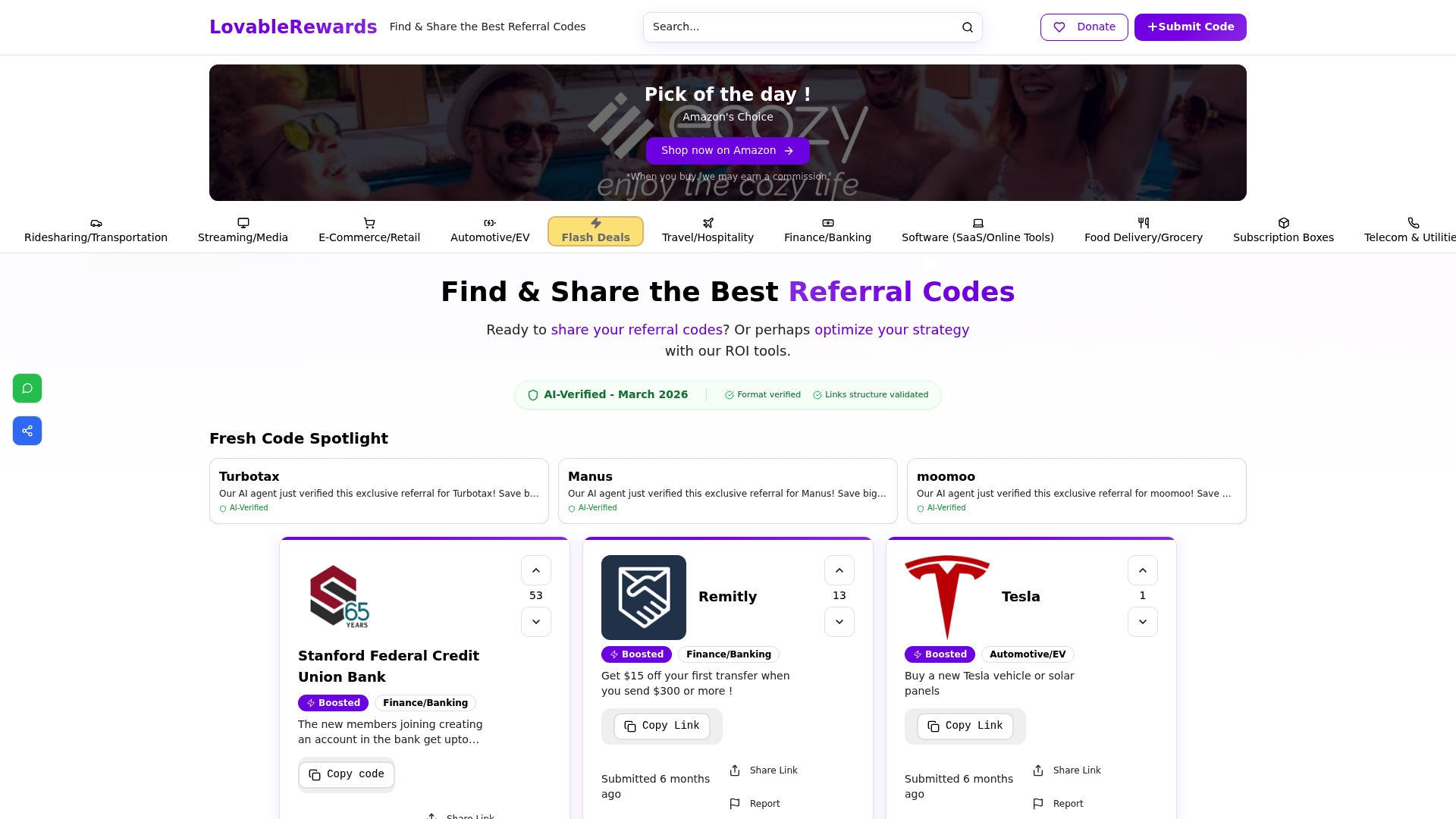
You do not need to tab-hop between five different cashback sites or wonder if a code is still active. LovableRewards surfaces AI-verified deals with clear expiration data, community validation signals, and fair exposure for every contributor. Whether you are after cashback on your next online order or a referral bonus for signing up with a new fintech app, the platform keeps verified offers organized and current. Start browsing today and let the community do the heavy lifting.
Frequently asked questions
Are promoted deals more reliable than regular promo codes?
Promoted deals are often verified and highlighted for authenticity, making them more reliable than random promo codes you find through a basic web search.
Can I stack multiple promoted deals for more savings?
Sometimes stacking works, but portals may conflict and override each other's tracking, so always check the platform's combining rules before checkout.
Do promoted deals ever expire or have hidden restrictions?
Yes, promoted deals can expire or require a minimum spend, so always review the terms and expiration date before you redeem.
Which platforms offer the best promoted deals?
Popular options include Rakuten, TopCashback, Honey, Chime Deals, and LovableRewards, all of which curate and verify savings across multiple categories.