
TL;DR:
- Referral marketing reduces customer acquisition costs by 50 to 70% over paid ads.
- Setting clear goals and tracking key metrics improves referral program effectiveness.
- Proper promotion, incentives, and fraud prevention are essential for maximizing referrals and long-term customer value.
Running paid ads to find new customers is expensive, and the results are often unpredictable. Referral marketing flips that problem on its head. When existing customers bring in new ones, trust is already built into the transaction. Referral programs cut acquisition costs by 50 to 70% compared to paid channels, making them one of the most efficient growth tools available to small businesses and solo operators. This guide walks you through goal-setting, incentive design, promotion tactics, fraud prevention, and how to use verified referral codes to stretch every dollar further.
Table of Contents
- Set clear goals and track key referral metrics
- Choose the right referral incentive for your audience
- Promote your referral program for maximum participation
- Guard against referral fraud and optimize for savings
- What most referral marketing guides miss: The overlooked link between savings and true customer value
- Next steps: Jumpstart your referral program and save more today
- Frequently asked questions
Key Takeaways
| Point | Details |
|---|---|
| Track your metrics | Success starts with clear goals and monitoring key referral performance indicators. |
| Choose smart incentives | The right mix of cash, credits, or double-sided rewards drives higher participation and retention. |
| Promote strategically | Well-timed, visible promotions boost referral program awareness and conversions. |
| Prevent referral fraud | Implement technical controls and clear limits to maximize genuine savings and minimize abuse. |
| Focus on lifetime value | Long-term customer value and retention amplify the savings and ROI delivered by referrals. |
Set clear goals and track key referral metrics
Every successful referral program starts with a clear purpose. Before you launch anything, ask yourself what you actually want from the program. More signups? Higher average order value? Repeat purchases from existing customers? Each goal requires a different setup, and mixing them up from the start is one of the most common mistakes small businesses make.
Once your goal is locked in, build your tracking around these core metrics:
- Number of shares: How many customers are actively sharing your referral link or code?
- Referral conversion rate: Of those who click a referral link, how many complete the desired action?
- Referral rate: The percentage of new customers who arrived through a referral.
- Return on investment (ROI): Revenue generated from referrals divided by the total cost of the program.
Knowing your numbers matters, but so does knowing what good looks like. E-commerce referral conversion rates average 13.8%, with a typical range of 10 to 25%, and program ROI commonly lands between 3.5x and 8x. If your numbers fall below that range, your incentive or promotion strategy likely needs adjustment.
Comparing your results to these benchmarks gives you a realistic target instead of guessing. A referral revenue calculator can help you model different scenarios before you even launch, so you enter the program with informed expectations.
Pro Tip: If you are new to referral tracking, start by measuring just one metric, such as conversion rate. Add more metrics as your program matures and you have enough data to act on them.
Consistency in tracking is what separates programs that improve over time from ones that stagnate. Review your numbers weekly, not monthly, especially in the first 90 days.
Choose the right referral incentive for your audience
Incentives are the engine of any referral program. Get them right and participation climbs fast. Get them wrong and even a well-promoted program will sit idle. The good news is that you have real options, and testing is straightforward.
Here is a quick comparison of the most common incentive structures:
| Incentive type | Best for | Retention impact | Cost level |
|---|---|---|---|
| Cash reward | High-volume B2C | Low to medium | High |
| Store credit | Repeat purchase brands | High | Medium |
| Discount code | Price-sensitive buyers | Medium | Low |
| Gift or product | Brand-loyal communities | Medium | Variable |
The structure of your reward matters just as much as the type. Single-sided rewards are cheaper to run but tend to produce lower motivation, while double-sided rewards, where both the referrer and the new customer benefit, drive viral sharing in B2C settings. For B2B programs, revenue share arrangements tend to outperform both.
Key considerations when choosing your incentive:
- Cash produces the highest immediate participation but does little to build long-term loyalty.
- Store credits tie rewards back to your brand, encouraging repeat purchases and boosting retention.
- Discounts work well for price-sensitive audiences but can erode perceived value if overused.
- Double-sided rewards create a win for both parties and are especially powerful in consumer markets.
To learn more about how different program structures compare, the referral program types breakdown covers the full spectrum. If you are just getting started with how codes and rewards actually work in practice, referral codes explained is a solid starting point.
Pro Tip: Run a simple A/B test with two incentive types for 30 days. Even a small sample size will show you which one your audience responds to more.
Promote your referral program for maximum participation
No incentive works unless people know about it. Promotion is where most small businesses underinvest, and it shows in their participation rates. The goal is to put your referral offer in front of customers at the exact moments they are most likely to act.
The most effective promotion channels include:
- Email campaigns: A dedicated referral email to your existing list is the fastest way to generate early shares. Follow up with a reminder two weeks later.
- Social media posts: Short, visual posts showing the reward work well on Instagram and Facebook. User-generated content from happy referrers performs even better.
- Website banners: A persistent banner or pop-up on your homepage and checkout page keeps the program visible without being intrusive.
- In-app or mobile push notifications: If you have an app or SMS list, time-sensitive nudges at key moments, like after a completed purchase, drive action fast.
- Time-limited bonuses: A short window of doubled rewards creates urgency without permanently inflating your costs.
Referral traffic converts at 30% compared to just 15% for organic traffic, which means referred visitors are twice as likely to become customers. That stat alone justifies putting real effort into promotion. The global average referral rate sits at 2.35%, but programs with active promotion routinely hit participation rates between 16% and 29%.
For a step-by-step look at how to structure your outreach, the referral code workflow guide walks through the full process. You can also find real-world multi-industry code examples to see how other businesses frame their offers. And if you are worried about codes going stale, referral code expiration tips covers how to handle timing without losing momentum.
Pro Tip: The best time to ask for a referral is right after a customer has their "aha moment," the first time they experience real value from your product or service. That is when enthusiasm is highest and sharing feels natural.
Guard against referral fraud and optimize for savings
A referral program that gets abused is worse than no program at all. Fraud erodes your budget, skews your data, and rewards people who add no real value to your business. The most common threats are self-referrals, multi-accounting, and code leakage to discount sites.

Here is a breakdown of common fraud types and the controls that stop them:
| Fraud type | Description | Recommended control |
|---|---|---|
| Self-referral | One person refers themselves using a second account | Identity and email matching |
| Multi-accounting | Creating multiple accounts to stack rewards | Device fingerprinting |
| Code leakage | Codes shared publicly beyond your intended audience | Unique, single-use codes |
| Fake purchases | Completing a purchase only to trigger a reward, then returning | Purchase verification with delay |
Practical steps to protect your program:
- Require a completed and non-refunded purchase before releasing any reward.
- Cap referrals at 5 to 10 per user per month to limit abuse from power users gaming the system.
- Match referral codes to specific user identities so codes cannot be transferred or reused.
- Use device tracking to flag accounts that share IP addresses or browser fingerprints.
"Referral programs work best with smart controls preventing abuse."
Purchase verification, referral caps, and multi-device tracking are the three pillars of a fraud-resistant program. Edge cases, like a legitimate customer who refers many friends, can be handled with tiered rewards that increase value for verified, high-activity referrers.
Optimizing for savings means focusing your rewards budget on referrers who bring in customers with genuine long-term value. Not every referral is equal. A customer who makes one purchase and disappears is worth far less than one who subscribes, upgrades, and refers others. For more on keeping your codes clean and your program healthy, referral code fraud tips covers rotation strategies and abuse prevention in detail.
What most referral marketing guides miss: The overlooked link between savings and true customer value
Most referral marketing advice focuses on volume. Get more shares, more clicks, more signups. That framing is understandable, but it misses the bigger opportunity entirely.
Referred customers have 16 to 25% higher lifetime value and 37% higher retention than customers acquired through paid channels. That means the real savings from a referral program are not just in lower acquisition costs. They compound over time through reduced churn, higher average spend, and more organic referrals from people who actually stay.
The practical implication is that small tweaks to your incentive design can produce outsized results. Switching from a one-time cash reward to a tiered store credit system, for example, can shift your referrer base from deal-seekers to loyal advocates. That shift alone can move your ROI from 3.5x to well above it.
We have seen this play out across multi-industry referral savings data consistently. The programs that deliver the best long-term returns are not the ones with the biggest upfront rewards. They are the ones designed to attract and retain high-value customers from the start.
Pro Tip: Use store credits or tiered discounts instead of flat cash rewards. Customers who redeem credits make a second purchase, and that second purchase is where the real lifetime value begins.
Next steps: Jumpstart your referral program and save more today
You now have a clear framework: set measurable goals, pick the right incentive, promote consistently, and protect your program from fraud. The next step is putting it into practice without wasting time on guesswork.
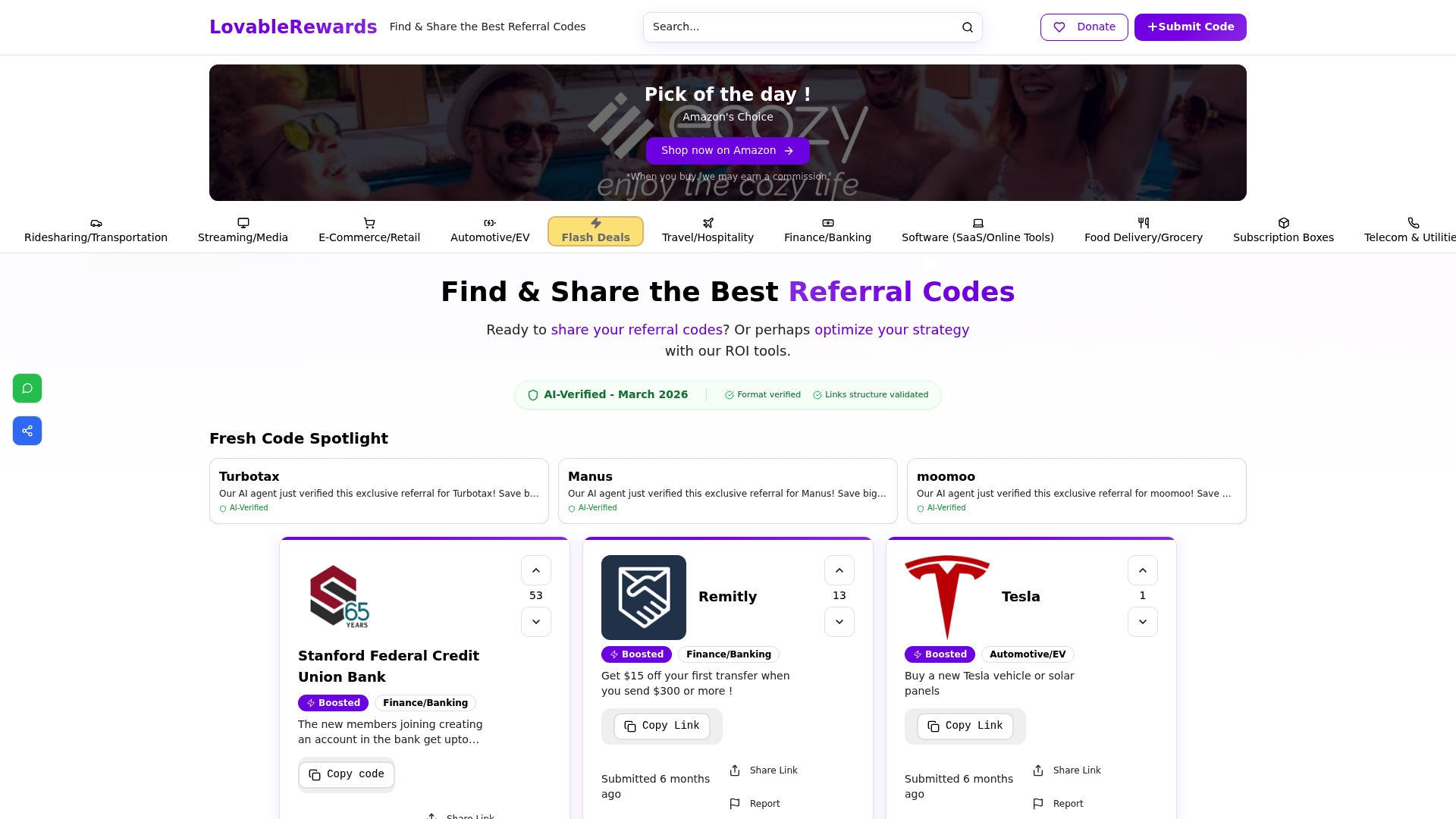
LovableRewards gives you access to a community-verified library of referral codes across e-commerce, finance, and transportation, all checked by AI to confirm they actually work. Before you launch your own program, use the free referral ROI calculator to model your expected returns based on your audience size and incentive structure. You will know your projected savings before spending a dollar. Start building smarter referral strategies today and let verified, working codes do the heavy lifting.
Frequently asked questions
What is the most effective referral incentive?
Cash rewards and double-sided programs generally produce the highest participation and ROI, but store credits and discounts are better for building long-term retention and repeat purchases.
How can I prevent fraud in my referral program?
Set up purchase verification, referral caps, and device tracking from day one, and match every code to a specific user identity to block self-referrals and multi-accounting.
What conversion rate should I expect from a referral program?
The average e-commerce referral conversion is 13.8%, with most actively promoted programs landing somewhere between 10% and 25%.
Why are referrals more cost-effective than ads?
Referral programs cut acquisition costs by 50 to 70% compared to paid channels, and referred leads convert at 3 to 5 times the rate of cold ad traffic.