
TL;DR:
- Community deal sharing transforms scattered offers into collective savings through verified codes and trust.
- Effective sharing requires verification, clear instructions, timely posts, and adherence to community rules.
- Using dedicated tools like LovableRewards simplifies verification, tracking, and maximizing referral rewards.
You've been there before: a friend mentions a referral code that would have saved you $40 on your last grocery order, but you found out three days too late. That kind of missed savings stings, especially when deals and referral codes are circulating in communities you're already part of. Community deal sharing fixes that problem by turning scattered, individual discoveries into a collective advantage. This guide walks you through everything you need, from the tools and setup to sharing workflows, common mistakes, and how to verify that your efforts are actually paying off.
Table of Contents
- What you need to start sharing community deals
- Step-by-step workflow for sharing deals and referral codes
- Common mistakes and how to avoid them
- How to verify and track deal success
- Why community deal sharing is about trust, not just savings
- Multiply your rewards with LovableRewards
- Frequently asked questions
Key Takeaways
| Point | Details |
|---|---|
| Start with the right tools | A smartphone, trusted deal-sharing platforms, and verified sources are essential for maximizing savings. |
| Share with personalization | Personalized messages and clear instructions boost engagement and redemption rates for referral codes. |
| Avoid common pitfalls | Keep codes current and relevant to maintain trust and community value. |
| Track and confirm success | Use tracking tools and simple spreadsheets to ensure you and your community truly benefit from shared deals. |
What you need to start sharing community deals
Getting started with community deal sharing doesn't require a big investment. What it does require is the right setup so you can move fast when a hot deal surfaces.
Devices and accounts you'll need:
- A smartphone with push notifications enabled for deal alerts
- Active accounts on at least two social platforms (Reddit, Facebook Groups, or Telegram work well)
- An email address dedicated to deal newsletters and reward confirmations
- Access to a notes app or spreadsheet to catalog active codes
Knowing your target categories matters just as much as having the right devices. Focus on three core verticals: e-commerce (Amazon, Walmart, Etsy), financial services (cash-back cards, investing apps, neobanks), and transportation (Uber, Lyft, Lime). These categories rotate deals frequently and offer the highest referral values.
Before you share anything, verify it. Referral programs from companies like Airbnb, Uber, and Tesla offer rewards for both sharers and recipients, which means the stakes are real on both sides. Sharing a dead code damages your credibility fast.
Etiquette is the unspoken currency of every deal community. Only post codes that are active, time-sensitive, and relevant to the group's focus. Off-topic or expired posts get you muted or removed, and that cuts off your access to future deals.
Here's a quick look at the most popular deal-sharing platforms and what they're best for:
| Platform | Best for | Verification support |
|---|---|---|
| Reddit (r/deals) | E-commerce codes | Community upvotes |
| Telegram groups | Real-time alerts | Admin moderation |
| Facebook Groups | Local and national deals | Member reporting |
| LovableRewards | All verticals | AI-based verification |
To learn more about how to find and share referral codes across categories, LovableRewards maintains a regularly updated resource that covers active deals by industry.
Pro Tip: When you save a referral code, label it with the brand name, reward amount, and expiration date. Something like "Uber_$20off_expires0630" takes five seconds to write and saves you from sharing a stale code later.
Step-by-step workflow for sharing deals and referral codes
With the right tools in hand, let's walk through exactly how you can start sharing and redeeming deals for the greatest impact.
1. Find the code. Check official brand apps, your email inbox, and community boards. Prioritize codes with a clear expiration date and confirmed reward value.
2. Test it yourself. Before sharing, add the code to a cart or sign-up flow and confirm it applies correctly. Screenshot the discount confirmation.
3. Craft a benefit-focused message. Lead with the reward, not the code itself. "Get $25 off your first DoorDash order with code SAVE25" outperforms "Here's a code: SAVE25" every time. Personalized messages and clear redemption steps increase referral code engagement significantly.
4. Choose the right channel. Match the deal to the audience. Ride-share codes go in commuter groups. Finance app bonuses go in personal finance communities. Generic e-commerce codes work across most channels.
5. Include step-by-step redemption instructions. Don't assume everyone knows where to enter a promo code. A two-line instruction ("Go to checkout, click 'Promo Code,' enter SAVE25") removes friction and boosts redemption.
6. Track usage. Most referral dashboards show how many people used your link. Check back 24 to 48 hours after posting and note the redemption count.
7. Follow up. If a code is performing well, reshare it with a reminder like "48 hours left on this deal." Urgency drives action.
Here's a comparison of sharing channels by reach and engagement:
| Channel | Reach | Engagement speed | Best code type |
|---|---|---|---|
| WhatsApp group | Medium | Very fast | Time-sensitive deals |
| Social media post | High | Moderate | Brand referral codes |
| Email list | Low to medium | Slow | High-value finance codes |
| Deal platform | High | Fast | All verified codes |
For a deeper breakdown of how to structure your referral code workflow for maximum impact, and to understand rotation tips for referral codes that prevent overuse and fraud, both resources are worth bookmarking.
Pro Tip: Share codes for high-demand brands like food delivery and ride-sharing apps at the start of the week. Monday and Tuesday posts tend to get more clicks than weekend shares when people are planning their week.
Common mistakes and how to avoid them
Even with the right approach, mistakes can happen. Here are the most common missteps and how to steer clear.
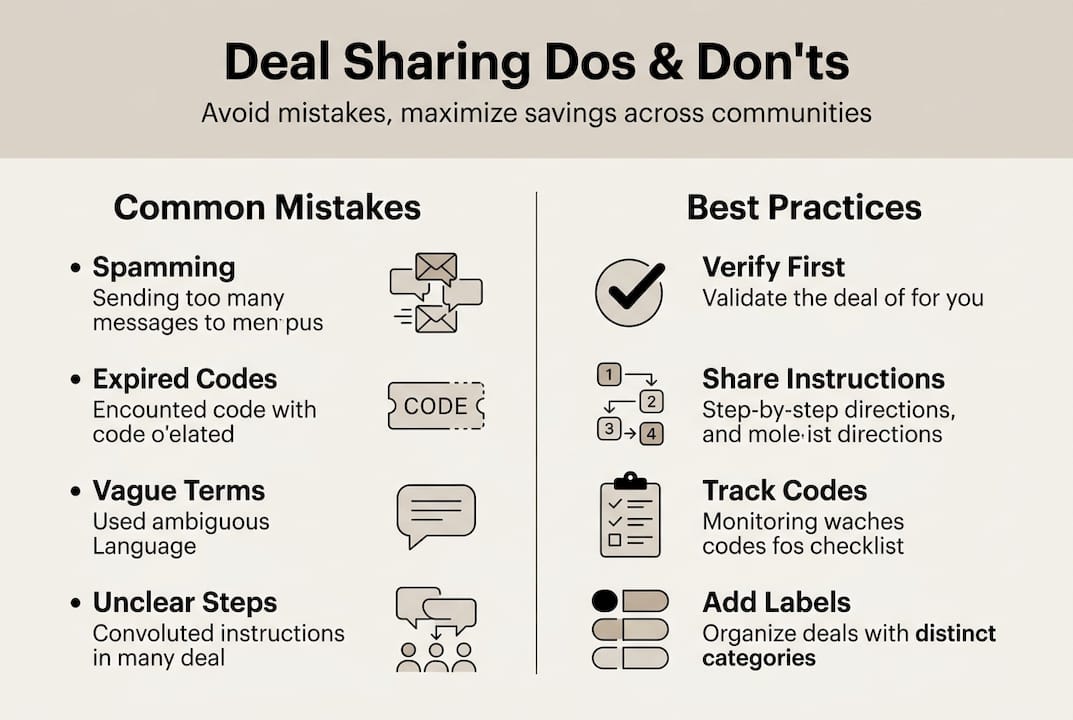
Spamming the group. Posting five codes in a row, or sharing the same code repeatedly, trains members to ignore your posts. One well-timed, well-explained share beats ten rushed ones.
Skipping the expiration check. Using vague messages or forgetting to update expired codes frustrates participants and decreases engagement. Make it a habit to confirm the expiration date every time, not just when you first save the code.
Hiding the terms. If a referral code only works for new users, or requires a minimum purchase, say so upfront. Omitting that detail leads to failed redemptions and complaints directed at you.
Unclear redemption instructions. Assume your audience has never used a promo code before. Walk them through it. This one step alone can double your redemption rate.
Ignoring platform rules. Every community has posting guidelines. Some require you to include a direct link. Others prohibit affiliate-style codes. Read the rules before you post, not after you get flagged.
Here's a quick reference for what to always include when sharing a deal:
- Brand name and deal value ("$20 off at Lyft")
- Exact code or referral link
- Expiration date ("Valid through July 15")
- Who qualifies ("New users only" or "All users")
- Redemption steps ("Enter at checkout under 'Promo Code'")
"Trust is the foundation of every high-performing referral community. When members know your shares are accurate, verified, and transparent, they act on them. When they don't, they scroll past."
To understand how to boost conversions and avoid fraud in your sharing activity, the principles of rotation and verification apply directly to community deal sharing as well.
How to verify and track deal success
Sharing deals is only effective if you know they really work. Here's how you can confidently verify and quantify your results.

1. Test the code before sharing. Apply it in a real transaction or sign-up flow. A confirmed discount screen is your proof of validity.
2. Check the brand's referral dashboard. Most apps (Uber, Robinhood, Cash App) have a built-in referral tracker that shows clicks, sign-ups, and rewards earned.
3. Screenshot confirmations. Keep a folder of screenshots showing successful code applications. This is useful if a reward doesn't post and you need to contact support.
4. Log everything in a spreadsheet. Tracking and follow-up are integral to successful referral programs, and a simple spreadsheet is the most reliable way to do it without relying on memory.
5. Calculate cumulative savings. Add up the rewards you've earned and the discounts your referrals have received. Seeing the total number makes the habit feel worthwhile and helps you prioritize which brands to focus on.
Here's a simple tracking table you can replicate in Google Sheets:
| Brand | Code | Date shared | Redemptions | Reward earned | Expiration |
|---|---|---|---|---|---|
| Uber | RIDE20 | June 1 | 4 | $80 | June 30 |
| Robinhood | REF2026 | June 5 | 2 | 2 free stocks | July 31 |
| DoorDash | DASH25 | June 10 | 6 | $30 credit | June 25 |
For a more automated approach, the referral ROI calculator at LovableRewards lets you input your sharing activity and see projected earnings. If you're new to the platform, how referral redemption works explains the full cycle from submission to reward.
Pro Tip: Review your tracking spreadsheet every Sunday. Five minutes of weekly review tells you which codes are still active, which brands are worth resharing, and where your biggest rewards are coming from.
Why community deal sharing is about trust, not just savings
Most people treat deal sharing as a transactional habit: find a code, post it, collect a reward. But the communities that consistently generate the most savings operate on something deeper than that. They run on trust.
When you share a verified code with clear terms and accurate instructions, you're doing more than passing along a discount. You're signaling that you're a reliable source. Over time, that reputation compounds. Members tag you when they find deals. Admins give your posts more visibility. Your redemption rates climb because people act on your shares without hesitation.
Healthy communities also self-police. Members flag expired codes, update outdated posts, and call out spam before it takes hold. That kind of collective accountability is what separates a thriving deal group from a noisy, low-trust feed nobody checks anymore.
For a deeper look at how community referral success is built over time, the pattern is consistent: transparency and repeat positive interactions create the foundation. The savings follow naturally.
Multiply your rewards with LovableRewards
Ready to put these strategies into action with minimal effort? LovableRewards brings everything covered in this guide into one place. You can browse verified referral codes across e-commerce, finance, and transportation, submit your own codes for community exposure, and track deal performance without juggling multiple tabs or spreadsheets.
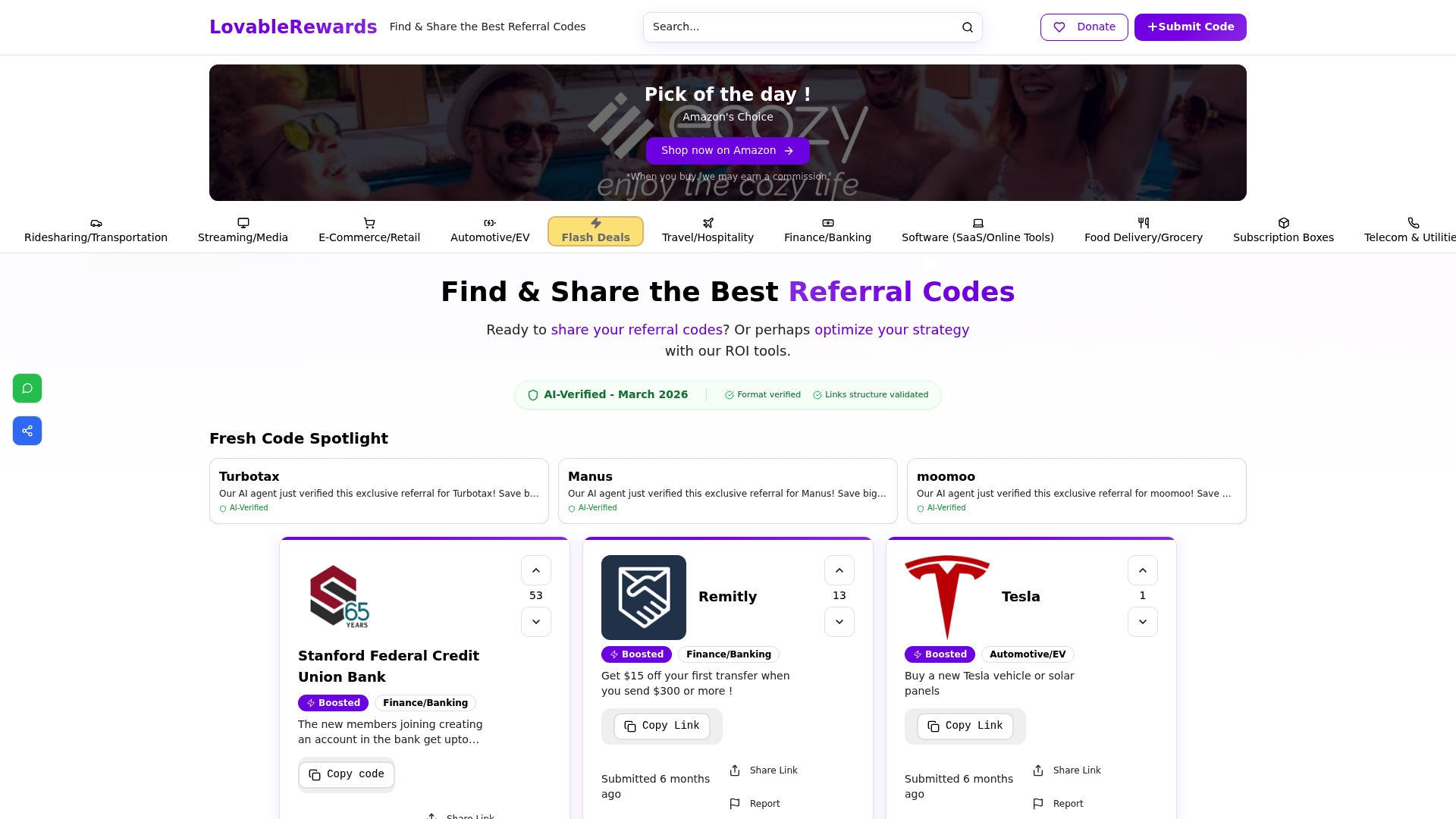
The platform's AI-based verification means every code you find has been checked for validity before it reaches you. No more testing dead links or sharing outdated deals by accident. If you want to understand the full process, how it works walks you through submission, verification, and reward tracking in plain language. Start with one category, build your reputation, and watch your savings stack up.
Frequently asked questions
What is community deal sharing?
Community deal sharing is the collective process of finding, sharing, and redeeming verified discount and referral codes within a group to maximize savings for all members.
How can I verify if a deal or referral code is still valid?
Check the expiration and usage limits directly on the official site, or use a tracking community like LovableRewards for verified codes. Tracking and follow-up are integral to confirming that a referral program is still active before you share it.
What's the best way to share referral codes online?
Personalize the message and share in trusted channels like social media groups or direct messaging platforms, always including redemption steps. Personalized messages and clear redemption steps increase referral code engagement across every channel.
Are there risks with sharing referral codes in communities?
Yes. Risks include sharing expired codes, spamming members, or unintentionally violating terms of service. Vague messages and expired codes frustrate participants and reduce your credibility, so always focus on verified, relevant codes.
How can I track the rewards I've earned from community deals?
Maintain a spreadsheet of shared and redeemed codes, or use online tracking tools provided by deal-sharing platforms like LovableRewards. Tracking and follow-up are essential for understanding your cumulative savings and community impact.
Recommended
- Master community referral code workflow for max savings
- LovableRewards - Find & Share the Best Referral Codes | Verified Community Rewards
- Working Referral Codes & Exclusive Offers - March 2026 | LovableRewards
- LovableRewards: Working Referral Codes - March 2026 | LovableRewards
- How to Set Financial Goals for 2026 (Free Personolised Plan)