
TL;DR:
- Referral codes yield higher conversion and retention rates than traditional ads.
- Verified community codes prevent wasted efforts and improve savings.
- Using proper verification reduces risks like expired or region-locked offers.
Referred customers retain at 37% higher rates and convert four times more often than customers acquired through traditional ads. That's not a minor edge. That's a structural advantage most shoppers completely ignore. Referral codes are often dismissed as simple discount tricks, but they're actually one of the most powerful tools in a savvy shopper's arsenal. Many consumers aren't sure how they work, which ones are legitimate, or how to avoid getting burned by expired or fraudulent offers. This article breaks down exactly what referral codes are, how they drive real savings, and how to use them without falling into common traps.
Table of Contents
- What is a referral code? Basic concept and origins
- How referral codes drive growth and savings
- Referral codes vs. referral links: Key differences
- Spotting and avoiding common referral code pitfalls
- Why verified referral codes are the game-changer for shoppers
- Next steps: Find verified referral codes and maximize your savings
- Frequently asked questions
Key Takeaways
| Point | Details |
|---|---|
| Referral codes boost savings | Using trusted referral codes can unlock exclusive discounts and cashback offers that generic coupons often miss. |
| Verified codes ensure safety | Community-based verification helps avoid expired or fraudulent referral codes and protects your rewards. |
| Referral links vs. codes | Knowing which is preferred in your shopping scenario ensures you maximize incentives and avoid missing out. |
| Avoid common pitfalls | Stay clear of abuses like fake signups, expired codes, and coupon site sharing to keep your rewards safe. |
| Unlock community rewards | Platforms with verified codes offer a seamless process for maximizing savings through referrals. |
What is a referral code? Basic concept and origins
A referral code is a unique alphanumeric sequence, typically 6 to 12 characters, that one user shares with another to unlock a reward for both parties. When the new user applies the code during signup or checkout, the system registers the connection and triggers a reward for the sender and, usually, a discount or credit for the receiver.
The concept started in brick-and-mortar retail, where businesses handed out paper coupons tied to specific customers. Over time, the model moved online and became far more sophisticated. Today, referral codes serve as unique identifiers that reward both the person giving the code and the person receiving it, creating a two-sided incentive that generic coupons simply can't replicate.
Here's what makes modern referral codes different from old-school coupons:
- Personalized tracking: Each code is tied to a specific user account, not a generic batch.
- Two-way rewards: Both the referrer and the new user benefit, not just one side.
- Flexible incentives: Rewards now go beyond discounts and include cashback, account credits, free months of service, and even exclusive access to features.
- Expiration controls: Platforms set validity windows, which is why using codes from verified sources matters.
"A referral code isn't just a discount vehicle. It's a trust signal that says someone you know already uses this product and thinks it's worth sharing."
The expansion into digital platforms has been dramatic. E-commerce stores, fintech apps, ride-sharing services, and subscription software all use referral codes now. The mechanism is essentially the same across all of them, but the rewards and tracking methods vary widely.
That's why verification matters so much. A code found on a random forum might be expired, region-locked, or tied to a fraudulent account. Platforms like LovableRewards exist specifically to solve this problem. You can browse best referral codes that have been community-verified and AI-checked for legitimacy, saving you the frustration of entering dead codes at checkout.
The bottom line: referral codes are not coupons. They're relationship-based rewards built on trust, and that's exactly why they perform so much better.
How referral codes drive growth and savings
Once you understand the basics, the data behind referral codes becomes genuinely surprising. These aren't marginal improvements over traditional marketing. They're a different category entirely.
Conversion rates four times higher than direct ads, combined with a 37% retention advantage, means that every referral code used represents a customer who is more likely to buy and more likely to stick around. For you as a shopper, this translates directly into more generous offers, because companies can afford to give more when acquisition costs are lower.
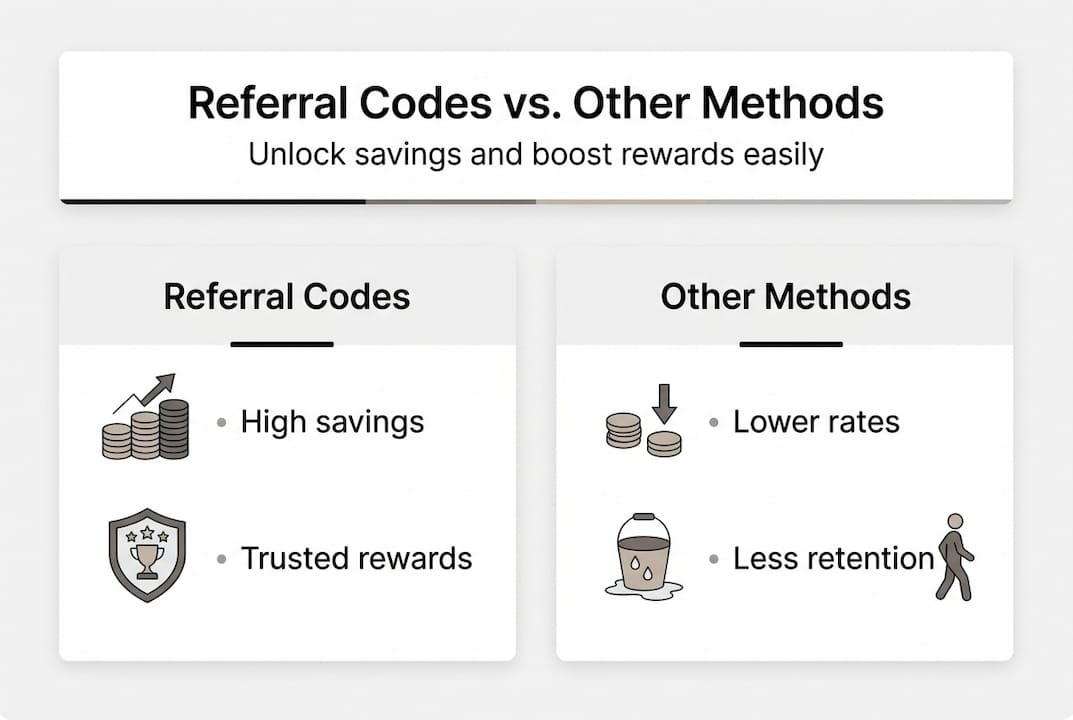
Here's a practical comparison of how referral codes stack up against other discount methods:
| Method | Avg. conversion rate | Retention advantage | Typical reward |
|---|---|---|---|
| Referral codes | 10 to 25% | +37% vs. ads | Cashback, credits, discounts |
| Display ads | 0.5 to 1% | Baseline | Occasional promo codes |
| Email coupons | 1 to 5% | Moderate | Flat percentage off |
| Influencer codes | 2 to 8% | Low to moderate | One-time discount |
The referral performance data is consistent: referral-driven customers spend more, return more often, and are more likely to refer others themselves. It's a compounding effect.
Here's a numbered breakdown of how savings actually stack up when you use a referral code strategically:
- Immediate discount: You save $20 at checkout when you apply a valid code.
- Cashback credit: The platform adds $10 in cashback to your account for future use.
- Referrer reward: The person who shared the code earns their own credit, strengthening the community.
- Loyalty bonus: Some platforms layer in additional rewards for first-time referred users.
- Compounding value: You now have a code of your own to share, starting the cycle again.
Using a referral ROI calculator can help you estimate how much you could realistically earn over time by participating in multiple referral programs simultaneously.
Pro Tip: Stack referral codes with seasonal sales for maximum impact. A 20% referral discount applied during a site-wide sale can compound into savings that no single coupon code could match.
Referral codes vs. referral links: Key differences
To maximize your savings, it's essential to recognize the distinction between referral codes and referral links. They accomplish the same goal but work differently depending on the platform.
A referral code is a string of text you type into a field at checkout or during account creation. A referral link is a clickable URL that automatically attributes the referral when someone clicks through and signs up or purchases.

Here's a side-by-side comparison:
| Feature | Referral code | Referral link |
|---|---|---|
| Format | Typed text (e.g., SAVE20) | Clickable URL |
| Common use | E-commerce, grocery, retail | SaaS, apps, subscriptions |
| Tracking method | Server-side code match | Cookie or UTM parameter |
| Shareable via | Text, email, word of mouth | Social media, email, chat |
| Risk of abuse | Moderate (easy to share widely) | Lower (tied to click session) |
According to referral code system design principles, codes are preferred for e-commerce checkouts while links dominate SaaS onboarding flows. Neither is universally better. Context determines which one performs.
When codes outperform links:
- In-store or phone purchases where clicking a URL isn't practical.
- Retail checkout flows where a text field is already present.
- Situations where the referrer wants to share verbally or via SMS.
When links outperform codes:
- Software subscriptions where the onboarding flow is entirely digital.
- Mobile app installs where deep links can pre-fill account data.
- Situations requiring automatic attribution without user input.
Pro Tip: Always check a platform's referral FAQ before sharing. Some platforms track by link only and won't honor manually entered codes, even if the code looks valid.
For shoppers exploring alternatives, it's worth reviewing referral code alternatives and understanding the community referral code workflow to make sure you're using the right format for each platform.
Spotting and avoiding common referral code pitfalls
Even with high rewards, referral codes have risks. Here's how to protect your savings and avoid costly mistakes.
The most common pitfalls fall into a few clear categories. Self-referrals, fake accounts, bot signups, and refund-triggered credit reversals are the edge cases that platforms actively monitor and that can get your account flagged or banned.
Here's what to watch for:
- Expired codes: A code that worked last month may be dead today. Always verify before checkout.
- Region-locked offers: Some codes only work in specific countries or for new users in certain markets.
- Self-referral traps: Creating a second account to refer yourself violates most terms of service and triggers IP or payment matching checks.
- Bot-inflated codes: Codes shared on mass coupon sites sometimes get abused by bots, causing platforms to deactivate them early.
- Refund reversals: If you use a referral code and later return the purchase, the associated credit is often clawed back automatically.
| Risk type | How it happens | How to avoid it |
|---|---|---|
| Expired code | Code validity window passed | Use platforms with live verification |
| Self-referral ban | Same IP or payment method | Never create duplicate accounts |
| Bot abuse | Code shared on public forums | Use community-verified sources only |
| Credit reversal | Purchase refunded after reward | Confirm return policy before using code |
Pro Tip: Only use codes from reputable, community-verified platforms. Random coupon aggregator sites rarely update their listings and often host codes that have been flagged for abuse.
For deeper protection, code rotation tips explain how legitimate platforms cycle codes to prevent fraud. You can also find exclusive referral offers that are vetted before being listed, reducing your exposure to the risks above.
The referral fraud prevention systems behind modern platforms are sophisticated. Respecting the rules isn't just ethical. It's the only way to keep earning.
Why verified referral codes are the game-changer for shoppers
Here's the uncomfortable truth most deal-hunting guides won't tell you: the biggest reason shoppers fail to maximize referral rewards isn't laziness. It's using unverified codes from unreliable sources.
Most people grab the first code they find via a search engine, paste it at checkout, and get nothing. The code is expired, region-locked, or already flagged. They assume referral programs don't work and move on. That's a costly mistake.
Verified codes eliminate the guesswork. When a platform uses AI-based validation combined with community moderation, the code you see has a real chance of working. Ledgers that track credits and flag duplicate or fraudulent rewards are what make this possible at scale.
Community-driven platforms are genuinely changing how shoppers discover rewards. Instead of one person curating a list, thousands of users submit, test, and validate codes in real time. The result is a living catalog of offers that stays current.
The future of referral rewards isn't just bigger discounts. It's personalized, auditable, and trustworthy. Shoppers who embrace verified community codes will consistently outperform those who rely on random coupon sites. That gap will only widen as platforms get smarter about fraud detection and reward personalization.
Next steps: Find verified referral codes and maximize your savings
You now have a clear picture of how referral codes work, why they outperform generic coupons, and how to avoid the traps that catch most shoppers off guard. The next move is putting that knowledge to work.
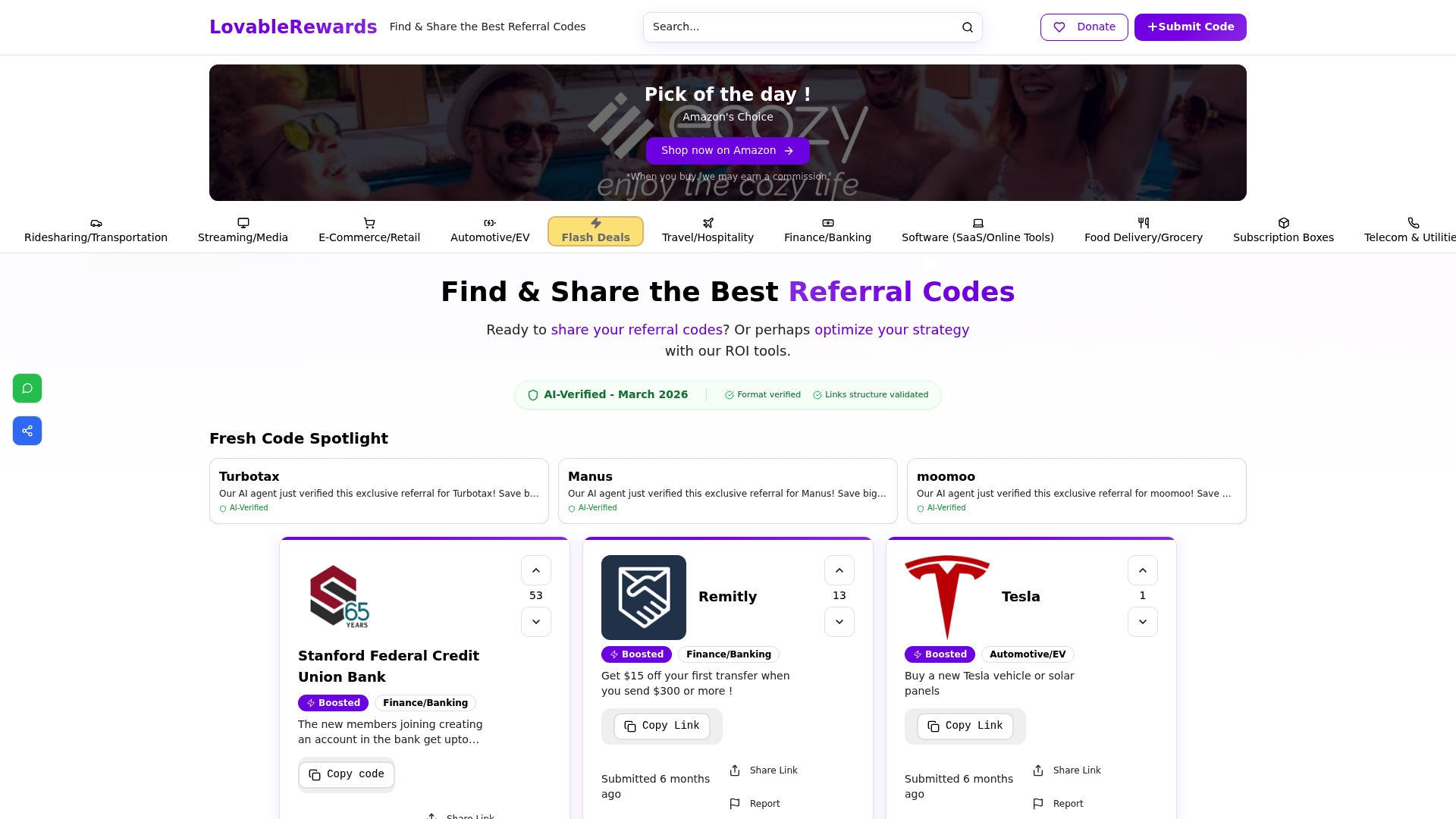
LovableRewards makes it straightforward. The platform aggregates community-verified referral codes across e-commerce, fintech, transportation, and more. Every code goes through AI-based validation before it appears in the listings, so you're not wasting time on dead offers. You can browse working referral codes by category, submit your own codes to earn visibility, and use tools like the age calculator tool to check offer eligibility windows. Whether you're a first-time deal hunter or a seasoned referral marketer, the platform gives you everything you need to save smarter starting today.
Frequently asked questions
How do I find a valid referral code?
Use platforms with community verification and AI-based checks, and look for codes that show recent activity or confirmed validity dates to avoid wasting time on expired offers. Verification ensures codes stay legitimate and current.
What happens if I use a referral code multiple times?
Most platforms allow only one use per account, and multiple signups from the same IP or device trigger anti-fraud measures that can revoke rewards or permanently block your account.
Are referral codes safe to share?
Yes, sharing through private channels like direct messages or email is generally safe, but posting codes on public coupon sites can lead to abuse and early deactivation of your code.
Can I get cashback and discounts with referral codes?
Absolutely. Many modern referral programs offer both an immediate discount at checkout and cashback, credits, or access rewards applied to your account for future purchases.
What's the difference between referral codes and referral links?
Codes are typed into a field at checkout and work best in retail settings, while links are clicked and tracked automatically, making them the preferred format for SaaS platforms and subscriptions.