
TL;DR:
- Effective stacking of referral codes requires verifying their active status and understanding exclusion policies.
- Cross-industry referral programs can be combined to maximize cumulative savings across shopping, finance, and travel.
- Using community platforms and verification tools helps ensure codes are legitimate and reduces the risk of forfeiting rewards.
Finding and stacking referral codes across retail, finance, and transportation is harder than it sounds. You're juggling expiration dates, exclusion policies, and a flood of unverified codes that waste your time. The good news is that a clear framework makes this manageable. This article walks you through how to evaluate referral programs, real examples from three major industries, and a practical guide for matching the right code to your spending situation. Whether you're a casual shopper or a deal-stacking pro, you'll leave with a sharper strategy for squeezing more value out of every purchase.
Table of Contents
- How to identify the best multi-industry referral programs
- E-commerce, finance, and transportation: Real referral code examples
- Side-by-side comparison: Which multi-industry referrals deliver maximum value?
- Situational picks: When to use which referral code
- Why most people miss out on the best multi-industry referral stacking (and how to fix it))
- Find and share the best verified referral codes across all industries
- Frequently asked questions
Key Takeaways
| Point | Details |
|---|---|
| Cross-industry advantage | Referral codes used across multiple sectors unlock more savings than sticking with a single industry. |
| Stacking for maximum benefit | Combining aggregator tools with verified referrals amplifies your discounts but requires checking exclusions. |
| Verification is crucial | Always use recent, community-verified codes to avoid disappointment and missing out on rewards. |
| Situational strategy wins | Choose referral codes based on your actual purchase scenario to maximize results. |
How to identify the best multi-industry referral programs
Not all referral programs are created equal. Some offer generous cash back but bury the payout in exclusions. Others look modest on paper but stack beautifully with other offers. Before you grab any code, run it through a quick set of criteria.
The strongest referral programs share these traits:
- Verified status: A third party or community has confirmed the code works and hasn't expired.
- Transparent terms: The offer clearly states what you earn, when you earn it, and what disqualifies you.
- Cross-industry flexibility: The program allows you to combine its rewards with codes from other sectors, such as pairing a retail cashback with a travel credit.
- Clear exclusion policies: You know upfront which products, categories, or payment methods are off-limits.
- Active community feedback: Real users have recently confirmed the code is live.
Cross-industry referrals are especially powerful because they let you layer savings. Imagine booking a rideshare with a transportation referral, then paying through a fintech app that gives you 2% cash back, and later shopping at a retailer where you apply a welcome code. Each step adds value independently, but together they compound your return on a single spending cycle.
The trust factor behind referrals is also shifting. 37% of Gen Z trusts friends over ads when making purchase decisions, which means referral programs are evolving to meet higher expectations for authenticity and transparency. Brands are responding with better verification, clearer terms, and community-driven reward structures.
Understanding the types of referral programs available helps you prioritize which ones fit your lifestyle. Some are one-time welcome bonuses. Others are ongoing, tiered programs that reward repeat use.
Pro Tip: Use aggregator tools like Rakuten or Honey alongside unique referral codes. Aggregators catch automatic discounts, while referral codes often unlock bonuses that aggregators miss entirely. Running both in parallel is one of the simplest ways to double-dip legally.
E-commerce, finance, and transportation: Real referral code examples
Now that you know how to evaluate programs, let's see how this works with actual codes in the wild.
Here's a quick look at one strong example from each major industry:
E-commerce (example: a major online retailer welcome code): New users get $10 to $20 off their first order. These codes are widely available, easy to verify, and often stack with site-wide sales.
Finance (example: a neobank or fintech app referral): Apps like Chime or Cash App offer $20 to $75 when a new user signs up and completes a qualifying transaction. These are time-sensitive but high-value for first-time users.
Transportation (example: a rideshare referral): Lyft and Uber regularly offer $5 to $20 in ride credits for new riders using a referral link. These are straightforward and easy to redeem.
| Industry | Typical offer | Stackable? | Verified status |
|---|---|---|---|
| E-commerce | $10 to $20 off first order | Yes, with site sales | Yes |
| Finance (fintech app) | $20 to $75 cash bonus | Limited | Yes |
| Transportation (rideshare) | $5 to $20 ride credit | Sometimes | Yes |
The real magic happens when you sequence them. Use a fintech referral to open a new account, fund it, then use that account to pay for a rideshare booked with a transportation code. Later, apply an e-commerce welcome code to a purchase you were already planning.

As the verified referral codes guide points out, stacking aggregators with portals like Rakuten or Honey is smart, but exclusions can silently cancel your stacking benefit. Always read the fine print before assuming two codes play nicely together.
For a deeper look at how to sequence codes effectively, the community referral workflow guide breaks down a step-by-step process that many experienced deal hunters already use.
Side-by-side comparison: Which multi-industry referrals deliver maximum value?
To make informed decisions, it's smart to compare the heavy hitters side by side.
| Program type | Industry | Offer size | Stackable | Exclusions | Ease of use |
|---|---|---|---|---|---|
| Retailer welcome code | E-commerce | $10 to $20 | Yes | Some categories | Very easy |
| Fintech sign-up bonus | Finance | $20 to $75 | Limited | Qualifying transactions required | Moderate |
| Rideshare referral | Transportation | $5 to $20 | Sometimes | New users only | Easy |
| Cashback portal (e.g., Rakuten) | Multi-industry | 1% to 10% | Yes | Varies by store | Easy |
Who benefits most from each type?
- Frequent shoppers get the most from e-commerce welcome codes and cashback portals, especially when stacked.
- Small business owners benefit most from fintech referrals, which often include fee waivers or bonus cash tied to business account activity.
- Travelers and commuters see the fastest return from transportation referrals, especially when combined with a travel credit card.
Exclusions are the silent deal-killers. Aggregator portals like Rakuten improve the process, but exclusion policies can wipe out a stacking benefit you were counting on. A fintech bonus might not apply if you fund your account through a credit card instead of a bank transfer. A rideshare credit might expire before your next trip.
If you want to calculate exactly how much a referral program is worth to your specific spending habits, the Referral ROI calculator gives you a personalized breakdown based on your usage patterns.
Situational picks: When to use which referral code
With so many choices, the best referral code is often situational. Here's what to use and when.
- Big travel booking: Lead with a travel credit card referral for the sign-up bonus, then layer a rideshare code for airport transfers. Book hotels through a cashback portal to capture an additional 3% to 8% back.
- First purchase at a new retailer: Always check for a welcome code first. These are the easiest wins and rarely conflict with other offers. Combine with a cashback portal for double savings.
- Opening a new bank account or fintech app: Use a friend's referral code to unlock a cash bonus. These bonuses are often the highest single-transaction value you'll find in the referral world.
- Recurring subscriptions (streaming, meal kits, software): Look for referral codes tied to free trial extensions or monthly discounts. These compound over time and are often overlooked.
- Grocery or everyday spending: Pair a grocery app referral with a cashback credit card. The referral handles the upfront bonus; the card handles the ongoing percentage back.
Pro Tip: Before any major purchase, check a community-verified code platform for recent submissions. Codes updated within the last 48 hours are far more likely to work than those sitting in a search result from three months ago.
"Trust in referrals now outpaces trust in advertising by a wide margin among younger consumers, pushing brands to deliver more transparent, verifiable reward experiences."
When you find and share referral codes within a trusted community, you're not just saving money. You're contributing to a system that keeps everyone's savings more reliable.
Why most people miss out on the best multi-industry referral stacking (and how to fix it)
Here's the uncomfortable truth: most consumers lose their stacking benefits not because codes don't exist, but because they skip the exclusion check. You find a great fintech referral, pair it with a cashback portal, and assume both will pay out. Then one exclusion clause quietly cancels the portal reward. You never notice because the payout happens weeks later.
The fix is a checklist-based workflow. Before redeeming any combination of codes, confirm each program's exclusion list, verify the code is still active, and note the payout timeline. Using community-updated referral platforms dramatically reduces this risk because real users flag conflicts in real time.
Stacking aggregators with portals like Rakuten or Honey is a proven strategy, but only when you've confirmed no exclusions apply. The referral code workflow strategy used by experienced deal hunters is built around this exact principle.
"The future of referral savings belongs to consumers who treat code verification as a habit, not an afterthought."
Bookmark your go-to aggregator and verification tools now. The five minutes you spend verifying before checkout will consistently outperform the hours you'd spend chasing a payout that never arrives.
Find and share the best verified referral codes across all industries
If you want to turn these strategies into real savings, here's where you can get started with a proven, trusted source.
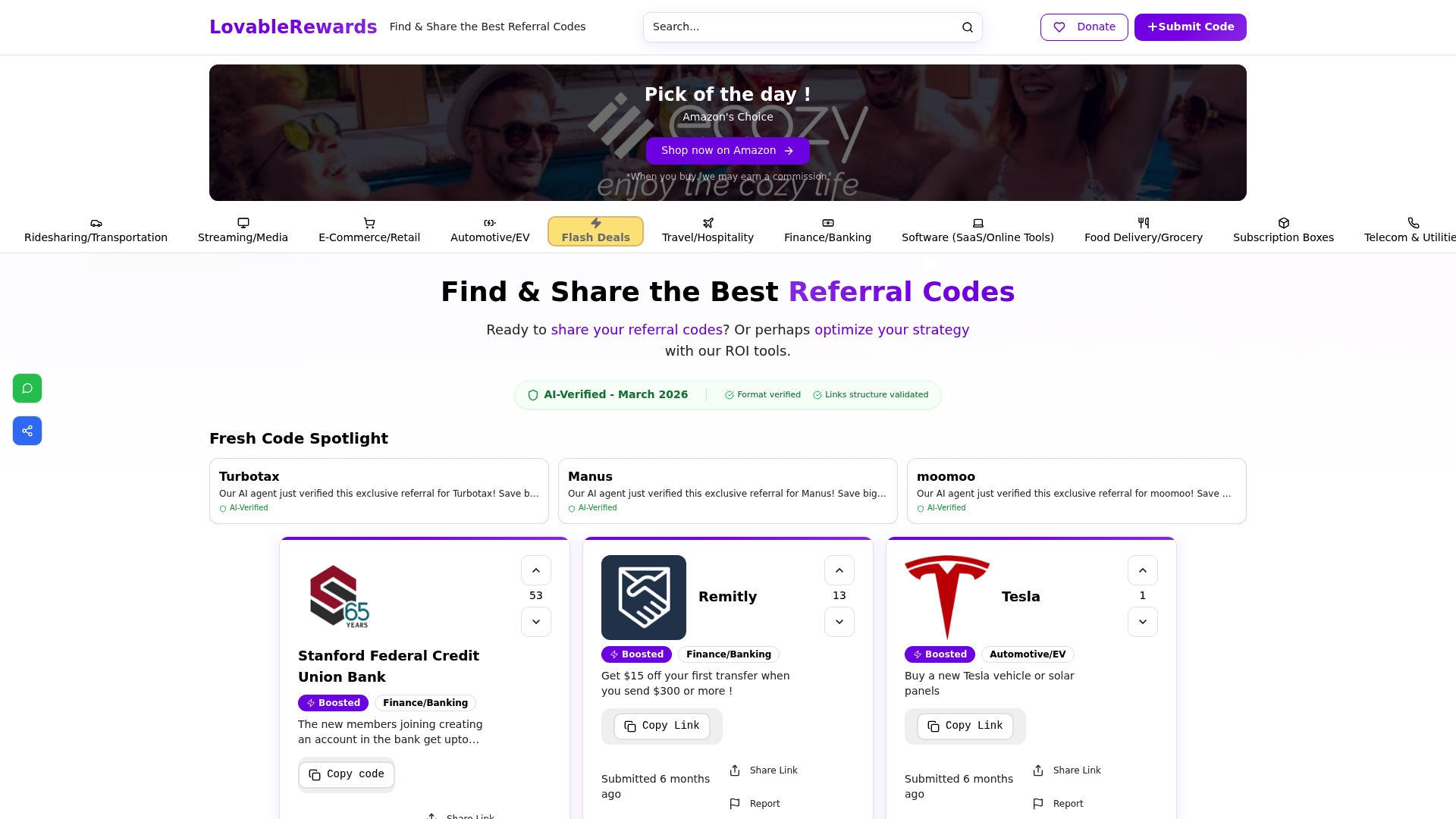
LovableRewards is a community-driven platform built specifically for deal hunters like you. It uses AI-based verification to confirm code validity, tracks expiration dates, and organizes offers by industry so you're never sorting through dead links or outdated deals. You can submit your own codes, browse community-verified offers, and access a fair rotation system that gives every contributor equal visibility. Whether you're chasing an e-commerce welcome bonus, a fintech sign-up reward, or a transportation credit, LovableRewards brings them all into one trusted, searchable hub. Start saving smarter today.
Frequently asked questions
What is a multi-industry referral code?
A multi-industry referral code is a discount or cash-back code that applies across sectors like shopping, finance, or travel. Cross-industry codes can often be stacked or sequenced to generate greater combined savings.
How can I make sure a referral code is verified and still active?
Check community platforms for verified status and look at the most recent user-confirmed dates before applying any code. Aggregator tools like Honey help, but always cross-check for exclusions and expiry.
Are there risks to using multi-industry referral codes?
Yes. If you miss exclusion policies or combine incompatible programs, you may forfeit part or all of your reward. Always review exclusion policies before stacking codes from different programs.
Can I use multiple referral codes in one transaction?
Sometimes. E-commerce platforms are generally the most flexible, but some programs limit stacking, so reading the program rules before checkout is essential to avoid missed payouts.