
TL;DR:
- Community-driven deals are user-sourced offers that often outperform traditional brand discounts.
- These deals enable stacking with loyalty programs and cashback for maximum savings.
- Verifying recent comments and testing codes reduces risks like expired or fake offers.
Most shoppers assume the best discounts come directly from brands: loyalty points, email coupons, or seasonal sales. That assumption leaves a lot of money on the table. Community-driven deals, sourced and rated by real users rather than marketing teams, consistently surface offers that official channels never promote. They cover everything from e-commerce cashback to financial product referrals to transportation credits. This article breaks down exactly how these deals work, why they often outperform traditional discounts, where they fall short, and how you can stack them strategically to squeeze out the most savings every single month.
Table of Contents
- What are community-driven deals?
- Why community-driven deals beat traditional discounts
- Common pitfalls and how to avoid them
- How to maximize savings with community-driven deals
- The surprising truth most deal hunters miss
- Get started and never miss your next big deal
- Frequently asked questions
Key Takeaways
| Point | Details |
|---|---|
| Authenticity wins | Community-driven deals are user-sourced, offering authentic savings but require self-verification. |
| Stack for max savings | Combining community deals with loyalty programs often results in the biggest discounts. |
| Beware pitfalls | Always check deal details and expiry to avoid disappointment. |
| Stay proactive | Regularly checking and participating in deal communities leads to more successful finds. |
What are community-driven deals?
A community-driven deal is any discount, referral code, or cashback offer that real users find, post, and rate on a shared platform. Nobody from a marketing department planted it there. A shopper spotted a price drop, a subscriber shared a referral bonus, or a frequent flyer posted a credit card promo code. The community then votes, comments, and verifies whether the deal actually works.
Most platforms built around this model share a few core features:
- User submissions: Anyone can post a deal they found.
- Upvoting and downvoting: The crowd signals which offers are worth your time.
- Comments and verification notes: Users report whether a code worked or expired.
- Deal alerts: You subscribe to categories and get notified when something relevant appears.
- Expiration tracking: Active communities flag dead deals quickly.
The appeal is straightforward. Instead of relying on one brand's marketing calendar, you tap into thousands of people actively hunting for savings across every industry. That collective intelligence finds deals faster and more broadly than any single source.
Authenticity is the core value here. These are real people reporting real results, not sponsored posts dressed up as discounts. That said, real-user input powers the system but also introduces occasional inaccuracies, so you always need to verify before redeeming. No platform eliminates that responsibility entirely.
For anyone new to this approach, a solid community deal sharing guide can show you how to navigate these platforms without wasting time on low-quality posts. Once you understand the mechanics, you can also start finding verified referral codes that come with an extra layer of legitimacy.
Pro Tip: Filter by "hot" or "top-rated" deals first. These have already been vetted by the community and are far less likely to be expired or inaccurate.
Why community-driven deals beat traditional discounts
Traditional discounts follow a predictable pattern. A brand decides what to discount, when, and by how much. You get what they want to give you. Community-driven deals flip that dynamic. Users share what they actually found, which means the deals are broader, more varied, and often deeper than anything a retailer would voluntarily advertise.
Consider this: 60% of consumers try new products because of coupons, but heavy discounting can erode long-term full-price sales for brands. That tension means brands are cautious about how aggressively they discount publicly. Community users have no such incentive. They share every deal they find, including unadvertised price errors, limited regional promos, and referral bonuses that brands quietly offer without broadcasting them.
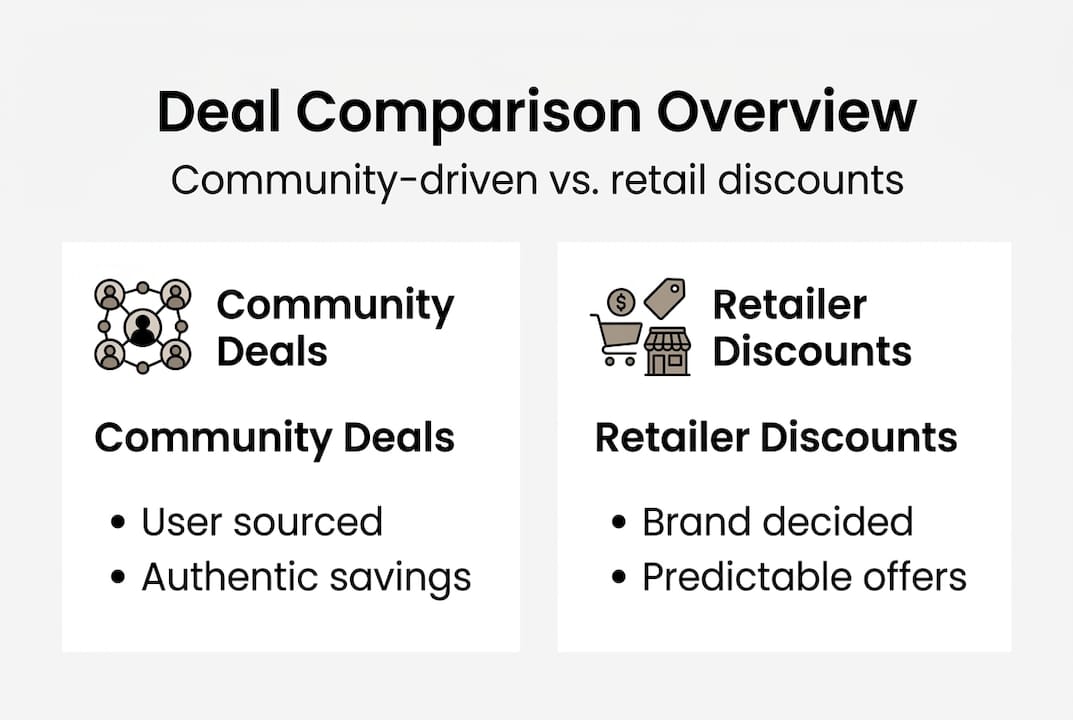
Here is a direct comparison:
| Feature | Community-driven deals | Retailer promos and loyalty points |
|---|---|---|
| Source | Real users | Brand marketing teams |
| Variety | Broad, cross-industry | Limited to one brand |
| Transparency | High, with comments and ratings | Low, terms often buried |
| Speed of discovery | Fast, crowd-sourced | Slow, tied to campaign calendars |
| Expiration tracking | Community flags dead deals | Often unclear until checkout |
| Stacking potential | High | Usually restricted |
The stacking potential row matters most. Community platforms regularly surface deals that combine with existing loyalty programs. That means you might use a referral code for a signup bonus, pay with a cashback credit card, and apply a community-found promo code all in one transaction.
How to build a basic stacking routine:
- Check your loyalty program balance before shopping.
- Search your deal platform for a relevant code or cashback offer.
- Confirm the deal is still active using recent comments.
- Apply the code at checkout and pay with a cashback card.
- Track the combined savings in a simple spreadsheet.
The risks are real too. Waiting for a deal that never comes is a genuine trap. Some shoppers delay purchases indefinitely, hoping for a better discount, and end up missing the product entirely or buying something inferior on impulse later. Use your loyalty points planner to set a savings threshold and commit to buying once you hit it.
Pro Tip: Set a personal discount floor. Decide in advance that you will only wait for a deal if it saves you at least 15%. Below that, buy now and move on.
Common pitfalls and how to avoid them
Community-driven deals are powerful, but they are not foolproof. The same openness that makes them valuable also creates vulnerabilities. Understanding these pitfalls is what separates casual deal hunters from people who actually save consistently.
The most common problems include:
- Expired codes: A deal posted three weeks ago may have ended yesterday.
- Groupthink: A highly upvoted deal can still be wrong if early voters did not verify carefully.
- Fake or planted deals: Some bad actors post fake discounts to drive traffic to scam sites.
- Region-locked offers: A deal that works in one state or country may not apply to you.
- Outdated terms: A deal may technically exist but with different conditions than originally posted.
"Mechanics prioritize authenticity via real-user input, but users must verify deals themselves due to occasional inaccuracies."
The verification process does not need to be complicated. Before redeeming any community deal, scan the comment section for recent activity. If the last comment is six months old and says "worked for me," treat that as a yellow flag. If someone posted yesterday saying the code failed, that is your answer.
Also check the deal's source link directly. Does it go to a legitimate retailer page? Does the URL look clean and recognizable? Platforms with AI-based link verification catch most scam links before they reach you, but manual checks take five seconds and can save you real headaches.
For a deeper look at this problem, the guide on avoiding expired codes walks through a reliable step-by-step process. And if you are sharing codes yourself, the resource on sharing codes fairly helps you contribute responsibly without flooding the community with low-quality posts.
Pro Tip: Always test a code in a separate browser tab before completing your full checkout. This way you confirm it works without risking a failed transaction on a time-sensitive cart.
How to maximize savings with community-driven deals
Knowing the risks is half the battle. The other half is building a repeatable system that consistently finds and applies the best deals without eating up your whole afternoon.
Here is a practical workflow:
- Set up deal alerts for your most common spending categories: groceries, software, travel, and financial products.
- Check the platform daily, but spend no more than ten minutes. Focus on the top-rated section.
- Verify before you act. Read the three most recent comments on any deal you plan to use.
- Stack intentionally. Combine the community deal with a loyalty program reward or cashback card whenever possible.
- Track your savings. A simple monthly log shows you which categories deliver the most value.
Real-world scenario: One user tracked their savings over 30 days using this method. They combined a referral bonus from a financial app, a community-sourced promo code for an online retailer, and a cashback credit card reward on the same purchase cycle. Total savings that month: $120, with no single deal accounting for more than $45.

Here is how that stacking looked in practice:
| Deal source | Category | Savings |
|---|---|---|
| Referral code (financial app) | Banking | $45 |
| Community promo code (retailer) | E-commerce | $38 |
| Cashback card reward | General spending | $37 |
| Total | $120 |
The community referral code workflow breaks this process into repeatable steps you can adapt to your own spending habits. And for broader strategies, the community deal sharing strategies guide covers how to contribute deals yourself, which often unlocks exclusive access or priority alerts on participating platforms.
Authenticity remains the foundation. As real-user input drives these platforms, contributing good deals improves the whole ecosystem and often brings better deals back to you.
Pro Tip: Organize your saved deals by expiration date, not by discount size. The biggest deal is worthless if it expires before you use it.
The surprising truth most deal hunters miss
Here is what most deal-hunting articles skip over: the community is wise, but it is not always right for you personally. Group wisdom reflects average behavior, and your spending patterns are not average.
We have seen users chase community deals on products they did not actually need, simply because the discount was impressive. That is not savings. That is spending with extra steps. The real win comes when you use community intelligence to reduce the cost of something you were already going to buy.
There is also a long-term consideration. Overreliance on community deals can erode brand loyalty and distort your sense of normal pricing. If you only buy something at 40% off, you may start to feel that full price is a rip-off, even when it is fair. That mindset can lead to missed opportunities or poor purchasing decisions.
The best approach combines community deal intelligence with a clear personal budget and a realistic view of your loyalty points and long-term value. Use the crowd to find deals. Use your own judgment to decide whether to act on them.
Get started and never miss your next big deal
You now understand how community-driven deals work, why they outperform traditional discounts in most scenarios, and how to avoid the traps that catch less experienced deal hunters off guard.
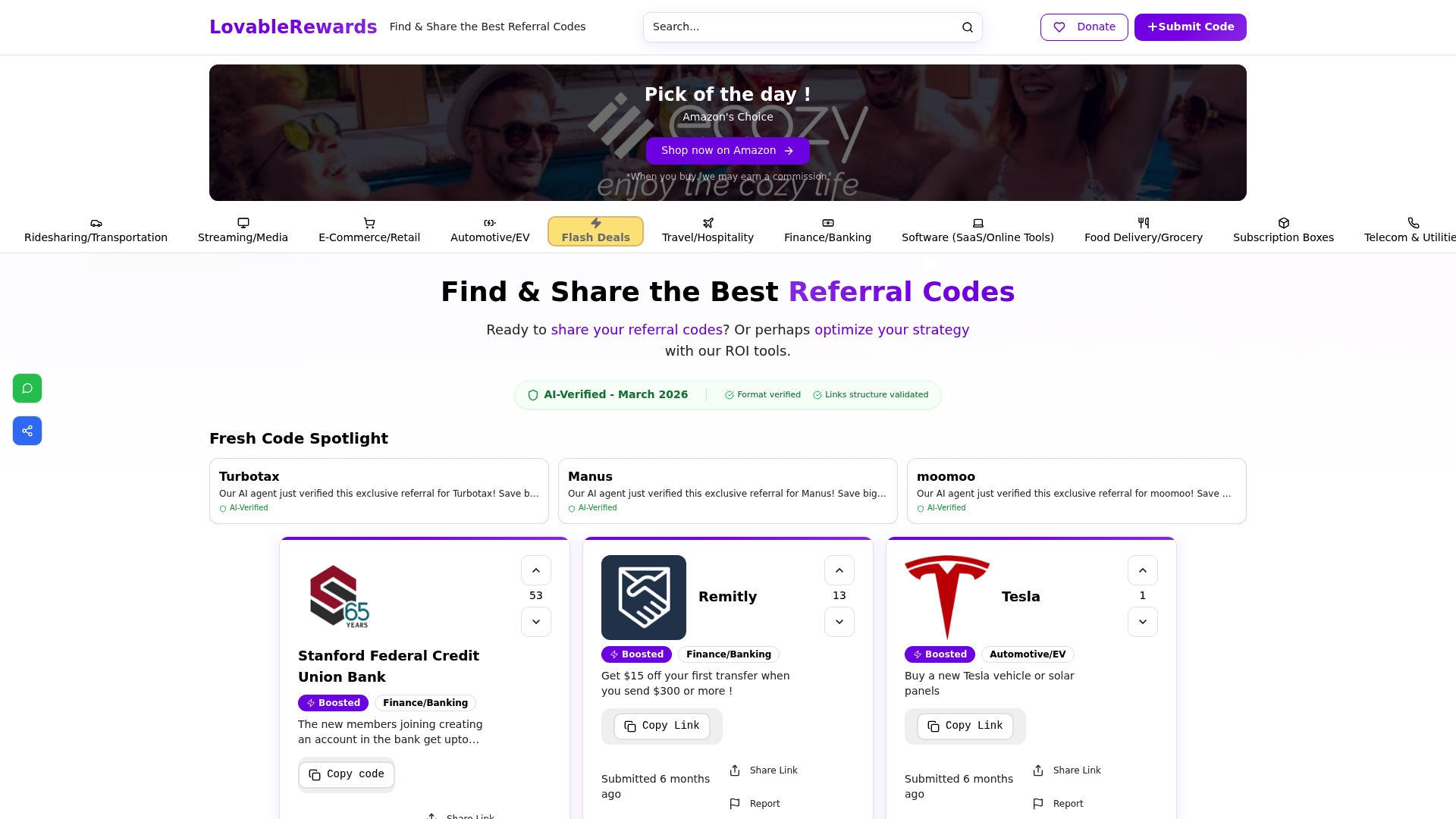
The LovableRewards community brings all of this together in one place: AI-verified referral codes, active community moderation, fair rotation for contributors, and categorized deals across e-commerce, finance, and transportation. Joining takes minutes. You can start browsing verified deals immediately, submit your own codes, and set alerts for the categories that matter most to your budget. The community deal sharing guide is a great first stop if you want to hit the ground running and start saving from day one.
Frequently asked questions
Are community-driven deals always reliable?
No. While community platforms use ratings and comments to filter quality, some deals may be expired or inaccurate. Always verify before redeeming by checking recent comments and testing the code yourself.
How do I verify a community-sourced deal before using it?
Check the most recent comments for confirmation, look at the upvote count, and test the code in a separate browser tab before completing checkout. Platforms with active moderation reduce but do not eliminate the risk of bad deals.
Can I use community-driven deals with store loyalty programs?
Yes, and this is where the biggest savings happen. Stacking community deals with loyalty rewards and cashback cards often produces savings that no single source could match on its own.
What if a community deal doesn't work?
Report it to the platform so other users are warned, check for updated comments that may include a working alternative, and move to the next top-rated deal in the same category.
Is it safe to share my referral codes on deal forums?
Most reputable platforms are safe, but review the privacy policy before posting and avoid sharing any code that is linked to sensitive personal or financial account data.
Recommended
- Save more in 2026: your guide to community deal sharing
- Master community referral code workflow for max savings
- LovableRewards - Find & Share the Best Referral Codes | Verified Community Rewards
- LovableRewards – Verified Referral Codes & AI-Verified Deals
- How city-specific deals work: maximize local savings