
You find a discount code, head to checkout, paste it in, and nothing. "Code invalid." That moment of frustration costs you more than a few seconds. 60% of discount codes on coupon websites are expired or invalid by the time shoppers attempt to use them. That means more than half your code-hunting effort is wasted before you even begin. This guide gives you a clear, step-by-step path to finding codes that actually work, filtering out the dead ones fast, and building habits that keep your savings consistent without the headache.
Table of Contents
- Understanding why codes expire
- Prepare: How to find trusted sources for referral codes
- Execution: How to test, filter, and verify codes quickly
- Automate and optimize: Use loyalty programs and auto-applied digital coupons
- The reality behind finding reliable codes: What experts won't tell you
- Find verified, working codes at LovableRewards
- Frequently asked questions
Key Takeaways
| Point | Details |
|---|---|
| Verified sources matter | Using platforms that test codes cuts failure rates from 60% to 15-27%. |
| Join loyalty programs | Loyalty programs and apps auto-apply current codes and deliver exclusive rewards. |
| Test codes efficiently | Follow step-by-step checks and use timestamped codes to avoid wasted time. |
| Aggregator site risks | Aggregator sites rarely verify codes, resulting in more expired and invalid offers. |
| Read the fine print | Always check code restrictions, region, stacking, and minimum spend rules before checkout. |
Understanding why codes expire
Before you can fix the problem, you need to know what causes it. Discount codes fail for a surprisingly wide range of reasons, and most of them have nothing to do with bad luck.
The biggest culprit is the aggregator site model. These are the large coupon directories that collect codes from across the internet and publish them in bulk. The problem is that 73% of aggregator sites never test codes before publishing them. They scrape, post, and move on. By the time you find the code and try it, it may have been dead for weeks.
Codes also expire for structural reasons that have nothing to do with the platform:
- Time-based expiration: Flash sale codes, holiday promotions, and limited-time offers have hard end dates baked in.
- Regional restrictions: A code valid in California may not work in Texas, or may be limited to specific countries entirely.
- Stacking exclusions: Many retailers block combining codes with other active promotions or sale items.
- Minimum spend requirements: A code technically works but fails at checkout because your cart doesn't hit the threshold.
Understanding code verification basics helps you recognize which codes are worth trying and which to skip entirely.
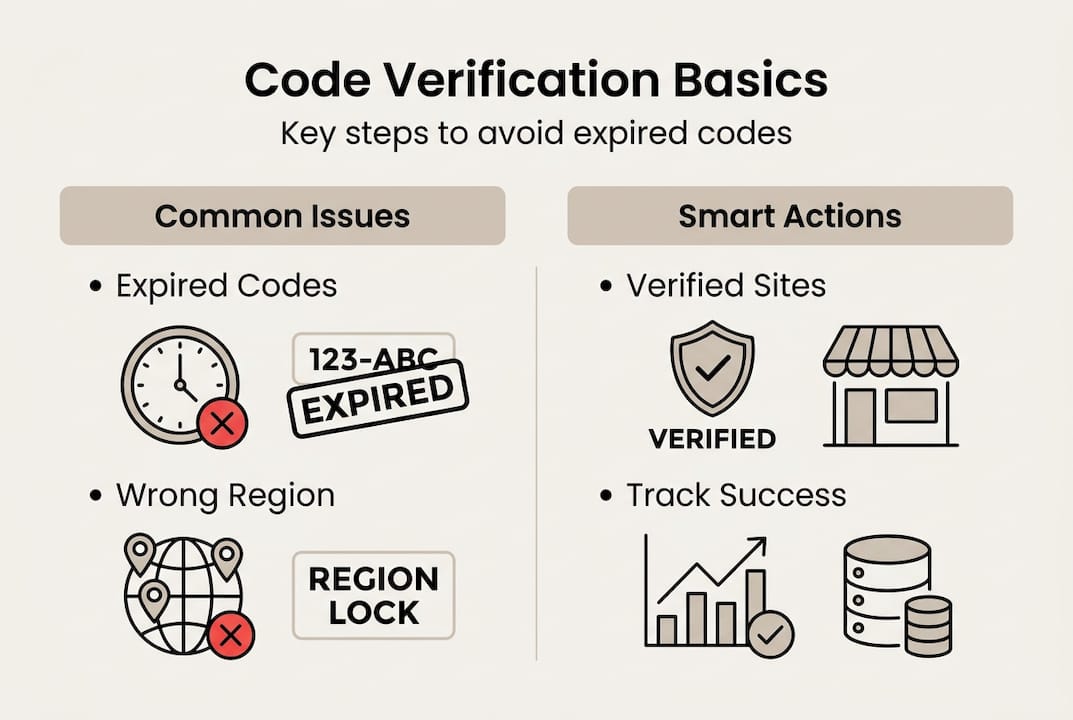
Here's a quick look at how different platform types compare on code reliability:
| Platform type | Avg. failure rate | Verification practice | Redemption rate |
|---|---|---|---|
| Aggregator sites | ~60% | None or rare | Low |
| Verified platforms | 15-27% | Manual + API testing | Moderate to high |
| Retailer newsletters | ~11% | Auto-applied or tested | High |
| Community forums | ~30% | Crowd-verified | Moderate |
The community workflow for savings shows how crowd-sourced verification can significantly close the gap between aggregator failure rates and newsletter-level reliability. The data is clear: where codes get tested, they get redeemed.
On average, shoppers waste 8 to 12 minutes per purchase searching and testing codes. That adds up fast if you shop regularly. Knowing why codes fail is the first step to cutting that time down dramatically.
Prepare: How to find trusted sources for referral codes
Once you understand why codes expire, the next move is choosing better sources from the start. Not all code platforms are built the same, and the difference in success rates is dramatic.
Verified platforms that actively test codes, whether through manual checkout simulations, API calls to retailer systems, or real user feedback loops, cut failure rates from 60% down to 15-27%. That's a massive improvement for the same amount of effort on your end.

Here's how the main source types stack up:
| Source type | Verification method | Code freshness | Best use case |
|---|---|---|---|
| Aggregator sites | None | Often stale | Browsing only |
| Verified platforms | Manual + AI + community | High | Active savings |
| Retailer newsletters | Auto-applied | Very high | Brand loyalty |
| Loyalty programs | Built-in | Always current | Repeat purchases |
When evaluating any platform, look for these specific signals of trustworthiness:
- "Last verified" timestamps on each code listing. If a code hasn't been checked in 30 days, treat it with skepticism.
- User feedback counts that show how many people recently confirmed the code worked.
- Expiration dates displayed prominently, not buried in fine print.
- Category filters that let you sort by code type, retailer, or region.
- Transparent removal policies that explain how dead codes get taken down.
One underrated source is reliable code alternatives to the major aggregators. These platforms tend to have smaller but more curated code libraries with higher success rates.
Certain code types are also structurally less likely to expire. Non-expiring codes include welcome offers for first-time buyers, loyalty program codes, referral codes, and verified identity discounts for students or military members. These are worth prioritizing when you find them.
Pro Tip: Reddit communities and niche deal-sharing forums are excellent for crowd-verified codes. Real users post codes they've just successfully redeemed, which gives you near-real-time confirmation. Check the active referral codes March 2026 roundup for a curated list of codes currently confirmed working.
The bottom line: spend five minutes choosing the right source before you start searching, and you'll save the 8 to 12 minutes of failed testing that follows a bad source.
Execution: How to test, filter, and verify codes quickly
Knowing where to find good codes is half the battle. The other half is testing them efficiently so you're not burning time at checkout.
Here's a reliable step-by-step process for code testing that keeps wasted time to a minimum:
- Copy the code exactly as listed. Even one extra space or wrong character will cause a failure that has nothing to do with expiration.
- Check the timestamp before trying. If the code was last verified more than two weeks ago on a non-verified platform, skip it.
- Read the terms quickly. Look for minimum spend, excluded categories, region restrictions, and stacking rules before you build your cart.
- Apply at checkout before entering payment info. Some platforms show error messages that tell you why a code failed, which helps you decide whether to try a backup.
- Note the source when a code works. Tracking which platforms consistently deliver working codes saves you time on every future purchase.
Filtering is just as important as testing. Most verified platforms let you sort codes by type, retailer, and region. Use those filters. A code tagged for the US that you're trying to use from a different region will always fail, no matter how fresh it is.
Digital coupon statistics show that digital coupons have an average redemption rate of around 7% or higher. That number sounds low, but it reflects the full pool including untested aggregator codes. On verified platforms, that rate climbs significantly.
Pro Tip: Keep a simple note or spreadsheet tracking which code sources have worked for you across different retailers. After a few weeks, patterns emerge. You'll know which platforms are worth checking first for which store categories.
For deeper insight into how rotation tips for good codes affect code availability, it helps to understand that high-traffic codes rotate out faster. The community workflow for code testing outlines how community members flag and refresh codes in real time, which is exactly the kind of system that keeps failure rates low.
Always check the terms and conditions. Exclusions around sale items, specific brands, or geographic regions are the most common reason a valid, non-expired code still fails at checkout.
Automate and optimize: Use loyalty programs and auto-applied digital coupons
The most efficient savers don't search for codes every time they shop. They build systems that bring codes to them automatically.
Loyalty programs are the most reliable version of this. When you join a store's loyalty program and link it to your account, current offers apply at checkout without any code hunting. Consumer Reports recommends joining store loyalty programs and apps for digital coupons that auto-apply at checkout, cutting out the manual search entirely.
Here's what makes loyalty programs particularly valuable for avoiding expired codes:
- Codes are always current. The retailer controls the offer, so it's never stale by the time it reaches you.
- Exclusive non-expiring rewards accumulate over time and don't disappear after a flash sale window.
- Personalized offers based on your purchase history tend to be more relevant and easier to use.
- App notifications alert you to new deals before they expire, giving you first access.
- Auto-applied discounts mean zero checkout friction and zero chance of a copy-paste error.
Non-expiring codes like loyalty program rewards and verified identity discounts through services like SheerID for students or military members are structurally designed to stay valid. These are the codes worth collecting and holding.
Pro Tip: Link your loyalty memberships directly to your personal account email rather than a shared or secondary address. Offers sent to your primary email reach you faster, and auto-apply features work more reliably when account data is consistent.
Use the loyalty points calculator to estimate how much you're leaving on the table if you're not currently enrolled in loyalty programs for your most frequent retailers. The numbers are often surprising.
Automation won't replace all manual code searching, but it handles the high-frequency, low-effort savings that add up over months. Combine it with verified platform sourcing and efficient testing habits, and you've built a savings system that works with minimal ongoing effort.
The reality behind finding reliable codes: What experts won't tell you
Here's the uncomfortable truth most coupon guides skip: aggregator sites are built for traffic, not savings. They win when you visit their pages. Whether the code works is secondary to whether you clicked.
The savers who consistently get the best results don't rely on aggregators at all. They subscribe directly to retailer newsletters, which have an 89% success rate compared to aggregator averages. They participate in deal communities where members flag expired codes within hours. And they use platforms built around how code verification works rather than code volume.
The counterintuitive insight is that fewer, better sources beat more, worse ones every time. Chasing every aggregator site wastes more time than it saves. Region rules, stacking exclusions, and minimum spend requirements still trip up even the freshest codes from good sources. No system is perfect. But testing, tracking, and persistence beat shortcuts by a wide margin. The savers who treat code hunting as a repeatable process rather than a one-off search are the ones who actually save money consistently.
Find verified, working codes at LovableRewards
You now have a clear framework for avoiding expired codes, from choosing better sources to automating savings with loyalty programs. The next step is putting it into practice with a platform designed around exactly these principles.
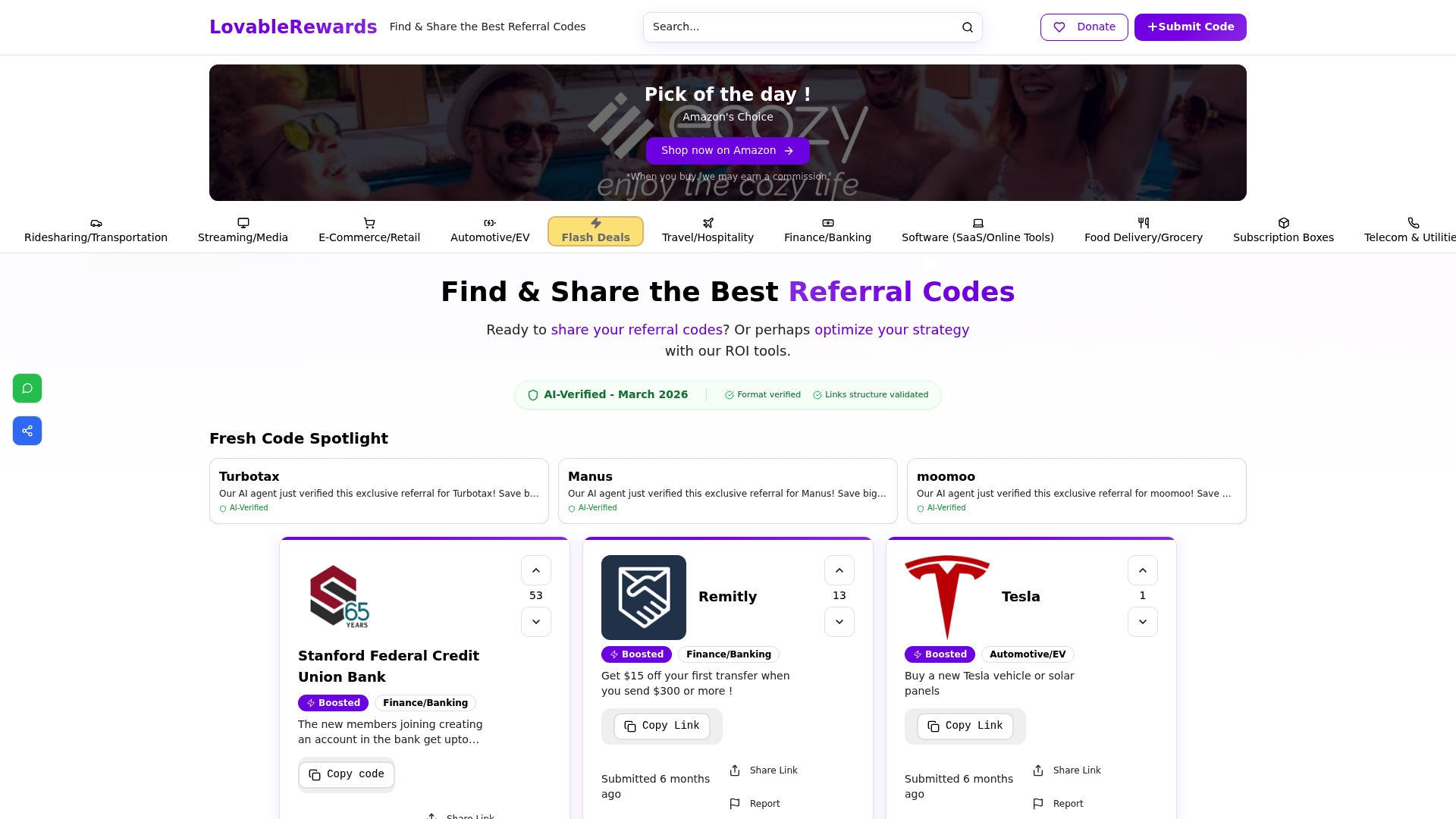
LovableRewards is built for deal hunters who want codes that actually work. Every code on the platform goes through AI-based verification and community validation, with timestamps showing exactly when each code was last confirmed. You can explore community tools for tracking and maximizing your savings, or browse the latest working codes across dozens of categories right now. Stop guessing and start saving with codes you can trust.
Frequently asked questions
How can I instantly check if a code is expired?
Look for platforms that display "last verified" timestamps on each listing. The most reliable platforms test codes via manual checkout and API integration to give you real-time status before you try.
What types of codes rarely expire?
Welcome offers for new users, loyalty program rewards, referral codes, and verified identity discounts for students or military members are structurally designed to stay valid longer than promotional flash codes.
How do loyalty programs help avoid expired codes?
Loyalty programs auto-apply current offers at checkout, eliminating manual searching and failure entirely. Consumer Reports recommends them as one of the most reliable ways to access digital coupons without expiration risk.
Are code aggregator sites completely unreliable?
Not completely, but their 60% failure rate makes them a poor primary source. Retailer newsletters and verified platforms consistently outperform aggregators, with newsletter success rates reaching 89% compared to aggregator averages.