
TL;DR:
- Referral programs significantly increase customer retention and spending, offering high ROI and long-term benefits.
- AI tools enhance the discovery, verification, and effective use of referral codes across industries.
- Consistent, strategic code rotation and verification maximize savings and prevent expired or invalid codes.
Referral sharing is not just a side hustle for coupon collectors. It's a serious savings engine backed by real numbers. Referred customers show 37% higher retention, spend 13 to 16% more per order, and deliver an average 8:1 ROI in e-commerce alone. Yet most online shoppers still treat referral codes like lottery tickets: nice if they work, easy to ignore if they don't. This article breaks down the actual industry trends driving referral value in 2026, compares performance across e-commerce, fintech, and transportation, and gives you a practical framework for finding and using verified codes that genuinely save you money.
Table of Contents
- What makes referrals so valuable now?
- Referral performance across top industries
- The rise of AI-powered referral sharing
- Maximizing your savings: code rotation, expiration, and workflows
- Most people underestimate referral code power—here's why
- Level up your referral rewards
- Frequently asked questions
Key Takeaways
| Point | Details |
|---|---|
| Referrals drive loyalty | Shoppers who use referral codes stick with brands longer and earn bigger savings. |
| Industry winners vary | Travel and fintech lead in referral rewards, while e-commerce offers strong average returns. |
| AI powers better deals | AI-driven platforms find and verify more valid codes, increasing your success rate and savings. |
| Smart sharing multiplies impact | Rotating, verifying, and strategically sharing codes compound your discount potential over time. |
What makes referrals so valuable now?
With that context, let's examine why referrals are becoming even more influential than you might expect.
Most people think of referral codes as a one-time discount. Use it once, save a few dollars, move on. But that framing misses the bigger picture entirely. Referral programs are structured loyalty engines, and the data shows they outperform almost every other marketing and savings channel available today.
Referred customers exhibit 37% higher retention, 16% higher lifetime value, and 13.2 to 16% higher spending compared to non-referred customers.
For shoppers, that loyalty loop works in reverse. When you consistently use referral codes from trusted sources, you tend to stick with platforms that reward you, spend more intentionally, and accumulate more cashback or credits over time. It's not random. It's a pattern.
One common misconception is that referral rewards are only valuable for the person sharing the code. In reality, both sides benefit. The referrer earns credits or cash. The new user gets a discount or bonus. The brand acquires a customer who statistically spends more and stays longer. Everyone wins, which is exactly why brands keep investing in these programs.
Here's how to identify a high-value referral code before you use it:
- Check if the platform offering the code uses AI verification or community moderation
- Look for codes with visible expiration dates rather than vague "limited time" language
- Prioritize codes tied to cashback or account credits over percentage discounts, which often have caps
- Cross-reference the code on a community platform to confirm recent successful redemptions
- Avoid codes shared without any context, since anonymous posts rarely include updated validity info
Pro Tip: The best referral codes come from platforms that rotate fresh submissions regularly. Static lists go stale fast. Look for referral marketing tips that focus on dynamic, community-verified sources rather than one-time blog posts.
Understanding how referral codes work at a structural level also helps you spot the difference between a real incentive and a marketing gimmick. Not all codes are created equal, and knowing what to look for puts you ahead of most shoppers.
Referral performance across top industries
Now that we know how valuable referrals are, let's compare where you'll get the biggest bang for your buck across industries.
Not every referral program delivers the same results. The industry you're shopping in dramatically affects how much you can save, how easy it is to redeem a code, and how often valid codes are actually available.
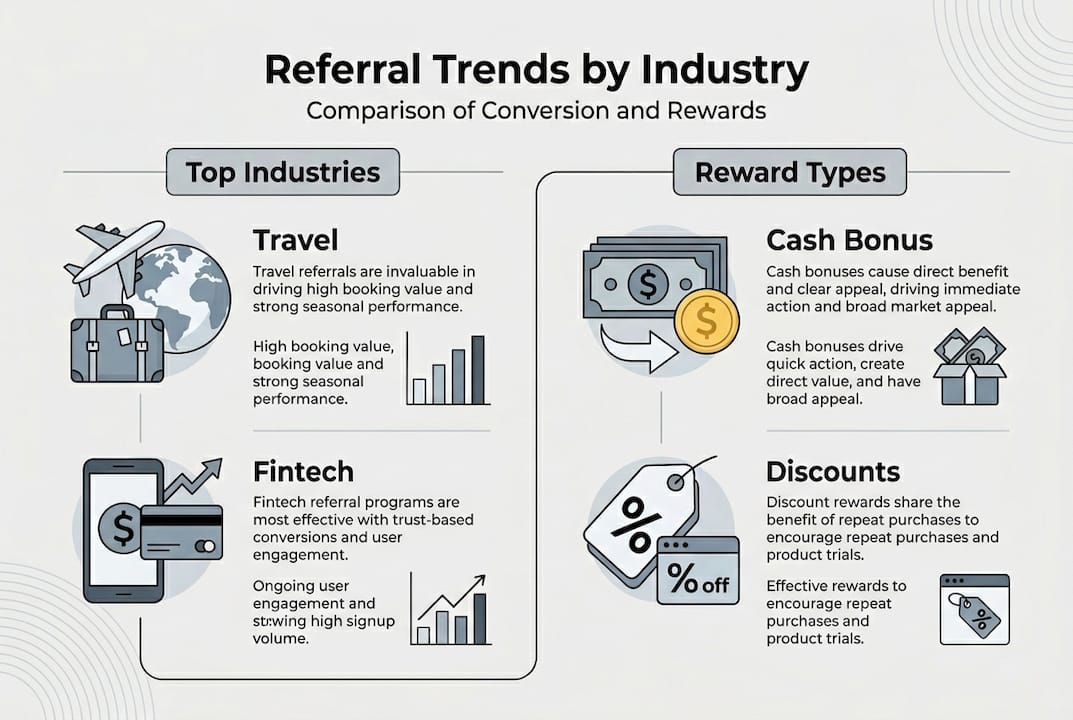
| Industry | Referral Conversion Rate | Typical Reward Type | Avg. Reward Value |
|---|---|---|---|
| Travel / Transportation | ~30% | Free nights, miles, credits | High |
| Fintech / Financial | ~20% | Cash bonuses, fee waivers | Medium to High |
| E-commerce / Retail | 13.8 to 15% | Discount codes, cashback | Low to Medium |
These industry benchmarks tell a clear story: travel leads, fintech follows, and retail trails behind in raw conversion terms. But that doesn't mean e-commerce referrals aren't worth your time. Volume matters. E-commerce platforms generate far more referral opportunities per month than a travel booking site, so the cumulative savings can still add up fast.
Here's what makes each sector unique:
- Travel and transportation: Referral rewards here tend to be the most generous because the average transaction value is high. Airlines, ride-share apps, and hotel platforms routinely offer $25 to $100 in credits per successful referral.
- Fintech and financial services: Banks and investment apps use referrals to acquire high-value customers. Expect cash bonuses ranging from $10 to $500 depending on account type and activity requirements.
- E-commerce and retail: Rewards are smaller per transaction but far more frequent. Stacking codes across multiple platforms is where the real savings strategy lives.
For a closer look at real-world examples, check out multi-industry referral examples that show exactly how shoppers are combining codes across sectors. You can also explore the types of referral programs to understand which structures deliver the most consistent value.
Quick stat: Travel referrals convert at nearly double the rate of e-commerce referrals. If you only use codes in one industry, you're leaving serious savings on the table.
The rise of AI-powered referral sharing
Understanding which industries perform best sets the stage for a major disruptor: AI-driven referral sharing.
Artificial intelligence is reshaping how shoppers find, verify, and use referral codes. And the numbers behind this shift are striking. AI traffic to retail apps surged 693%, while financial services saw a 266% increase. More importantly, AI-referred traffic converts 31% higher than traffic from traditional sources. That's not a marginal improvement. That's a structural advantage.

ChatGPT referrals to retail apps alone grew 28% year over year, signaling that shoppers are increasingly turning to AI tools to find deals rather than manually browsing coupon sites.
| AI Traffic Growth by Sector | YoY Change |
|---|---|
| Retail / E-commerce | +693% |
| Financial Services | +266% |
| ChatGPT to Retail Apps | +28% |
So what does this mean for you as a deal seeker?
- AI tools can surface valid codes faster than any manual search
- Automated verification reduces the chance of wasting time on expired codes
- AI-powered platforms can flag suspicious or duplicate codes before you try them
- Personalized recommendations based on your shopping history improve match quality
The drawbacks are real too. AI systems can occasionally verify a code that has just expired or miss region-specific restrictions. That's why human community moderation still plays an important role alongside automation.
Pro Tip: Before using any code found through an AI tool, cross-check it on a platform that combines AI verification for discount codes with community feedback. The combination of machine speed and human context is the most reliable filter available right now. You can also browse AI-verified deals for a curated, regularly updated list.
Maximizing your savings: code rotation, expiration, and workflows
With AI tools in the mix, it's never been more important to use smart strategies for rotating, verifying, and sharing referral codes.
Even the best referral code is worthless if it's expired, overused, or region-locked. Most shoppers lose savings not because good codes don't exist, but because they don't have a system for finding and using them consistently.
Here's a practical workflow you can start using today:
- Organize by category: Keep separate lists for e-commerce, fintech, and travel codes. Mixing them creates confusion and makes it harder to track what's working.
- Set expiration reminders: Use a simple calendar alert for codes with known end dates. Even a 24-hour heads-up can save you from a failed checkout.
- Rotate your sources: Don't rely on a single website or forum. Spread your code hunting across community platforms, AI tools, and brand newsletters.
- Track redemption outcomes: Note which codes worked, which failed, and where you found them. Over time, this tells you which sources are most reliable.
- Share what works: Platforms that reward code sharing create a feedback loop. When you contribute verified codes, you often earn priority access to new ones.
Avoiding common pitfalls is just as important as finding good codes. The biggest mistakes shoppers make include using codes without checking the terms, ignoring minimum purchase requirements, and assuming a code that worked last month still works today.
Referred customers who maximize code use consistently show higher retention and spending efficiency, which means the habit of smart code rotation pays off beyond just the first transaction.
Pro Tip: Bookmark a referral code rotation guide and review it monthly. Codes rotate faster than most shoppers expect, and a monthly check-in keeps your savings strategy current. Also explore community referral workflows and the referral code expiration guide for deeper tactical detail.
Most people underestimate referral code power—here's why
After reviewing practical strategies, it's worth asking: why do so many shoppers still miss out on referral rewards?
Honestly, it comes down to perception. Most deal seekers think of referral codes as a minor convenience, not a genuine savings strategy. But e-commerce referral ROI averages 8:1, and almost no one is tracking their cumulative savings from referrals over a year. If they did, the number would surprise them.
The compounding effect is real. A shopper who consistently uses verified referral codes across three industries, e-commerce, fintech, and travel, can realistically accumulate hundreds of dollars in credits and cashback annually. That's not hypothetical. That's what the data shows when you apply the retention and spending multipliers to average household purchase behavior.
The uncomfortable truth is that most people treat referral codes as a bonus rather than a baseline. Flipping that mindset, and using a referral ROI calculator to see your actual numbers, changes how seriously you take the habit. Once you see the math, casual code use starts to feel like leaving cash on the table.
Level up your referral rewards
If you're ready to jumpstart your own referral savings journey, here's where to start.
The strategies in this article work best when you have a reliable source for verified, up-to-date codes. That's exactly what LovableRewards is built for.
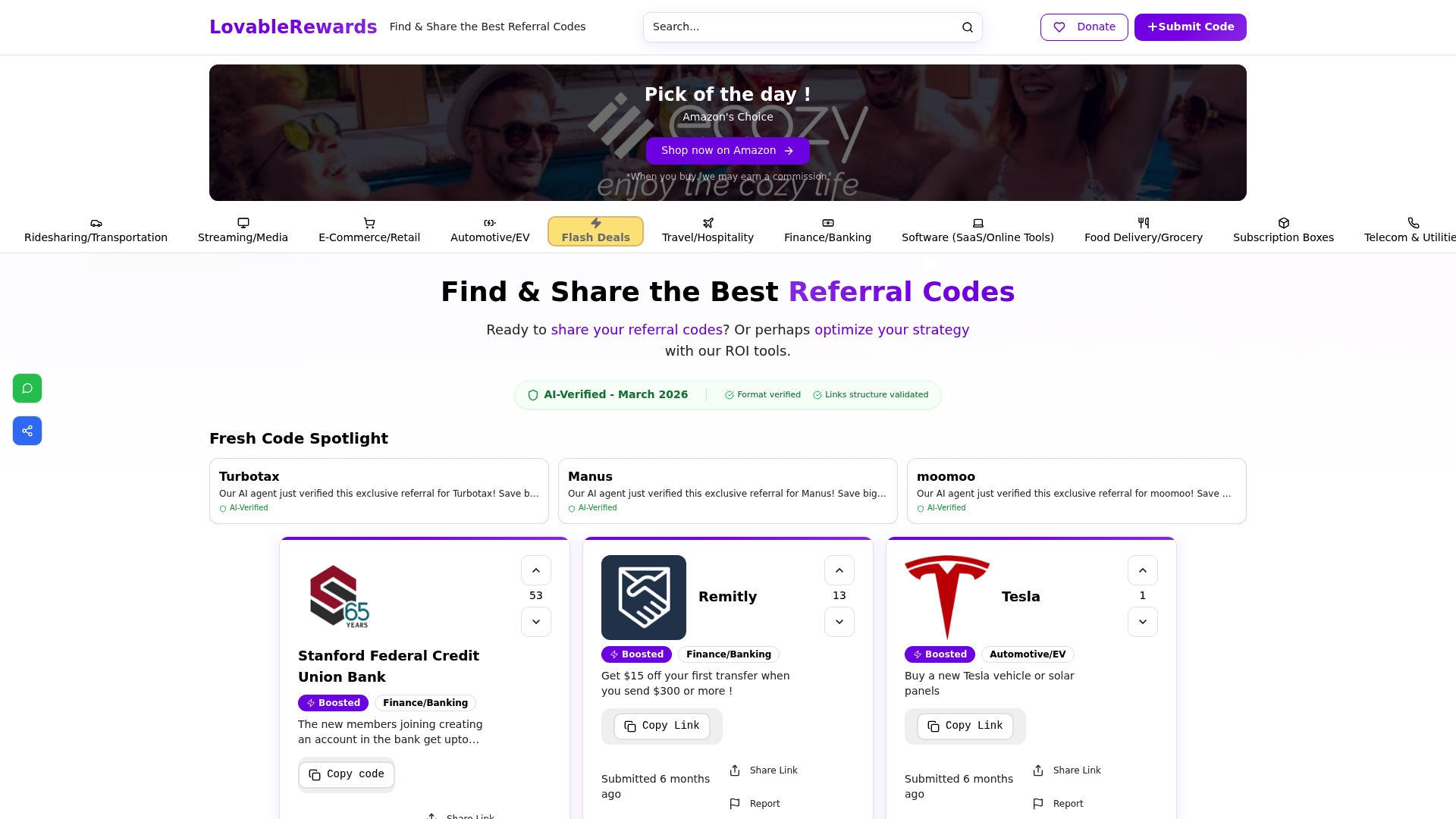
The LovableRewards platform combines AI-based code verification with community moderation to give you access to active, trustworthy referral codes across e-commerce, fintech, and transportation. You can browse categorized deals, submit your own codes, and track which offers are trending right now. For deeper strategies, the more referral tips section covers everything from stacking codes to building a long-term savings workflow. Stop guessing and start saving with tools built specifically for deal seekers like you.
Frequently asked questions
Which industries offer the best referral rewards for online shoppers?
Travel leads for referral-driven savings with 30% of bookings via referrals, followed by fintech at around 20% new customer acquisition, then e-commerce at 13.8 to 15% conversion rates.
How does AI improve referral code accuracy and savings?
AI verification dramatically speeds up code validation and surfaces more working deals. AI traffic converts 31% higher than traditional referral sources, meaning fewer wasted clicks and more actual savings.
What is the typical ROI of using referral codes for shoppers?
Referral programs deliver an average 8:1 ROI in e-commerce, with referred customers spending 13 to 16% more per transaction compared to non-referred buyers.
How can shoppers avoid expired or overused referral codes?
Use platforms that combine AI verification with community feedback, and rotate your code sources monthly. AI-driven referral platforms are improving code accuracy faster than any manual method can match.