
TL;DR:
- Referral codes typically expire within 30 to 90 days to create urgency and prevent fraud.
- Acting quickly upon receiving a code is essential to avoid missing rewards due to expiration.
- Using verified platforms and tracking expiration dates maximizes your chances of redeeming referral rewards.
Most users never realize they've lost a reward until it's already gone. You copy a referral code, save it for later, and then find out it expired three weeks ago. That's not bad luck — it's a pattern. Referral codes expire to create urgency, control costs, and prevent fraud, with typical windows running 30 to 90 days from issuance or signup. Understanding how expiration works is the single fastest way to stop leaving money on the table. This article breaks down why codes expire, how long they last, what edge cases can cut that window short, and exactly what you can do to claim more savings before the clock runs out.
Table of Contents
- Why referral codes expire and what it means for users
- Typical referral code expiration lengths: What the numbers show
- Edge cases: When referral codes or rewards expire sooner
- How to maximize your savings: Practical strategies for using referral codes before they expire
- The real reason expiration rules matter more than you think
- Discover verified referral codes and maximize your rewards
- Frequently asked questions
Key Takeaways
| Point | Details |
|---|---|
| Expiration drives urgency | Understanding referral code expiration helps you act quickly and avoid missing savings. |
| Expiration windows vary | Most codes last 30-90 days, but special conditions can shorten or lengthen periods. |
| Edge cases impact rewards | Codes or rewards may expire due to fraud, inactivity, or program revisions. |
| Community platforms maximize value | Verified, user-driven platforms reduce the risk of using expired codes for greater savings. |
Why referral codes expire and what it means for users
Referral code expiration isn't arbitrary. Platforms set these rules deliberately, and knowing the logic behind them helps you work with the system instead of against it.
There are three core reasons platforms enforce expiration dates:
- Urgency: A time limit pushes users to act. Without one, people hoard codes and never redeem them, which means the platform gets no new signups and you get no reward.
- Cost control: Every referral reward costs the platform money. Expiration limits how long that liability sits on their books, keeping programs financially sustainable.
- Fraud prevention: Open-ended codes are easy to abuse. Platforms that use referral code rotation tips know that rotating and expiring codes is one of the most effective ways to shut down self-referral schemes and fake account farming.
One of the most common forms of abuse is self-referral, where someone creates multiple accounts to collect rewards without bringing in any genuine new users. Expiration windows make this harder to pull off at scale because the fraudster has less time to cycle through fake accounts before the code becomes worthless.
"Referral codes expire to create urgency, control costs, and prevent fraud" — and that policy shapes every interaction you have with a referral program.
For real users, this means one thing above all else: don't wait. The moment you receive or discover a referral code, treat it like a perishable item. The platform isn't being unfair by setting an expiration date. It's protecting the integrity of the program for everyone involved, including you.
It's also worth noting that expiration policy varies significantly by industry. Financial apps often use shorter windows because regulatory risk is higher. E-commerce platforms may give you a bit more breathing room. Transportation services like rideshare apps tend to run aggressive short-window promotions to drive immediate first rides. Understanding which category your code falls into helps you prioritize which ones to use first.
The bottom line is that expiration rules exist to keep referral programs honest and functional. Once you accept that, you stop being frustrated by them and start planning around them.
Typical referral code expiration lengths: What the numbers show
Now that you know why expiration matters, here's how long you typically have to claim your rewards.
Common referral code durations run 30 to 90 days from the date the code is issued or from the moment a new user signs up. That range covers the majority of programs across industries, but the specifics vary quite a bit depending on the platform's goals.
| Expiration window | Typical use case | User behavior impact |
|---|---|---|
| 7 to 14 days | Flash promotions, ride apps | High urgency, fast action required |
| 30 days | E-commerce, subscription apps | Moderate urgency, plan within a month |
| 60 days | Financial apps, banking | Balanced window, room to research |
| 90 days | SaaS tools, loyalty programs | Lower urgency, higher trust |
| No expiration | Rare, brand ambassador codes | Evergreen but often lower-value rewards |
The 30-day window is the most common because it balances urgency with accessibility. Sixty and ninety-day windows are more common in financial services, where users need time to evaluate an offer before committing. Flash promotions at seven to fourteen days are designed specifically to spike activity during a campaign period.

Pro Tip: When you find a code on a community platform, check the submission date immediately. A code submitted 25 days ago on a 30-day program is nearly expired. Prioritize freshly submitted codes whenever possible.
For deal hunters, this data has a direct implication. You should be checking verified sources like referral codes explained regularly, not just when you happen to need a discount. Building a habit of browsing active offers weekly means you'll catch codes early in their window, giving you maximum time to use them.
The best referral codes are almost always the freshest ones. A code that was verified and posted yesterday is far more valuable than one that's been sitting in a browser bookmark for six weeks. Freshness is everything in this space.
Keep in mind that some programs reset expiration when a new user signs up using your code. In that case, your reward clock starts ticking from the signup date, not the code issuance date. Always read the specific program terms so you know exactly which clock you're racing against.
Edge cases: When referral codes or rewards expire sooner
Some referral codes and rewards expire sooner than the typical windows. Let's break down the special cases.
The most disruptive edge case is fraud-related invalidation. Codes may invalidate for existing users, fraud, or program changes, and rewards can expire separately, sometimes after just 30 days of inactivity. Fraud accounts for a significant share of e-commerce referral code problems, and platforms respond by revoking codes tied to suspicious activity, sometimes even retroactively.
Here are the most common edge cases to watch for:
- Existing user detection: If the person using your code already has an account, the referral is usually voided. No reward for you, even if the code was valid.
- Program changes: Companies restructure referral programs, sometimes mid-cycle. Codes issued under old terms may be honored, modified, or canceled entirely.
- Account inactivity: Some platforms expire rewards if your account goes dormant. Log in regularly to keep your earned rewards active.
- Fraud flags: If your account is flagged for suspicious behavior, even incorrectly, your codes and pending rewards may be frozen.
| Scenario | Code status | Reward status |
|---|---|---|
| Existing user signs up | Voided | No reward issued |
| Program restructure | May be canceled | Depends on new terms |
| Account inactivity | Remains valid | Reward may expire |
| Fraud flag on account | Suspended | Frozen or revoked |
This distinction between code expiration and reward expiration is critical. Your code might still be technically active, but the reward you earned from a previous referral could be expiring separately. These are two different clocks running at the same time.
To protect yourself, use resources like avoiding expired codes to build habits that catch these issues before they cost you. And when you're sourcing codes, stick to verified referral codes from platforms that actively monitor for program changes and fraud-related invalidations. Community verification is your best defense against wasting time on codes that are already dead.
How to maximize your savings: Practical strategies for using referral codes before they expire
Perfect timing and smart strategies will help you realize even greater rewards. Here's how.
The key insight is that balancing urgency with accessibility is exactly what platforms try to do when they set expiration windows. Your job as a user is to mirror that balance in your own behavior. Act fast enough to beat the deadline, but strategically enough to use the code at the right moment.
Follow these steps to stop missing out:
- Catalog codes the moment you find them. Use a simple spreadsheet or notes app. Record the code, the platform, the expiration date, and the reward value. Treat it like a personal savings tracker.
- Sort by expiration date, not reward size. A smaller reward you can actually claim beats a bigger one that expires before you use it.
- Set calendar reminders. Put an alert three days before each code expires. That's enough time to act without scrambling.
- Use community platforms for fresh codes. A community referral workflow built around verified, recently submitted codes gives you a massive advantage over searching random forums.
- Know the program type before you commit. Different types of referral programs have different rules. A one-sided program rewards only the new user. A two-sided program rewards both parties. Knowing which type you're dealing with helps you prioritize.
Pro Tip: If you're sharing codes, post them early in their validity window. Codes shared close to expiration get fewer redemptions because users don't have enough time to act, which means fewer rewards for you.
The users who consistently capture the most referral value aren't lucky. They're organized. A few minutes of setup time at the start of each week, reviewing active codes and checking expiration dates, can translate directly into consistent savings across the apps and services you already use.
The real reason expiration rules matter more than you think
Most people treat referral code expiration as an inconvenience. We see it differently. Expiration policy is actually one of the most revealing signals about how a platform values its community.
A program with a very short window, say seven days, is optimizing for campaign spikes. It wants fast action and doesn't particularly care about long-term user relationships. A program with a 90-day window is betting on trust. It believes users need time to evaluate the offer genuinely, and it's willing to absorb the fraud risk that comes with a longer window.
The uncomfortable truth is that short expiry windows reduce abuse like self-referrals, but they also exclude users who need more time to make a decision. Longer windows are more inclusive but require stronger fraud controls to compensate. Neither approach is perfect.
As a savvy user, you can use this to your advantage. When you see a program with a very short window, treat it as a signal that the offer is high-value and competitive. Move fast. When you see a longer window, take the time to evaluate whether the reward is actually worth the signup. Use tools like the referral ROI calculator to run the numbers before committing.
The platforms that get this balance right are the ones worth your loyalty. And the users who understand these trade-offs are the ones who consistently come out ahead.
Discover verified referral codes and maximize your rewards
Understanding expiration is only half the equation. The other half is knowing where to find codes that are actually still valid when you need them.
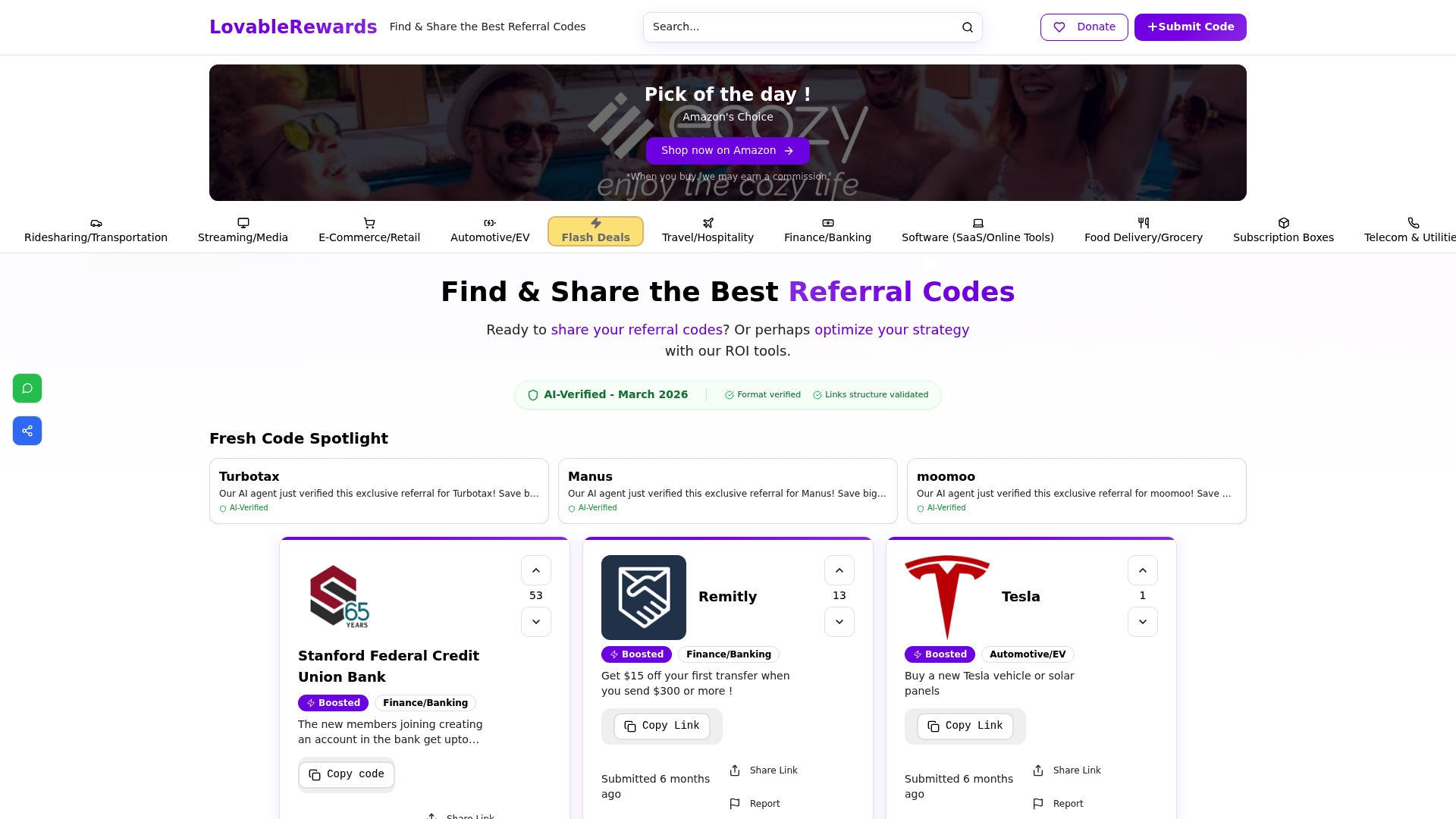
LovableRewards is built specifically for this problem. Every code on the platform goes through AI-based verification to confirm validity before it reaches you. The community flags expired codes quickly, and the fair rotation system means fresh submissions get real visibility. You're not digging through outdated forum threads or guessing whether a code still works. Browse working referral codes across e-commerce, financial services, transportation, and more, all verified and sorted so you can act while the window is still open.
Frequently asked questions
How long do most referral codes stay valid?
Most referral codes are valid for 30 to 90 days from issuance or signup, though flash promotions can run as short as seven days.
Can referral codes expire for reasons other than time limits?
Yes. Codes can be invalidated due to fraud, inactive accounts, or mid-cycle changes to the referral program, sometimes with no advance notice to the user.
Do rewards expire separately from codes?
Absolutely. Rewards operate on their own timeline and can expire after inactivity or when program terms change, even if the original code is still technically valid.
What can I do to avoid missing out on referral savings?
Track expiration dates proactively, set reminders before codes lapse, and use verified community platforms to find active, fresh offers rather than relying on codes you saved weeks ago.