
Choosing the wrong referral code rotation strategy doesn't just hurt your conversion rate. It opens the door to fraud, kills attribution accuracy, and frustrates the deal hunters you're trying to win over. Referral code rotation involves cycling unique codes to track performance and prevent abuse, but doing it well requires more than just swapping codes on a schedule. Whether you're an affiliate marketer managing dozens of campaigns or a deal hunter trying to maximize every reward, this guide walks you through the criteria, methodologies, and fraud defenses that actually work.
Table of Contents
- Key criteria for effective referral code rotation
- Popular rotation methodologies and when to use them
- Comparison table: Rotation techniques at a glance
- Situational recommendations: Picking the right rotation for your needs
- Fraud prevention strategies and edge cases
- Level up your referral code rotation with LovableRewards
- Frequently asked questions
Key Takeaways
| Point | Details |
|---|---|
| Use short, memorable codes | Codes 6-10 characters are easy to share and reduce user errors. |
| Rotate codes based on performance | Test rotation timings with A/B and analytics to optimize conversions and curb fraud. |
| Always set usage and time limits | Code limits prevent abuse and keep programs effective for both marketers and deal hunters. |
| Monitor for fraud indicators | Watch for rapid redemptions, device duplication, and chargebacks to maintain integrity. |
| Hybrid codes maximize rewards | Indefinite base codes plus limited-time bonuses drive sharing and reduce frustration for deal hunters. |
Key criteria for effective referral code rotation
Before you pick a rotation method, you need to know what makes a referral code worth rotating in the first place. Not all codes are created equal, and the wrong setup will undermine even the best strategy.
Here are the core criteria to evaluate:
- Length and memorability: Short codes reduce typos and sharing friction. A code like SAVE20 outperforms X7K2QR9 every time.
- Case sensitivity: Avoid case-sensitive codes in consumer-facing campaigns. They create unnecessary errors and support tickets.
- Custom vanity codes: Branded codes like JOHN25 or SUMMER2026 increase sharing rates because they feel personal and trustworthy.
- Usage and time limits: Short codes with limits reduce errors, boost sharing, and prevent abuse when paired with expiration rules.
- Referral link pairing: Combining a code with a tracked URL gives you two data points per conversion, which dramatically improves attribution.
- Analytics requirements: Know upfront what you need to measure: channel performance, conversion rate by code, or redemption velocity.
These criteria aren't just best practices. They're the foundation of any rotation system that scales. Skipping them means you'll be troubleshooting attribution gaps and fraud spikes instead of optimizing performance. Pairing strong code design with solid fraud prevention strategies from the start saves you significant headaches later.
Popular rotation methodologies and when to use them
With your evaluation criteria locked in, it's time to look at the actual rotation approaches available to you. Each one fits a different scenario, and picking the wrong one wastes budget and goodwill.
- A/B testing rotation: Run two or more codes simultaneously across different channels or audience segments. This lets you test incentive types, reward amounts, and messaging. A/B testing codes alongside timeframe analysis and rotating promos directly combats code blindness, which happens when audiences stop noticing or acting on the same offer.
- Periodic rotation: Swap codes on a fixed schedule, such as monthly or per campaign. This is the most common approach and works well for e-commerce and subscription services.
- Tiered promotions: Offer escalating rewards based on referral volume. Tier 1 might give $10, Tier 2 gives $25. This motivates power users without overpaying casual referrers.
- Long-tail code pools: Maintain a large library of codes with low individual exposure. Ideal for affiliate networks where many publishers need unique tracking.
- Short-run code pools: Release a small batch of codes for a limited window. Creates urgency and is easy to monitor for abuse.
- Hybrid approaches: Combine a permanent base code with time-limited bonus offers. Deal hunters love these because the base code always works, but the bonus creates urgency without frustration.
Pro Tip: Pair an indefinite code with a 72-hour bonus reward. The base code handles ongoing attribution while the bonus drives immediate action. You can calculate referral ROI for each variant to see which hybrid structure pays off most.
Comparison table: Rotation techniques at a glance
To make sense of these methodologies, here's how they stack up side by side. Use this to match your situation to the right approach quickly.
| Technique | Best for | Key strength | Main risk |
|---|---|---|---|
| A/B testing | Affiliates, SaaS | Data-driven optimization | Complexity, split traffic |
| Periodic rotation | E-commerce, subscriptions | Simple, predictable | Code fatigue between cycles |
| Tiered promotions | Power users, communities | Motivates high-volume referrers | Reward cost at scale |
| Long-tail pools | Affiliate networks | Unique tracking per publisher | Management overhead |
| Short-run pools | Flash sales, launches | High urgency, easy monitoring | User frustration if missed |
| Hybrid codes | Deal hunters, communities | Urgency plus reliability | Bonus tracking complexity |
Rotation optimizes attribution and limits fraud, but unlimited code pools without controls risk serious abuse. The table above makes one thing clear: there's no universal winner. Your choice depends on your audience, your fraud tolerance, and how much complexity your team can manage. For a live look at what's working right now, browsing working referral codes in active campaigns gives you real-world benchmarks.
Situational recommendations: Picking the right rotation for your needs
With the options laid out, here's prescriptive guidance for the most common referral marketing scenarios you'll encounter in 2026.

E-commerce brands should use periodic rotation with urgency bonuses. Monthly code swaps keep offers fresh, and a 48-hour bonus window at the end of each cycle drives last-minute conversions. Pair this with loyalty point rewards to retain customers between referral cycles.
Affiliate marketers benefit most from tiered pools combined with A/B reward testing. Test cash versus store credit, then scale the winner. Track everything by publisher ID so you know which partners drive quality traffic versus volume.
SaaS companies should favor credits over cash and use time-limited codes as a fraud defense layer. Reward only after a paid invoice clears, not at signup. This single rule eliminates most fake account abuse.
Deal hunter communities need exposure caps and hybrid codes. Cap each code at a set number of redemptions, then rotate in a fresh one. Use a referral QR generator to make sharing frictionless across social and print.
Here are the key metrics to watch across all scenarios:
- Redemption velocity per code per day
- Conversion rate by channel and code variant
- IP and device clustering patterns
- Reward cost as a percentage of acquired customer LTV
Pro Tip: Monitor redemption velocity daily. A sudden spike, say 50 redemptions in two hours from the same region, is almost always a fraud signal, not a viral moment.
"Referrals convert 3 to 5 times better than cold traffic and deliver 16% higher lifetime value. Dual-sided reward programs boost redemption rates 2 to 3 times compared to one-sided offers."
For industries like financial services, studying how banking reward referrals structure their dual-sided programs gives you a proven template to adapt.
Fraud prevention strategies and edge cases
Even the best rotation strategy falls apart without anti-abuse controls. Fraud in referral programs is more common than most marketers admit.
The most frequent abuse patterns include:
- Self-referrals: One person creates multiple accounts to claim both referrer and referee rewards.
- Fake account farming: Bots or hired workers generate bulk signups using temporary emails and VPNs.
- Coupon farming on deal sites: Codes get scraped and mass-redeemed before your intended audience sees them.
- Redemption velocity spikes: A legitimate code suddenly gets hit with hundreds of redemptions in minutes.
- Chargeback abuse: A referee completes a purchase to unlock a reward, then reverses the transaction.
25% of merchants face referral fraud, and flagging accounts with more than 20 signups per day from the same IP is one of the most effective early detection rules you can implement. Blocking same-device and same-IP redemptions stops the majority of self-referral abuse cold.
Delaying rewards until post-refund windows close, using ledger-based tracking for reversals, and monitoring device fingerprints are the three technical controls that separate robust programs from vulnerable ones. Combine these with the prevent referral abuse workflows built for community platforms.
Here's a quick reference for fraud flags and response thresholds:
| Fraud signal | Detection method | Response action |
|---|---|---|
| Same IP, multiple accounts | IP clustering analysis | Block and flag for review |
| 20+ signups per day per code | Velocity monitoring | Pause code, alert admin |
| Device fingerprint match | Browser/device tracking | Require additional verification |
| Chargeback after reward | Ledger reversal tracking | Claw back reward, ban account |
| Scraped code mass redemption | Redemption spike alert | Expire code, issue replacement |
For programs that include loyalty components, reviewing loyalty program security practices helps you close gaps that pure referral-focused guides often miss.
Level up your referral code rotation with LovableRewards
You now have a solid framework for building, testing, and protecting your referral code rotation strategy. The next step is putting it into practice with tools built specifically for this work.
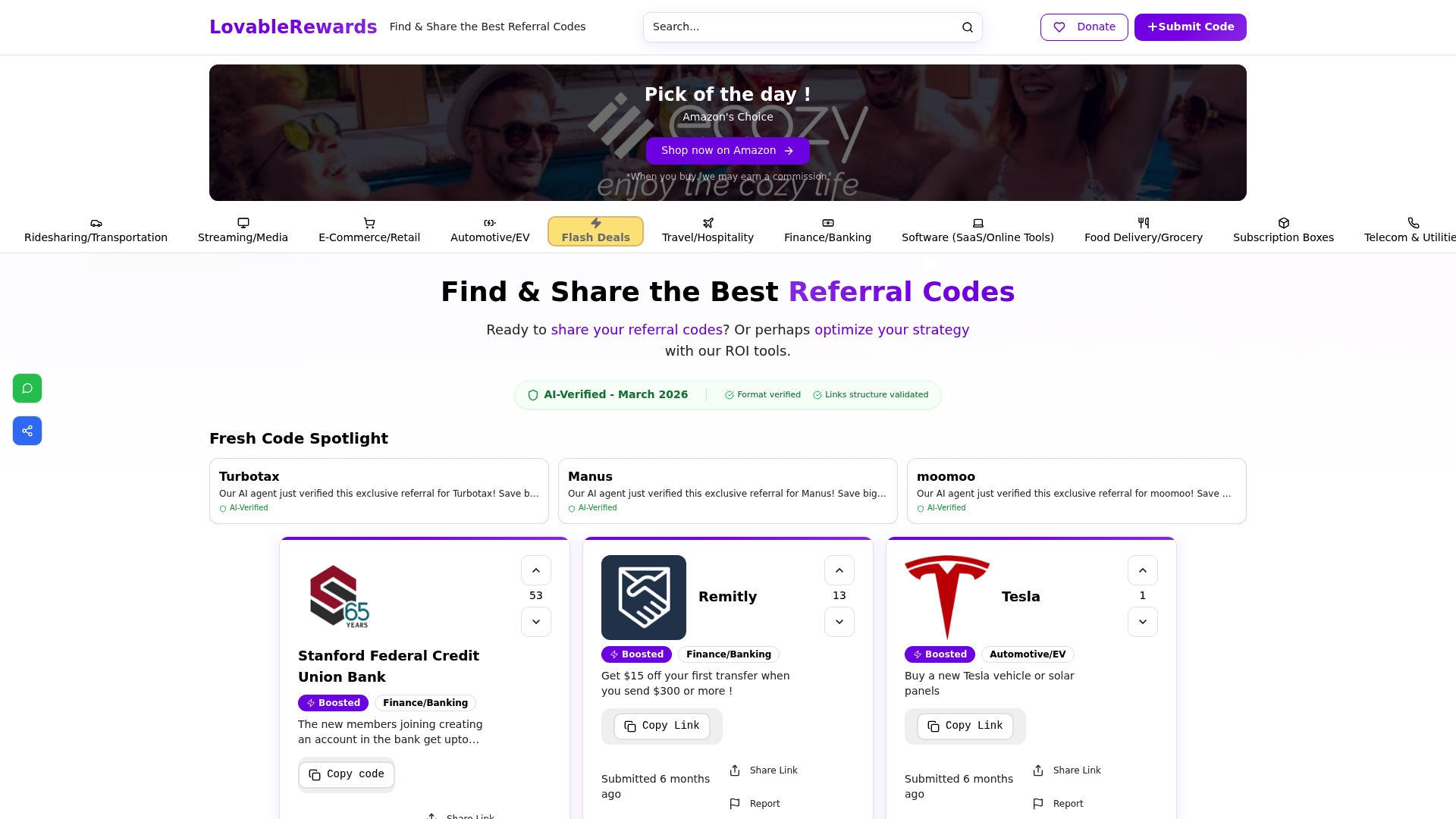
LovableRewards gives referral marketers and deal hunters a centralized hub to discover working referral codes verified by AI and community moderation. You can calculate referral rewards using the built-in revenue calculator, generate QR posters for instant sharing, and browse categorized active offers across e-commerce, finance, and transportation. The platform's fair rotation system ensures your submitted codes get equal exposure, not buried under promoted listings. If you're serious about maximizing visibility and minimizing fraud risk, LovableRewards is where your strategy gets real traction.
Frequently asked questions
How frequently should referral codes be rotated?
Most marketers rotate codes per campaign or every 30 days. Codes limited to 30-day periods with capped redemptions balance freshness with fraud control effectively.
What are the main fraud risks in referral code rotation?
The biggest risks are self-referrals, fake accounts, code farming, and chargeback abuse. 25% of merchants face fraud, and flagging more than 20 signups per day per code is a reliable early warning rule.
Which reward models work best for SaaS referral programs?
Credits outperform cash for SaaS because they keep value inside the product ecosystem. SaaS programs favoring credits with rewards issued after a paid invoice see significantly lower fraud rates.
How can deal hunters avoid code frustration and maximize rewards?
Hybrid codes solve this well. A permanent base code ensures the deal always works, while a time-limited bonus layer adds urgency. Hybrid codes with bonus urgency help deal hunters capture maximum value without hitting expired-code dead ends.
What analytics metrics are most important in code rotation?
Focus on redemption velocity, IP and device clustering, conversion rate by code variant, and flagged spike events. Monitoring spikes above 20 per day by channel gives you the earliest possible fraud signal before damage scales.
Recommended
- LovableRewards - Find & Share the Best Referral Codes | Verified Community Rewards
- LovableRewards: Working Referral Codes - March 2026 | LovableRewards
- Working Referral Codes & Exclusive Offers - March 2026 | LovableRewards
- Master community referral code workflow for max savings
- Turning Website Traffic Into Leads That Convert | Rich Harrington
- How to build a referral network for Dubai real estate