
TL;DR:
- Verified code sharing enhances trust, increases success rates, and saves time for users.
- Platforms with moderation and verification reduce fraud, expired codes, and privacy risks.
- Community-driven sharing drives organic growth and improves campaign effectiveness for marketers.
Finding real discounts online feels like a treasure hunt rigged against you. Fake promo codes, expired links, and vague percentage-off promises waste your time and erode your trust. For digital marketers, the stakes go even higher because a dead referral code doesn't just frustrate a customer, it breaks the conversion funnel entirely. Verified code sharing changes that equation. Time-limited or percentage offers can actually create decisional conflict for deal hunters, making it harder to act fast. This guide breaks down exactly how smart code sharing works, which methods deliver the best results, and how to protect yourself along the way.
Table of Contents
- Understanding code sharing: What it is and why it matters
- Top benefits of code sharing for marketers and deal hunters
- Comparing code sharing methods: Platform, peer, and brand-driven approaches
- Security, compliance, and trust: Protecting your savings with verified codes
- A smarter way to save: Why code sharing beats old-school coupon hunting
- Start sharing and saving with LovableRewards
- Frequently asked questions
Key Takeaways
| Point | Details |
|---|---|
| Verified codes save time | Community-checked codes reduce wasted time on invalid deals. |
| Better conversion rates | Marketers and shoppers get more value from shared, vetted referral codes. |
| Safety and compliance | Secure platforms protect savings and follow data privacy requirements. |
| Community-powered value | Loyalty and trust grow through collaborative code sharing. |
Understanding code sharing: What it is and why it matters
Code sharing, at its core, is the practice of distributing promotional, referral, or loyalty codes through organized channels where users can find, validate, and apply them. It goes well beyond pasting a coupon code into a blog comment. True code sharing involves structured platforms, peer networks, and brand-direct programs, each with distinct strengths.
Here are the main types of codes you'll encounter:
- Referral codes: Unique codes tied to a specific user, rewarding both the referrer and the new customer
- Promo codes: Brand-issued codes with a set discount, often time-limited
- One-time use codes: Single-application codes that expire after redemption, reducing abuse
- Collaborative platform codes: Codes submitted and verified by community members on dedicated sites
The difference between code sharing and blindly hunting coupons is huge. Coupon hunting usually means clicking through dozens of sites that promise "100% working" codes, only to watch them fail at checkout. Code sharing, especially through community-driven platforms, creates a feedback loop where users confirm whether a code works, flag expired ones, and contribute new finds. Understanding what code sharing means in a structured sense helps both marketers and shoppers set realistic expectations and build smarter habits.
For marketers, code sharing generates something traditional advertising rarely delivers: organic trust. When a real user shares your referral code in a verified community, it carries social proof. That referral converts at a higher rate than a cold ad impression because the recipient already trusts the source. Collaborative coding consistently leads to enhanced financial product adoption and stronger customer loyalty, which makes it a core tactic rather than a nice-to-have.
Verified codes also save time for everyone involved. Instead of testing ten codes that might work, you access one that has already been confirmed. That efficiency matters when you're managing email campaigns, paid social, or affiliate programs at scale.
Pro Tip: Always use platforms with community vetting before submitting or redeeming a code. Community-verified codes have a measurably higher success rate than codes scraped from unmoderated forums.
Top benefits of code sharing for marketers and deal hunters
Once you understand what code sharing is, the real question becomes: what does it actually do for you? The benefits stack up fast for both sides of the equation.
For deal hunters:
- No wasted time testing dead links
- Immediate access to the newest offers through network effects
- Community validation removes guesswork and reduces the stress of choosing between deals
- Access to niche codes not listed on generic coupon aggregators
For digital marketers:
- Higher conversion rates because shared codes arrive with implied peer endorsement
- Longer customer lifetime value through loyalty loops built on recurring referral rewards
- Broader campaign reach without proportionally increasing ad spend
- Trackable attribution when each referral code is unique per user
One standout insight from research: financially constrained shoppers tend to prefer BOGO deals over percentage discounts because BOGO and community incentives make the value tangible and immediate. This matters for marketers crafting offers. A "Buy one, get one" framing in your referral campaign may outperform a "20% off" message for specific audience segments.

Exploring community deal sharing strategies gives you a practical roadmap for structuring these campaigns, and reviewing multi-industry referral code examples shows how brands across sectors are already putting this into practice.
Loyalty loops deserve a closer look. When a customer uses your referral code, they're not just making a purchase. They're entering a system where their own referral activity can generate future rewards. That compounding effect drives repeat engagement without requiring additional paid acquisition. It's one of the most underrated growth mechanics in e-commerce right now.
Pro Tip: Feature your top-converting referral codes in a dedicated email campaign segment. Subscribers who engage with referral content once are significantly more likely to convert again, creating a reliable loop of repeat engagement.
Comparing code sharing methods: Platform, peer, and brand-driven approaches
Not all code sharing is equal. The method you choose affects everything from redemption success rate to your exposure to fraud. Here's how the three main approaches stack up.
Platform-based sharing (such as LovableRewards) uses AI verification and community moderation to ensure codes are active and legitimate before users ever see them. Codes are categorized, dated, and rotated fairly. The trade-off is a slightly more structured submission process, but the payoff is reliability.
Peer-to-peer sharing happens in Facebook groups, Reddit threads, Discord servers, and personal blogs. It's fast and real-time, which is great when a flash deal drops. But expired codes and abuse are common because there's no vetting layer. You might find a gem, or you might waste ten minutes on codes that stopped working yesterday.
Brand-driven sharing means getting codes directly from the company through loyalty programs, email lists, or invite-only referral systems. These codes are reliable because the brand controls them. The downside is limited availability and restricted reach. Not everyone qualifies, and the codes often have strict usage terms.
"Verification isn't optional when real money is involved. One expired code at checkout can cost you a customer for good." The importance of checking a code before promoting it cannot be overstated, and platform-driven sharing with built-in verification adds a layer of security that peer networks simply can't match.
| Feature | Platform-based | Peer-to-peer | Brand-driven |
|---|---|---|---|
| Code verification | AI + community | None or minimal | Brand-controlled |
| Safety level | High | Low to medium | High |
| Redemption success rate | High | Variable | High |
| Ease of access | Easy | Very easy | Limited |
| Code variety | Broad | Broad | Narrow |
| Risk of expired codes | Low | High | Low |
Knowing how to share codes safely matters especially if you're a marketer protecting your brand reputation. One viral post with a dead or fraudulent code attached to your name can undercut months of goodwill.
Security, compliance, and trust: Protecting your savings with verified codes
Choosing a sharing method isn't just about convenience. When real money and personal data are involved, security and compliance become non-negotiable.
The most common risks in unverified code sharing include:
- Expired codes that waste time and erode trust
- Phishing scams disguised as exclusive deal offers
- Privacy leaks when shady platforms collect personal data without consent
- Code stacking fraud where bots exploit loopholes in promotional systems
Verified platforms address these risks through multiple layers. AI scans for code validity and link legitimacy. Community members flag suspicious submissions. Moderation teams review reports and remove fraudulent entries. Secure code sharing protects not just your wallet but your personal data and compliance standing, which is especially critical for fintech and e-commerce deals governed by GDPR or bank-specific promotional rules.
Here's how redemption success rates compare across methods:
| Method | Avg. redemption success rate |
|---|---|
| Platform-based (verified) | 85 to 92% |
| Brand-driven | 80 to 90% |
| Peer-to-peer | 45 to 60% |
To verify a code before using or promoting it, follow these steps:
- Check the submission date. Codes older than 30 days without a recent confirmation deserve extra scrutiny.
- Look for community flags or comments noting the code as expired or fraudulent.
- Test on a low-stakes cart before sharing publicly.
- Confirm the issuing brand's terms of service permit sharing of this code type.
- Use a platform with visible moderation history and reporting features.
Reading up on community moderation tips gives you a clearer picture of how the best platforms handle bad actors and keep their databases clean. Favor platforms that show you when a code was last verified, not just when it was submitted.
A smarter way to save: Why code sharing beats old-school coupon hunting
Here's an opinion worth sitting with: traditional coupon hunting doesn't just waste your time, it actively trains you to distrust discounts. Every dead code conditions you to expect failure, which is the opposite of what a good discount experience should deliver.
Verified code sharing flips that pattern. When you know a code has been checked by both an algorithm and real users, you approach checkout with confidence. That confidence changes behavior. You act faster, you share the deal with others, and you return to the platform that delivered it.
For marketers, the network effect is the real prize. Collaborative code sharing drives the kind of organic growth that paid campaigns rarely replicate. A single satisfied user sharing a working code can reach dozens of high-intent buyers. Community-driven platforms compound this effect by making top codes more visible over time, rewarding quality over quantity.
The old spray-and-pray coupon model is dead. Smart code sharing, built on verification and community trust, is what scales in 2026 and beyond.
Start sharing and saving with LovableRewards
If you're serious about finding deals that actually work or getting your referral codes in front of the right audience, it's time to try a platform built for exactly that.
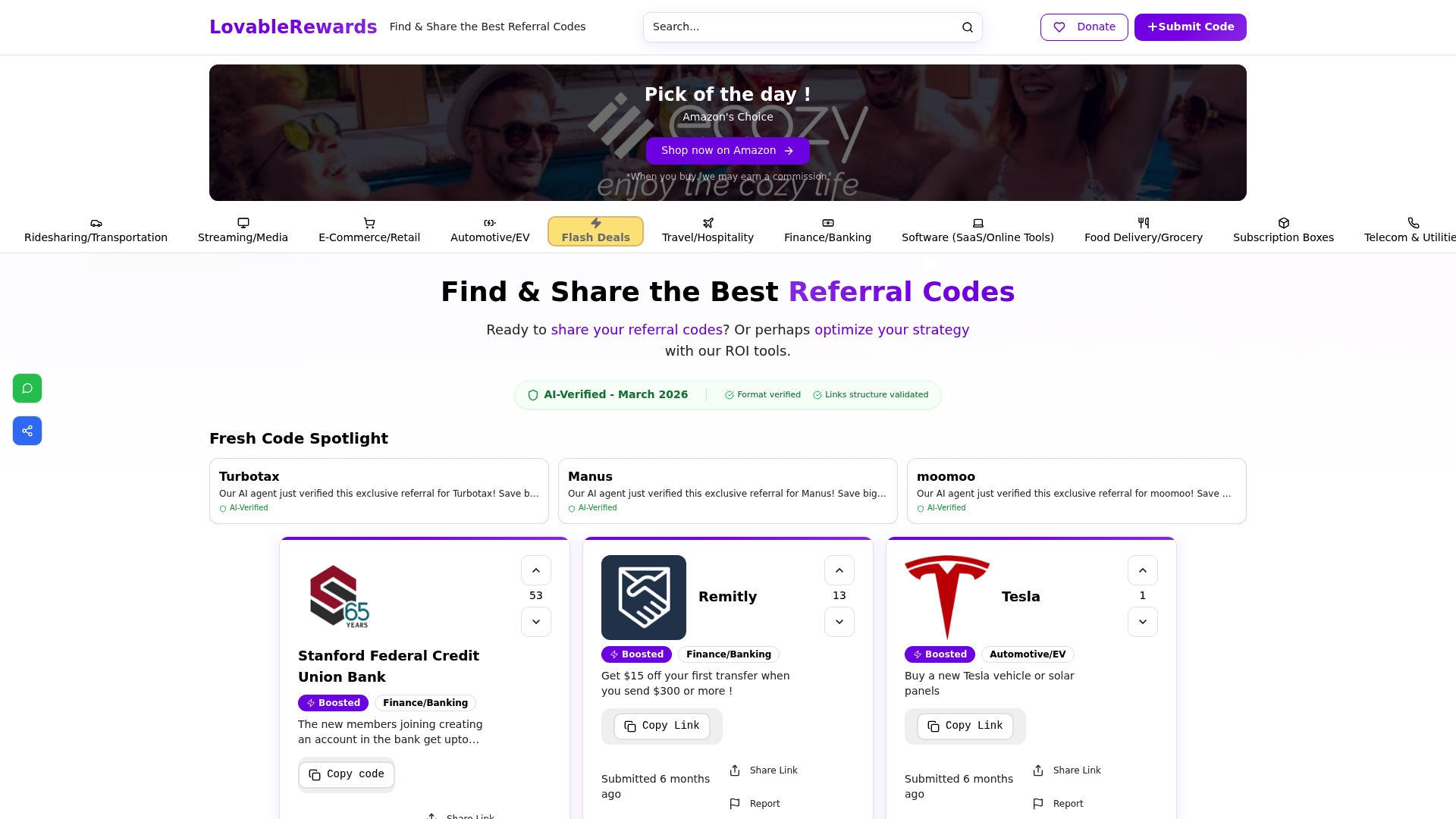
LovableRewards uses AI-based verification and community moderation to keep its code database clean and current. Every code you find there has been checked for legitimacy, not just submitted and forgotten. Whether you're a deal hunter looking for the next cashback offer or a marketer who wants more reach for a referral campaign, you'll find a fair, transparent system that rewards real participation. Ready to get started? Submit your referral code today and let the community put it to work for you.
Frequently asked questions
How is code sharing different from using regular coupons?
Code sharing relies on verified, community-backed deals, while coupons are often generic and unvetted. Community platforms verify codes for authenticity before users ever see them, reducing the risk of wasted time at checkout.
What types of codes can I share or find in these platforms?
You can share or find referral codes, promotional codes, one-time use codes, and loyalty bonus codes, covering a wide range of industries from e-commerce to fintech.
Is it safe to share codes online?
Sharing through verified platforms is significantly safer thanks to compliance checks and community moderation. Platform-driven sharing with verification adds security layers that unmoderated peer networks cannot provide.
Do marketers really benefit from shared codes?
Yes. Marketers gain wider reach, better conversion rates, and improved customer loyalty through verified code campaigns. Referral promotions grow both customer loyalty and overall campaign reach more cost-effectively than most paid acquisition channels.