
You share a discount code with your audience, and within hours it's plastered across three public coupon sites, redeemed by strangers who were never your referrals, and your reward tracking shows zero attribution. That frustration is real, and it's more common than most people realize. Fair code sharing is not just about generosity. It's about making sure every person gets a genuine shot at the discount, every reward traces back correctly, and no one exploits the system. This guide covers the tools, steps, pitfalls, and metrics you need to share codes in a way that protects everyone's interests, whether you're a casual sharer or a serious referral marketer.
Table of Contents
- What you need to share codes fairly
- Step-by-step process for sharing codes
- How to prevent unfair code use and leakage
- Measuring success and maximizing reach
- Why 'fair' code sharing beats the spray-and-pray approach
- Take the next step with LovableRewards
- Frequently asked questions
Key Takeaways
| Point | Details |
|---|---|
| Unique codes matter | Sharing unique codes ensures fair use, better rewards, and less leakage. |
| Segment sharing channels | Distribute codes via segmented emails, SMS, or widgets to maximize fairness and reach. |
| Prevent code leakage | Use technical tools and best practices to block generic code misuse, keeping rewards accurate. |
| Track and optimize | Regularly measure redemption rates and attribution to improve your code sharing strategy. |
| Fair sharing wins long-term | A fair, trust-based approach benefits both sharers and brands for sustained results. |
What you need to share codes fairly
Before you share a single code, it helps to get clear on what "fair" actually means in practice. Fair sharing means every intended recipient gets access to a working code, each code can only be used once per person, and every successful redemption is correctly assigned to the person who shared it. Without these three elements, you're not really sharing fairly. You're just broadcasting and hoping for the best.
The foundation of fair sharing is the right set of tools. You need a unique code generator that creates individual codes for each recipient or campaign, an attribution tracking system that ties each redemption to a specific sharer or channel, and encrypted delivery so codes don't get intercepted or reshared without permission. Understanding code verification basics is a smart starting point before you build any of this out.
Unique codes outperform generics for both attribution accuracy and click-through rates, which means your results improve simply by switching from one shared code to individualized ones.
| Tool | Purpose | Platform examples |
|---|---|---|
| Unique code generator | Creates one-per-person codes | Shopify, Voucherify |
| Attribution tracking | Ties redemptions to sharers | UTM links, referral dashboards |
| Encrypted delivery | Prevents code interception | Email encryption, secure SMS |
| Segmented channel manager | Controls who sees which code | Klaviyo, Twilio, Mailchimp |
Common platforms for code delivery include:
- Email (highest control, easiest to segment)
- SMS (high open rates, great for time-sensitive codes)
- Mobile app push notifications (targeted, trackable)
- Social media (wide reach, lower control)
- Post-purchase widgets (captures buyers at peak motivation)
Also, reviewing a community referral workflow can show you how others have structured their distribution for maximum fairness and efficiency.
Pro Tip: Always use unique codes for high-value offers. Generic codes might feel easier to manage, but they erode your margins fast and make attribution nearly impossible.
Step-by-step process for sharing codes
Once your tools and setup are ready, you're set to follow a proven process for fair sharing. Here's how to move from idea to execution without losing control of your codes.
- Plan your platform and audience. Decide where your audience lives and which channel gives you the most control. Email and SMS are safer than open social posts for high-value codes.
- Generate unique codes. Use a code generator to create individual codes per recipient or per campaign segment. Never reuse codes across different audiences.
- Segment your audience. Group recipients by behavior, location, or purchase history. Targeted segments get more relevant codes, which drives higher redemption.
- Deliver securely. Send codes through encrypted channels. Avoid copy-pasting codes into public posts or unprotected messages.
- Track redemptions in real time. Monitor which codes are used, by whom, and through which channel. This data is your feedback loop.
- Collect feedback. Ask recipients whether the code worked and what they thought of the offer. This helps you refine future campaigns.
Segmented communication via email, SMS, and push boosts redemption rates and keeps leakage under control, which is why step three is often the most impactful one to get right.
| Channel | Ease of use | Control level | Typical redemption rate |
|---|---|---|---|
| High | High | 3-8% | |
| SMS | Medium | High | 5-10% |
| Social media | High | Low | 1-3% |
| Post-purchase widget | Medium | Very high | 8-15% |
For managing referral code rotation across multiple campaigns, having a clear rotation schedule prevents overlap and keeps your offers feeling fresh.
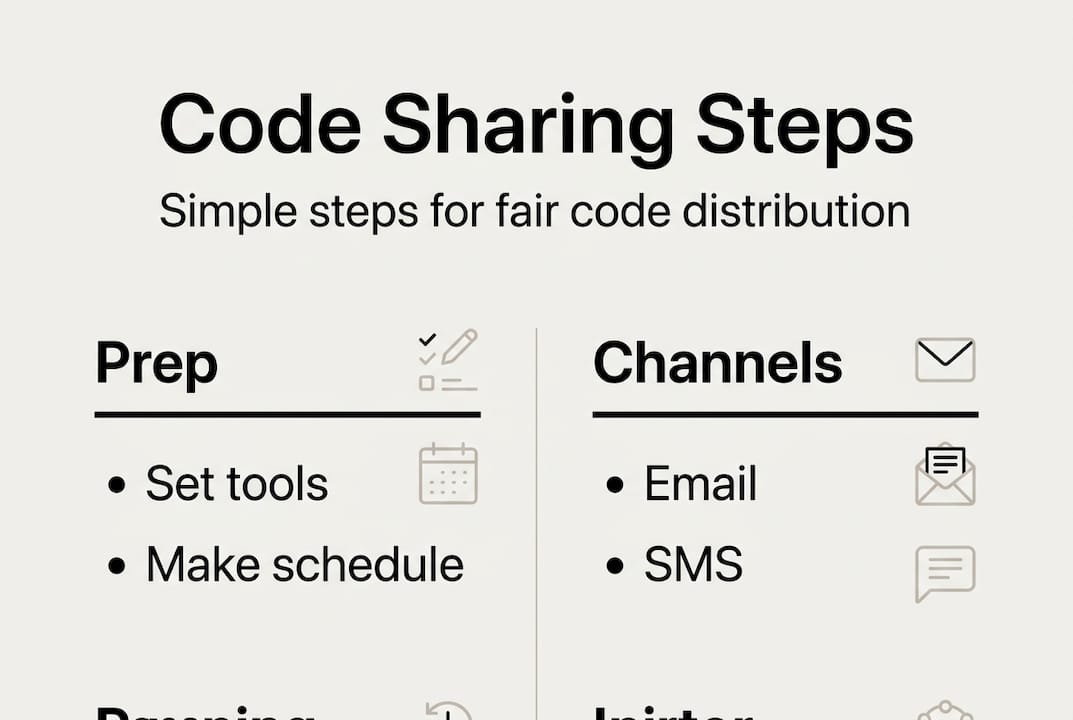
Also, revisiting the workflow for referral codes can help you spot gaps in your current process before they become problems.
For deeper insight into what reward levels drive the best results, strategic coupon campaigns show that 10-20% discounts consistently outperform both lower and higher offers for new customer acquisition.
Pro Tip: A/B test your reward levels. A 10% discount often converts just as well as 20%, which means you can protect your margins while still driving action.
How to prevent unfair code use and leakage
As you start sharing, it's critical to understand how codes can end up misused and what you can do to stop it. Code leakage is not a rare edge case. It's a predictable outcome when sharing is done carelessly.

Codes leak for a few consistent reasons. Generic codes are the biggest culprit because anyone who sees one can share it freely. No attribution means there's no accountability. And when codes don't expire or have no use limits, they stay active on public forums indefinitely.
Common mistakes that lead to leakage:
- Using a single generic code for all channels
- Sharing codes in public social posts without restrictions
- No expiration dates or use limits on codes
- Skipping attribution tracking entirely
- Allowing codes to be forwarded without any friction
Generic codes leak rapidly, undermining attribution and cutting into margins in ways that are hard to recover from once the damage is done.
"Policy alone can't prevent leakage; technical tools are essential."
The fix is not just telling people not to reshare. You need technical barriers. Use code verification methods to confirm codes are valid before redemption. Set codes to single-use or add expiration windows. Rotate codes regularly so leaked ones become worthless quickly. Encrypted delivery channels add another layer of protection.
For a real-world look at how communities handle this, verified community rewards show how moderated platforms keep codes clean and accountable. And the case study on coupon security demonstrates how brands that invested in technical prevention saw measurable drops in unauthorized redemptions.
Even in casual community groups, you can apply these principles. Share codes in direct messages rather than open threads. Use codes with short expiration windows. Ask recipients to confirm redemption so you know the code reached the right person.
Measuring success and maximizing reach
To ensure your sharing efforts are actually working and fair, you need to measure and adapt. Gut feeling is not a strategy. Data is.
Key metrics to track:
- Redemption rate: The percentage of distributed codes that get used
- Click-through rate (CTR): How many people clicked the code link versus how many received it
- Average order value (AOV): Whether code users spend more or less than non-code users
- Referral attribution: How many conversions trace back to specific sharers or channels
- Leakage rate: Redemptions that came from outside your intended audience
E-commerce redemption rates average 2-8%, with high performers hitting 12% or more. If you're below 2%, your distribution method or offer likely needs work.
A/B testing is your best tool for improvement. Test different platforms, different reward levels, and different message formats. Run one variable at a time so you know what actually moved the needle. For example, test email versus SMS for the same offer to the same audience segment and compare redemption rates directly.
The loyalty points planner can help you model the long-term value of different reward structures before you commit to a campaign. And the referral program ROI tool lets you calculate whether your current sharing strategy is actually generating positive returns.
For a broader view of how to optimize your campaigns over time, coupon ROI strategies offer a solid framework for iterating based on real data rather than assumptions.
The goal is not just more redemptions. It's the right redemptions from the right people through the right channels.
Why 'fair' code sharing beats the spray-and-pray approach
After measuring success, it's worth reflecting on why taking the fair route works better for everyone. The temptation to blast a generic code everywhere feels logical. More exposure should mean more redemptions, right? In practice, it usually means more chaos and fewer real wins.
When codes leak to public coupon sites, the people redeeming them were never your audience. You lose margin without gaining a customer. The sharer loses attribution. The brand loses trust in the channel. Everyone loses except the coupon aggregator.
Deliberate, accountable sharing flips this dynamic. When codes are unique, tracked, and delivered to the right people, redemption rates climb, rewards flow to the right sharers, and communities stay motivated to keep participating. The community code success story is a clear example of how structured sharing creates long-term engagement rather than one-time spikes.
The hard-won lesson here is that fairness is not just ethical. It's more profitable. Brands that build fair sharing systems see higher lifetime value from referred customers, lower fraud rates, and stronger community trust. If you want to be a referral marketer people actually respect, become an advocate for fair sharing, not just a distributor of discount codes.
Take the next step with LovableRewards
Ready to put fair code sharing into action? LovableRewards gives you a centralized place to share, discover, and verify referral codes across dozens of industries. Every code on the platform goes through AI-based verification, so you're never wasting time on expired or fake offers.
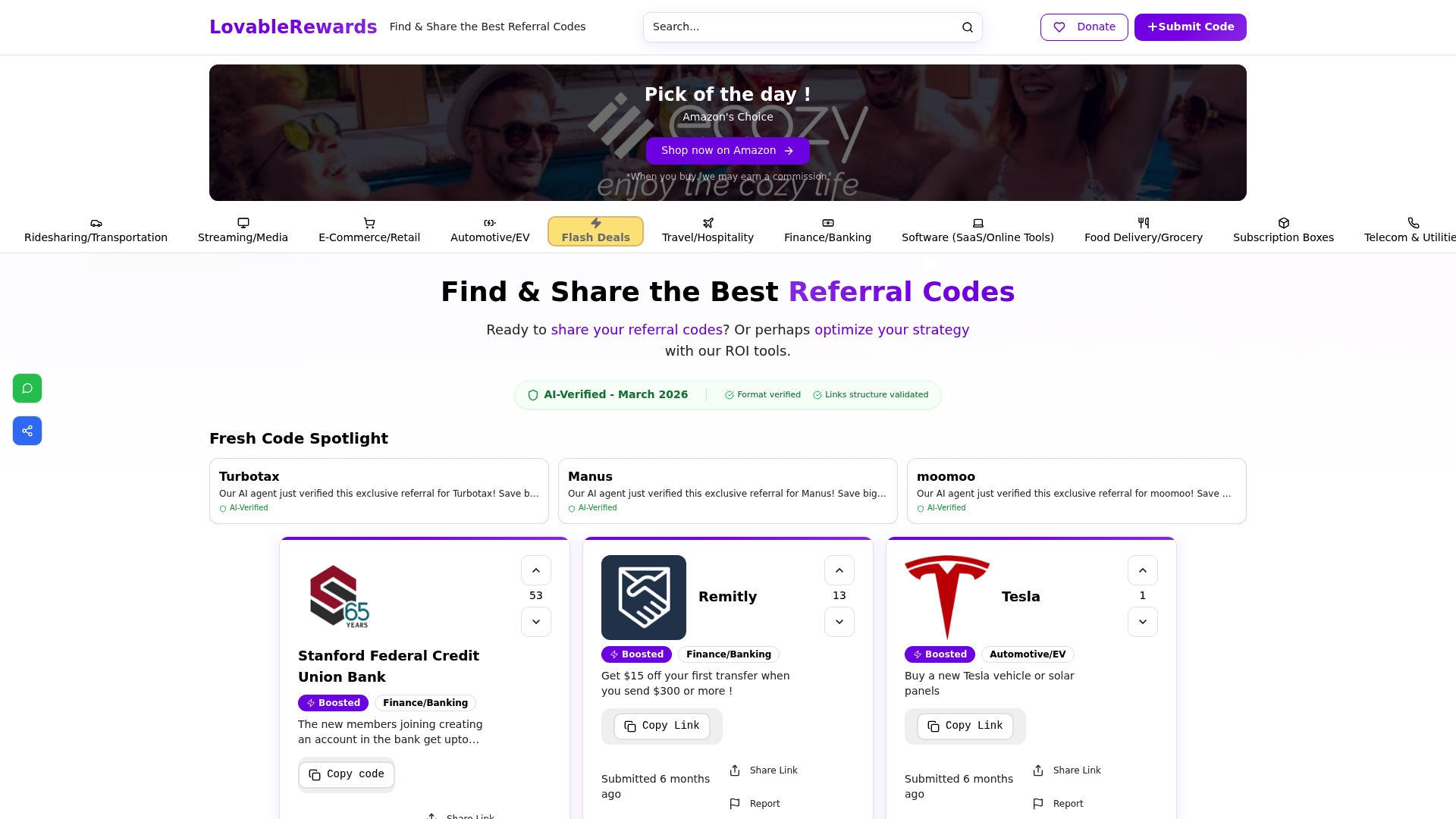
You can find working referral codes that are community-verified and actively maintained, or submit your own codes for fair rotation exposure. The platform's rotation system ensures every contributor gets equal visibility, not just the loudest voices. If you're new and want to understand the full picture, how LovableRewards works walks you through the entire process. You can also use the age calculator tool and other free tools available on the platform to support your planning.
Frequently asked questions
What makes code sharing 'fair'?
Fair code sharing means every intended recipient gets access to a working code, rewards are correctly tracked back to the sharer, and codes are not leaked to generic public sites. Unique codes protect against leakage and ensure proper attribution for every redemption.
What are the best channels for sharing discount codes?
Segmented email, SMS, push notifications, and post-purchase widgets are the most effective options for secure, controlled sharing. Segmented emails, SMS, and push consistently outperform open social posts for both redemption rates and leakage prevention.
How can I keep my referral codes from leaking to public coupon sites?
Use unique codes with expiration dates, deliver them through encrypted channels, and limit distribution to trusted audiences. Generic codes leak fast, so technical prevention through unique code generation is far more reliable than relying on policy alone.
How do I know if my code sharing strategy is working?
Track redemption rates, click-through rates, and referral attribution using a code management dashboard or analytics tool. E-commerce redemption averages 2-8%, so if you're consistently above that range, your strategy is performing well.
Recommended
- LovableRewards: Working Referral Codes - March 2026 | LovableRewards
- LovableRewards - Find & Share the Best Referral Codes | Verified Community Rewards
- Master community referral code workflow for max savings
- Boost Your Code's Visibility | LovableRewards
- Nectar | Case Study -Maximizing Sales with Strategic Coupon Campaigns