
TL;DR:
- Successful referral sharing requires verified codes, proper tracking, and understanding program rules.
- Timely, targeted sharing with deep links and double-sided rewards significantly increases conversion.
- Monitoring rewards and avoiding fraud tactics ensures fair payout and long-term platform trust.
Scattered codes, expired links, and unverified offers cost deal hunters real money every single day. Most people assume referral sharing is simple: copy a code, paste it somewhere, and wait. But between fraud traps, program terms you never read, and zero visibility into whether your code actually worked, the whole process falls apart fast. This guide gives you a verified, step-by-step blueprint for sharing referral codes the right way, covering everything from setup and fraud prevention to real-time reward tracking so you stop leaving savings on the table.
Table of Contents
- What you need before sharing a referral code
- Step by step: How to share your referral code for maximum rewards
- Avoiding common mistakes and fraud prevention
- How to track and verify your referral rewards
- Our take: Why most referral code sharing fails and what actually works
- Try LovableRewards for seamless, verified code sharing
- Frequently asked questions
Key Takeaways
| Point | Details |
|---|---|
| Verified platforms win | Using trustworthy referral code platforms ensures your savings and rewards are real and secure. |
| Timing is crucial | Share codes 48–72 hours after sign-up for the best response. |
| Fraud risks exist | Avoid self-referrals, fake accounts, and public posting to prevent bans and lost rewards. |
| Track your rewards | Use platforms with real-time tracking to confirm every code is credited. |
What you need before sharing a referral code
Once you appreciate the value of reliable savings, let's gather what you need to get started. Jumping in without the right tools is how most people end up frustrated, banned, or simply unrewarded. Preparation is not optional here.
First, you need an account on the platform or service whose referral program you want to join. Some programs require app installation before a code activates, so check whether a mobile download is part of the process. Without this, your referral link may never trigger a reward.
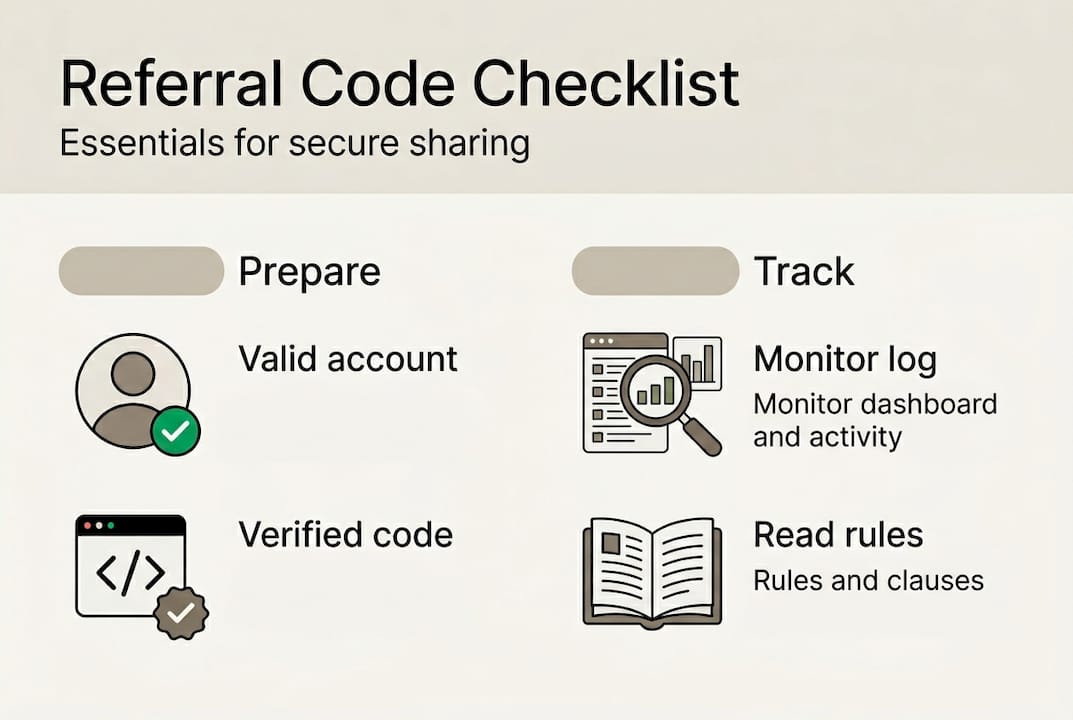
Second, you need a verified code. Not all codes floating around the internet are current or legitimate. Verified platforms and real-time tracking are critical for maximizing reliable savings and preventing fraud. Using a stale or fake code wastes everyone's time and can flag your account.
Third, you need a tracking method. Whether it's a platform dashboard, a spreadsheet, or a dedicated tool, you should know at a glance which codes are active, who used them, and what rewards are pending. Understanding the community code sharing workflow helps you see how organized contributors consistently outperform casual sharers.
Finally, read the terms and conditions before sharing anywhere publicly. Many programs prohibit posting codes on coupon sites or open forums.
Requirements overview
| Requirement | Details |
|---|---|
| Active account | Registered and verified on the referral platform |
| Valid referral code | Confirmed active, not expired or restricted |
| Platform support | Compatible app or browser access |
| Tracking method | Dashboard, spreadsheet, or automated tool |
| Terms and conditions | Read and understood before any sharing |
Here is what to confirm before you share a single code:
- Your referral code is active and not expired
- You understand the program's sharing restrictions
- You have a way to monitor conversions and pending rewards
- Your account is in good standing with no prior flags
Pro Tip: Screenshot your referral code and its expiration date the moment you receive it. Codes often expire quietly, and having a record saves you from sharing dead links.
Step by step: How to share your referral code for maximum rewards
With everything prepared, you're ready to begin sharing codes step by step. The order matters more than most people realize.
- Locate your referral code. Find it in your account dashboard or app settings. Copy the exact code or deep link, not a screenshot.
- Check the program terms. Confirm where you are allowed to share, who qualifies as a new user, and what action triggers the reward.
- Choose your sharing method. Direct message, email, or a verified community platform will always outperform a generic public post.
- Use a one-click sharing platform. Platforms that let recipients apply a code in one tap reduce friction dramatically and increase follow-through.
- Share at key moments. Time your outreach to when someone is actively considering a purchase or signup, not randomly.
- Track the result. Log every share and check your dashboard within 48 hours to confirm the code was received and used.
Timing is one of the most overlooked factors. Referral conversions reach 10 to 25% in e-commerce and around 12% in SaaS, with referred customers spending 13.2% more on average. That means the quality of your share, not just the quantity, drives your actual earnings.

For reward structure, the data is clear. Double-sided rewards boost conversion rates by 40 to 300% compared to single-sided offers. Browse referral code examples to see how top performers structure their offers across industries.
Single-sided vs. double-sided sharing
| Approach | Who benefits | Conversion impact | Best use case |
|---|---|---|---|
| Single-sided | Referrer only | Moderate | Brand loyalty programs |
| Double-sided | Referrer and new user | High (40-300% lift) | New user acquisition |
For more context on structuring your outreach, the referral marketing tips from active community contributors are worth reviewing before you send your first batch.
Pro Tip: For app-based referrals, always use a deep link rather than a plain code. Deep links send the new user directly to the signup screen with your code pre-filled, cutting drop-off significantly.
Avoiding common mistakes and fraud prevention
Even with the best steps, mistakes and dishonest tactics can ruin your referral rewards. Here's how to stay safe.
The most common mistakes are not always obvious. People create secondary accounts to refer themselves, exceed sharing caps by blasting codes across dozens of forums, or use fake accounts to inflate their referral count. Self-referrals and fake accounts are common pitfalls, and programs use device and IP fingerprinting along with velocity monitoring to catch them fast.
Here is what to avoid:
- Self-referrals using alternate emails or devices
- Sharing codes on public forums when program terms prohibit it
- Exceeding the program's monthly or total sharing cap
- Encouraging signups from people who have no real interest in the product
- Posting codes in bulk to unrelated communities
For fraud prevention on your end, always track who received your code and through which channel. If you notice unusual activity, like a spike in signups from unknown sources, report it to the platform immediately. Using referral code rotation tips keeps your codes fresh and reduces the risk of abuse by limiting exposure windows.
Warning: Misusing a referral program, whether through self-referrals, fake accounts, or terms violations, can result in permanent account bans and forfeiture of all earned rewards. No short-term gain is worth losing your entire account history.
Safeguards worth building into your routine include keeping a private log of every person you shared a code with, using platform-native sharing tools that add accountability, and reviewing your referral dashboard at least twice a week.
Pro Tip: The golden window for referral response is 48 to 72 hours after someone activates a new product or service. Ask for their referral or remind them of your code during this period when satisfaction is highest and action is most likely.
How to track and verify your referral rewards
Once you've shared your referral code securely, the final step is making sure you get the rewards you earned. Assuming the reward will show up automatically is a mistake many people make.
Follow these steps to stay on top of your rewards:
- Monitor referral status. Log into your dashboard daily for the first week after sharing. Look for status changes from "pending" to "confirmed."
- Confirm code usage. Check that the new user applied your specific code, not a generic one. Some platforms show you the exact timestamp of code application.
- Check pending rewards. Rewards often sit in a pending state for 7 to 30 days while the platform verifies the new user's activity.
- Claim your payout. Some platforms require manual claiming. Set a calendar reminder so you don't miss the claim window.
Signs that a code was used correctly include:
- A new entry appears in your referral history
- Your pending reward balance increases
- You receive a confirmation email from the platform
- The referred user's account shows as active
92% of consumers trust referrals more than ads, which is why accurate reward delivery matters so much to platform credibility. Real-time tracking is the backbone of that trust. Learn more about how rewards are credited on verified platforms to understand the full payment cycle.
Typical reward confirmation timeframes
| Platform type | Pending period | Confirmation method |
|---|---|---|
| E-commerce | 7 to 14 days | Dashboard and email |
| Financial services | 14 to 30 days | Dashboard and statement |
| SaaS or subscriptions | 30 to 60 days | Dashboard notification |
| Transportation apps | 3 to 7 days | In-app notification |
If a referral is not credited after the standard window, contact support with your referral ID, the date of sharing, and any confirmation emails. Use the referral ROI calculator to estimate what you should have earned and use that figure when escalating a dispute.
Our take: Why most referral code sharing fails and what actually works
After mastering execution, it's worth considering the bigger picture and why so many people stumble. The honest answer is that most referral failures have nothing to do with the code itself.
95% of referral programs fail due to friction and misaligned incentives. People share a code once, see no result, and give up. But the real issue is usually timing, trust, or a reward structure that doesn't motivate the recipient. Sharing a code to someone who has no context for why they should care is the equivalent of handing out flyers on a street corner.
What actually works is combining verified codes with a genuine moment of value. When someone is already excited about a product, a referral code feels like a bonus, not a sales pitch. Double-sided rewards amplify this further, but only when the reward is balanced enough to avoid abuse. Exploring the types of reward programs reveals how the best performers align incentives on both sides without creating unsustainable costs.
Verified platforms with streamlined sharing remove the guesswork. When both parties trust the process, conversion rates climb naturally.
Try LovableRewards for seamless, verified code sharing
Now that you're equipped to share referral codes securely and profitably, here's the best way to get started.
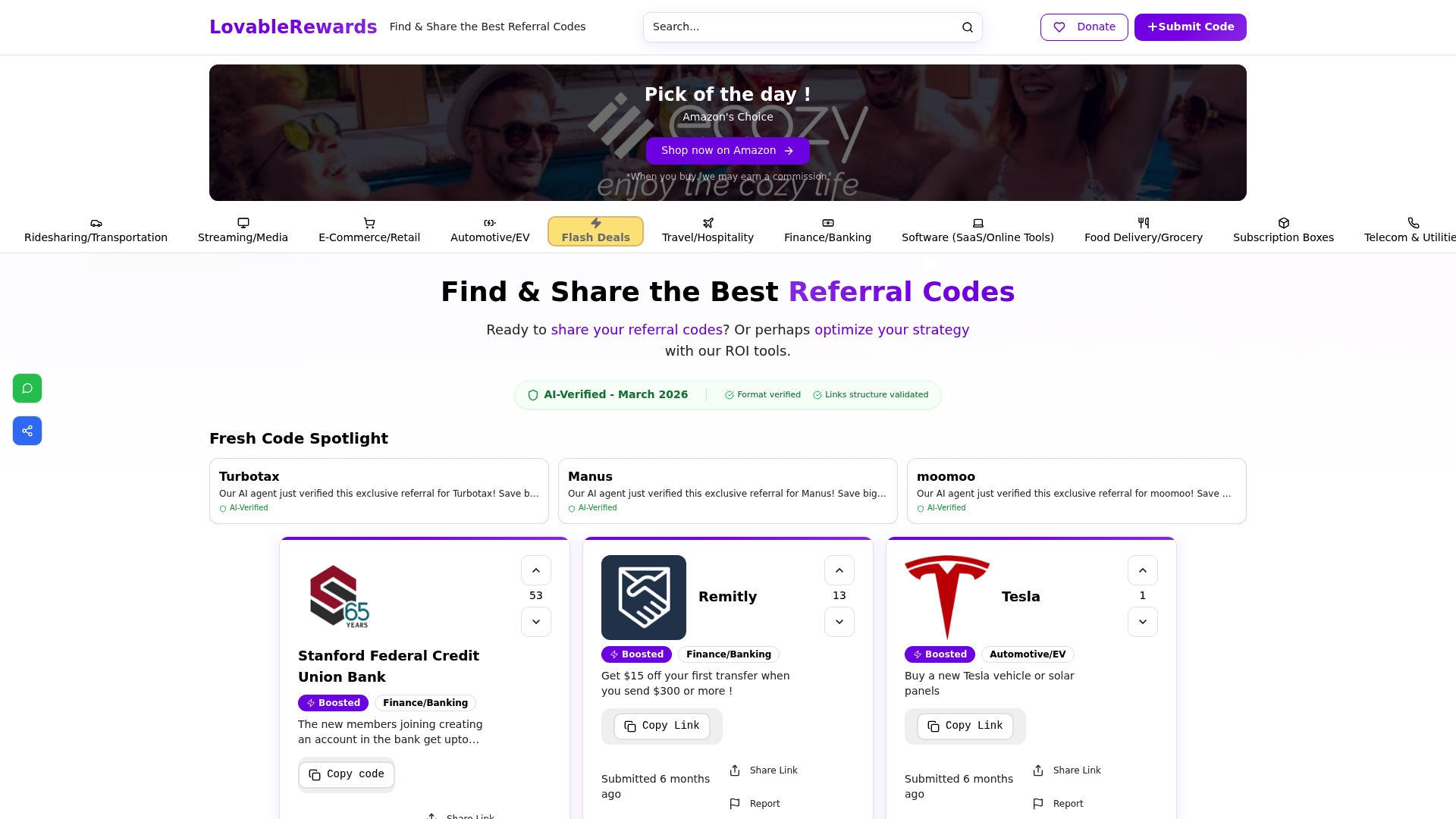
LovableRewards brings together AI-verified referral codes across e-commerce, financial services, transportation, and more, all in one place. The platform's real-time monitoring means you always know whether a code is active before you share it, eliminating the frustration of dead links and expired offers. One-click sharing tools reduce friction for recipients, which directly lifts your conversion rate. Community moderation adds another layer of trust, so every code you find or submit has been reviewed for legitimacy. Stop chasing scattered deals and start using a LovableRewards referral platform built specifically for deal hunters and referral marketers who want results.
Frequently asked questions
What is the best time to share a referral code for higher conversions?
The optimal time is 48 to 72 hours after someone first activates a service or product, when excitement is highest and they are most likely to act on your recommendation. This window consistently outperforms cold outreach by a wide margin.
How do I know my referral code was used and rewards are on the way?
Check your platform dashboard for referral status and pending reward entries. Real-time tracking ensures accurate reward delivery and gives you a clear record if you need to escalate a dispute.
What are the risks of sharing referral codes on public forums?
Public sharing can trigger fraud flags, cause account bans, or violate program terms because it invites self-referrals and fake account signups. Self-referrals and fake accounts are routinely caught through device and IP monitoring.
Do double-sided rewards always work better than single-sided rewards?
Double-sided rewards dramatically boost signups but can strain program budgets if not carefully managed. Each structure works best when it is matched to the program's specific acquisition goals and cost limits.