
TL;DR:
- Referral hubs centralize and verify active referral codes, making savings and earnings easily accessible.
- Verified platforms eliminate guesswork, offering up to $200 in bonuses or discounts.
- Anyone can participate as a consumer or marketer, earning rewards through trusted, community-moderated hubs.
Most people leave $50 to $200 sitting on the table every time they sign up for a new bank account, rideshare app, or shopping platform. Why? They skip referral hubs entirely, assuming these codes are hard to find, expired, or reserved for social media influencers. That assumption is costing real money. Verified referral hubs change the game by centralizing, checking, and rotating working codes so anyone can access 10-20% off rideshares or banking bonuses up to $200 instantly. Whether you want to save on your next Uber ride or earn commissions by sharing your own codes, this guide walks you through everything you need to know.
Table of Contents
- What are referral hubs and how do they work?
- Key benefits for consumers: Verified savings and simple access
- Referral marketers: Earning and optimizing through hubs
- How to spot trustworthy hubs (and common pitfalls to avoid))
- Why most people still miss out on referral hub rewards
- Ready to maximize your savings? Start with trusted referral hubs
- Frequently asked questions
Key Takeaways
| Point | Details |
|---|---|
| Verified savings made easy | Referral hubs make it simple to find and trust discounts and cashback rewards. |
| Earn by sharing codes | Referral marketers can use hubs to grow earnings safely with tracking and analytics. |
| Safety requires verification | Always choose trusted platforms that actively verify codes and remove scams. |
| Choose the right hub | Spotting a reputable referral hub unlocks more value for consumers and marketers. |
What are referral hubs and how do they work?
A referral hub is a platform that collects, verifies, and organizes referral codes from dozens or hundreds of brands in one place. Instead of digging through Reddit threads or expired coupon sites, you visit a single destination and browse active, confirmed codes sorted by category. Think of it as a curated marketplace where trust is built into the system.
Understanding how referrals work is the first step. When a brand issues a referral code, it ties a unique identifier to a specific person or campaign. Every time someone uses that code, the system records the action and triggers a reward, either for the new user, the code owner, or both. Hubs track these links automatically, removing the guesswork.
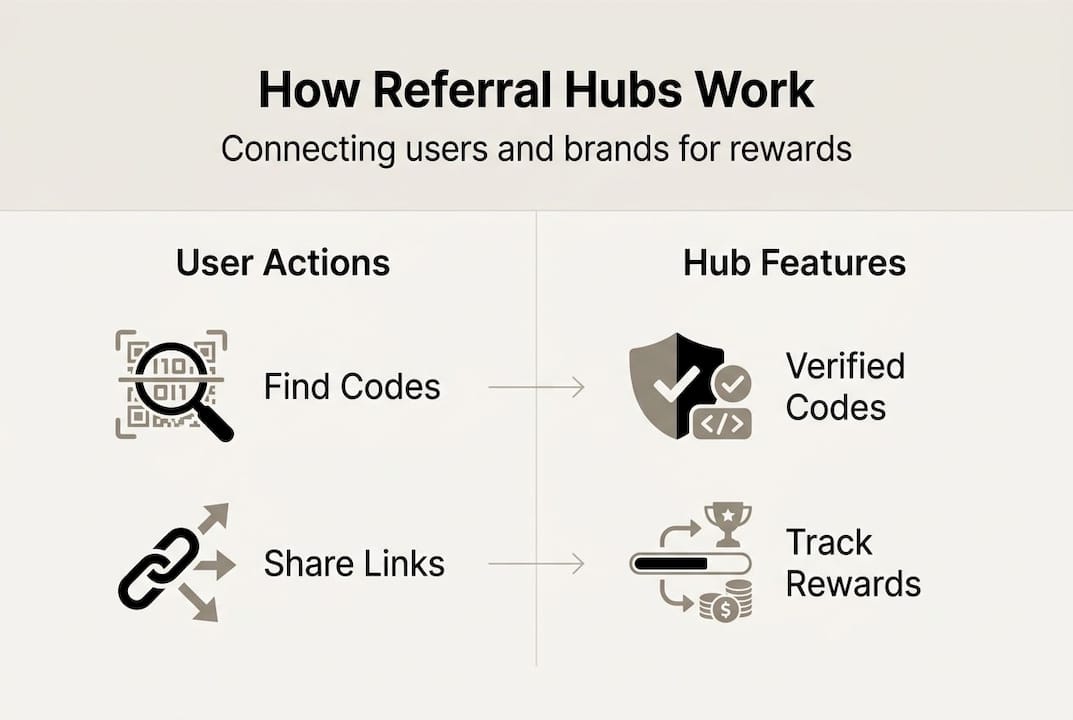
Here is a quick look at what kinds of rewards you can realistically expect:
| Category | Typical reward | Who benefits |
|---|---|---|
| Rideshare (Uber, Lyft) | 10-20% off first rides | New user |
| Banking signups | $50 to $200 cash bonus | New account holder |
| E-commerce | 5-15% off first order | Shopper |
| Marketer commission | Variable per conversion | Code owner |
Reputable hubs verify codes using a mix of automated checks and community feedback. If a code stops working, it gets flagged and removed fast. You can browse working referral codes on platforms like LovableRewards and know the list is current.
Key features that make referral hubs valuable:
- AI verification confirms code validity before listing
- Rotation systems give every contributor fair exposure
- Expiration tracking removes dead codes automatically
- Category filters let you find deals by industry or brand
"Referral hubs are not just link directories. They are trust infrastructure for a community of savers and earners."
For consumers, the payoff is immediate access to savings they would otherwise miss. For marketers, the payoff is visibility and trackable commission income. Both sides win when the hub operates with transparency.
Key benefits for consumers: Verified savings and simple access
Hunting for a working referral code on your own is frustrating. You find a promising code, try it at checkout, and get an error. Then you spend 20 minutes searching for an alternative. Referral hubs eliminate that cycle entirely.

Consumers can access verified discounts and cashback worth up to $200 on banking signups or 10-20% off rideshares without any guesswork. The verification layer is what separates a hub from a random blog post listing codes that expired two years ago.
Here is how the solo search compares to using a hub:
| Method | Time spent | Code success rate | Trust level |
|---|---|---|---|
| Solo search (Google, forums) | 15-30 minutes | Low (many expired) | Uncertain |
| Referral hub | Under 2 minutes | High (verified, active) | Community-backed |
How to use a referral hub as a consumer, step by step:
- Visit the hub and select your category (rideshare, banking, shopping).
- Browse listed codes and check the verification badge or community rating.
- Click the code to copy it or follow the referral link directly.
- Apply the code at checkout or during account signup.
- Confirm your reward appears before completing the transaction.
To find and share the best referral codes, you should also check whether a brand allows stacking. Some platforms let you combine a referral code with a seasonal promo, doubling your savings without any extra effort.
Pro Tip: Before signing up for any service, search the referral hub first. Even if you were not planning to use a referral code, a verified $100 banking bonus or a 15% rideshare discount is worth the 90 seconds it takes to check. You can also review referral code savings examples to see exactly how much others have saved across industries.
The best hubs also surface perks that brands do not advertise widely, like double cashback windows or bonus credits for early signups. These hidden offers only show up when the community is actively contributing and moderating the platform together.
Referral marketers: Earning and optimizing through hubs
If you have ever referred a friend to a service and earned a small bonus, you already understand the core mechanic. Referral hubs scale that idea into a real earning system. Earn commissions by submitting your personal codes to a hub, where they get tracked through unique links every time someone converts.
Here is what a typical marketer workflow looks like on a well-run hub:
- Submit your referral code with the correct brand category and expiration date
- The hub assigns a tracked link and places your code in the rotation
- When a user clicks and converts, the platform logs the referral
- You receive commission credit based on the brand's payout terms
- You audit your performance dashboard to see which codes drive the most conversions
The community referral code workflow is designed so that even first-time contributors get fair exposure. Rotation systems prevent a single marketer from dominating the listings, which keeps the ecosystem healthy and trustworthy for consumers.
Statistic to know: Referral programs consistently outperform cold advertising in conversion rates, with referred customers converting at rates up to 3-5 times higher than standard ad traffic. That is why brands invest heavily in referral incentives, and why your code has real earning potential on a verified hub.
Pro Tip: Use the analytics dashboard your hub provides to identify which categories or brands generate the most clicks. Then focus your submissions there. Reading up on referral code rotation tips can help you prevent fraud flags and keep your codes eligible longer.
Fraud prevention matters. Hubs that use AI verification will flag suspicious activity, including self-referrals or bulk fake signups. Staying compliant protects your account and your commission history. Learn how to share codes fairly so your contributions stay in good standing and continue earning over time.
How to spot trustworthy hubs (and common pitfalls to avoid)
Not every referral hub is built the same. Some are little more than link farms designed to harvest clicks without delivering real rewards. Knowing the difference protects both your money and your personal data.
Verified hubs offer real, trackable rewards and ensure user safety through transparent processes. Here is what a trustworthy hub looks like versus a risky one:
Features only legitimate hubs provide:
- Visible verification process: The hub explains how codes are checked and by whom
- Expiration dates: Every code shows when it was last confirmed active
- Community ratings: Users can flag or upvote codes based on real experience
- Clear payout terms: Marketers see exactly how and when commissions are paid
- No upfront fees: Legitimate hubs do not charge consumers to access codes
Red flags to watch for:
- Codes with no verification date or community feedback
- Platforms that ask for payment before showing you deals
- Hubs with no contact information or privacy policy
- Promises of guaranteed earnings with no explanation of how
"Community moderation is not optional in referral hubs. It is the mechanism that separates a trusted resource from a scam directory."
When evaluating referral hub alternatives, compare how each platform handles expired codes and user complaints. A hub that responds quickly to bad code reports is one that values its community. You can also consult a guide to community deal sharing to understand what responsible platforms look like in practice.
Your checklist before trusting any hub: confirm they show code verification status, check for user reviews or ratings, verify there are no hidden fees, and make sure the site has a clear privacy policy. These four steps take less than three minutes and can save you from wasted time or worse.
Why most people still miss out on referral hub rewards
Here is the uncomfortable reality: most people know referral codes exist, but they still do not use them. The reason is not laziness. It is a mental model problem. Many consumers still associate referral codes with pyramid schemes or influencer gimmicks, a perception rooted in the early 2010s when some programs were genuinely exploitative.
That world is gone. In 2026, verification standards have caught up. AI moderation, community oversight, and transparent payout systems have made referral code misconceptions increasingly outdated. Early adopters who trusted verified hubs two or three years ago are now sitting on consistent passive income streams or saving hundreds annually on everyday services.
The people who benefit most are not influencers with massive followings. They are regular users who took 10 minutes to understand how the system works and then acted on it. Skepticism made sense before verification existed. Now it is just leaving money behind. The landscape has shifted, and the gap between those who know and those who do not is only getting wider.
Ready to maximize your savings? Start with trusted referral hubs
You now have a clear picture of how referral hubs work, what to look for, and how to benefit whether you are saving or earning. The next step is simple: put this knowledge to work.
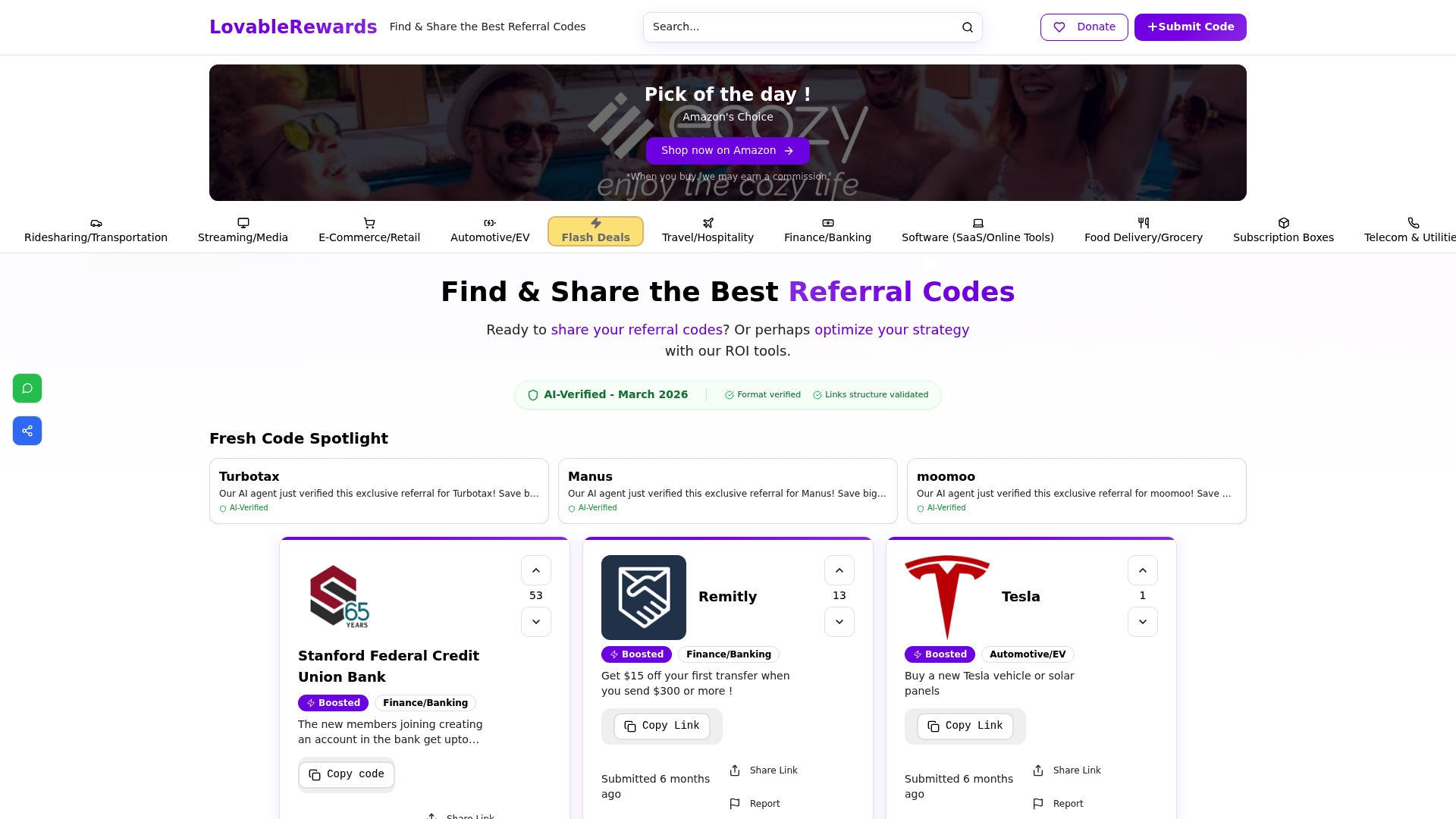
Try LovableRewards to browse AI-verified referral codes across rideshare, banking, e-commerce, and more. The platform uses a fair rotation system so every contributor gets visibility, and every consumer gets access to codes that actually work. Whether you want to save on your next signup or start earning commissions from your own referral links, LovableRewards gives you a verified, community-backed starting point. One click can unlock better rewards right now.
Frequently asked questions
Are referral hubs safe to use for sharing or collecting codes?
Yes, reputable referral hubs use verification and community oversight to ensure only legitimate codes and safe payouts are listed. Always check for visible verification steps before submitting or using any code.
How do I know if a referral code is verified and still active?
Look for platforms with visible verification steps and user feedback. Most reputable hubs remove expired codes quickly through automated checks and community flagging.
Can anyone join a referral hub as a marketer, or is it just for influencers?
Anyone can contribute and earn. Commissions tracked via unique links mean you do not need a following, just a valid referral code and a verified account on the hub.
What types of rewards are most common on referral hubs?
Bank signup bonuses and rideshare discounts are the most popular, often delivering $50-200 or 10-20% off instantly upon a successful referral conversion.