
TL;DR:
- Retailers use promo code rotation to prevent abuse, control budgets, and manage campaigns.
- Most online codes are expired quickly due to real-time validation and session-based rotation.
- Verified platforms and browser extensions offer higher success rates for active discount codes.
You paste a promo code at checkout, hit apply, and get the dreaded "invalid code" message. It happens constantly, and it is not random bad luck. Over 60% of codes listed on popular coupon sites are already expired by the time you try them, according to the Baymard Institute. The culprit behind most of this frustration is a deliberate retail practice called promo code rotation, and once you understand how it works, you can dramatically improve your odds of finding discounts that actually save you money.
Table of Contents
- What is promo code rotation?
- How promo code rotation works: mechanics and policies
- The shopper's experience: why codes expire and how to improve your odds
- Technical edge cases and new trends: single-use, bots, and session-based codes
- The real story: why smarter shoppers and retailers both win with rotation
- Get verified rewards and maximize your savings
- Frequently asked questions
Key Takeaways
| Point | Details |
|---|---|
| Promo code rotation explained | Retailers regularly update and replace promo codes to control distribution and prevent abuse. |
| Why many codes fail | Most codes on aggregator sites are expired due to rotation, with only 18% typically working. |
| How shoppers can win | Using verified sources and browser extensions greatly boosts your chance of finding working codes. |
| More secure code trends | Single-use and session-based codes protect retailer margins but require smarter shopping habits. |
What is promo code rotation?
Before you can beat the system, you need to understand what you are up against. Promo code rotation is not a glitch or an accident. It is a calculated strategy.
Promo code rotation refers to the practice by retailers of regularly changing, updating, or cycling through promotional codes to manage campaigns, prevent abuse, control distribution, and maintain the effectiveness of discounts. In plain terms, retailers swap out old codes for new ones on a scheduled or triggered basis, making previously shared codes useless.
Why do retailers bother? Several reasons drive this decision:
- Fraud prevention: Old codes circulate on forums and coupon sites, getting used far beyond their intended audience.
- Budget control: Unlimited use of a 20% off code can destroy a retailer's margins if thousands of unintended users apply it.
- Campaign management: Rotating codes lets retailers tie specific discounts to specific campaigns, audiences, or time windows.
- Competitive secrecy: Keeping active codes private protects promotional strategies from competitors.
"The core purpose of rotation is not to frustrate shoppers. It is to prevent code misuse and keep discount programs financially sustainable for the long term."
Once you see rotation as a business necessity rather than a deliberate annoyance, you can start working with it instead of against it.
How promo code rotation works: mechanics and policies
With a clear definition in hand, we can now look at the technology and policies that make promo code rotation possible. The mechanics are more sophisticated than most shoppers realize.
Modern retailers use automated code generation platforms that produce large batches of unique alphanumeric strings. These are not random keyboard mashes. They use randomization for collision resistance, meaning each code is statistically unlikely to be guessed or duplicated. Codes are then assigned expiration windows, usage limits, and customer-level restrictions before being distributed.

Here is a breakdown of the most common rotation mechanics:
| Mechanic | How it works | Shopper impact |
|---|---|---|
| Time-based expiration | Code expires after a set number of days | Valid codes become useless after 7 to 30 days |
| Usage cap | Code deactivates after N total uses | Popular codes disappear fast |
| Per-customer limit | One use per email or account | Sharing the code does not help others |
| Real-time validation | System checks code status at checkout | Expired codes fail instantly |
| Triggered rotation | New code issued after campaign milestone | Codes change unpredictably |
The steps a retailer typically follows when rotating codes look like this:
- Generate a new batch of unique codes using a randomized algorithm.
- Assign parameters including expiration date, usage cap, and eligible customer segment.
- Distribute the codes through email, SMS, app notifications, or partner channels.
- Monitor usage in real time to catch unusual spikes that signal leakage or abuse.
- Deactivate old codes automatically once the expiration date or usage cap is hit.
- Audit and repeat the cycle for the next campaign period.
Pro Tip: When a retailer emails you a code directly, use it within 48 hours. Personalized codes distributed through newsletters often have shorter lifespans than publicly advertised ones because retailers know direct recipients are more likely to act fast.
Understanding code validation steps helps you appreciate why even a code that worked yesterday might fail today. Real-time validation means there is no grace period once a code crosses its limit or expiration threshold. The system flags it as invalid the moment you try to apply it.
Fair code sharing platforms that respect these mechanics tend to maintain fresher, more accurate code listings because they build rotation awareness directly into their verification process.
The shopper's experience: why codes expire and how to improve your odds
Knowing the mechanics, let us look at what shoppers actually face and the practical steps you can take to adapt.
The core problem is a timing gap. Coupon aggregator sites collect codes from various sources, post them publicly, and rarely update their listings in real time. By the time you find a code on one of these sites, it may have already cycled through thousands of uses or passed its expiration date. The Baymard Institute found that 60% of codes on aggregator sites are expired, and a separate test of RetailMeNot found zero out of 47 Black Friday codes still working months after the event.
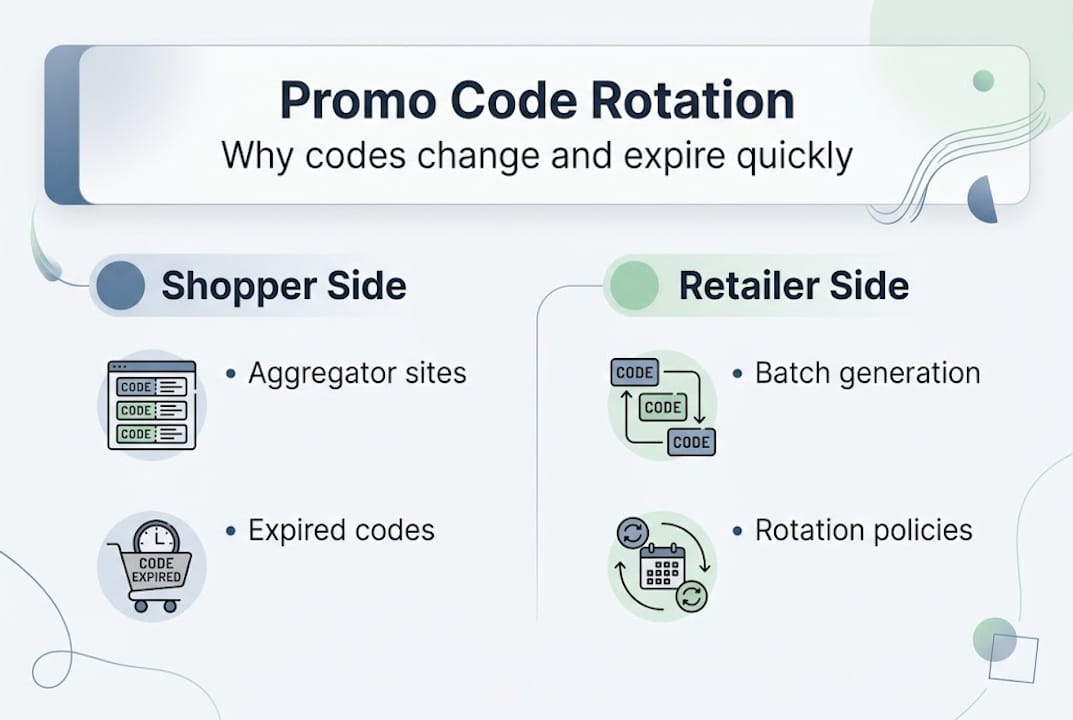
Compare the success rates across different code sources:
| Source type | Estimated success rate | Why it works or fails |
|---|---|---|
| Verified community platforms | ~73% | Codes tested and updated regularly |
| Retailer newsletters | ~65% | Codes are fresh and personalized |
| Browser extensions (real-time) | ~55% | Test multiple codes live at checkout |
| Coupon aggregator sites | ~18% | Listings lag behind rotation cycles |
| Social media posts | ~10% | Codes shared publicly expire fast |
The gap between verified sources and aggregators is not small. Verified sites achieve 73% success rates compared to just 18% for aggregators, which means your strategy for finding codes matters far more than the effort you put into searching.
Here are the most effective habits for finding working codes:
- Subscribe to retailer newsletters directly. Brands send exclusive, time-sensitive codes to their email lists that rarely appear on public aggregator sites.
- Check the retailer's own app. Many brands reserve their best codes for app-only users as an incentive to download and engage.
- Use browser extensions at checkout. Tools that test codes in real time give you a live snapshot of what is currently active, bypassing the aggregator lag problem.
- Follow verified community platforms that use AI or manual testing to confirm code validity before listing.
- Act quickly on any code you find. Even a verified code can expire within hours if it hits its usage cap.
Pro Tip: When avoiding expired codes, your best move is to treat every code you find as perishable. Set a mental deadline of 24 hours for any code you plan to use, regardless of the stated expiration date.
The frustration most shoppers feel comes from treating coupon hunting as a low-effort task. Paste a code, hope it works, move on. But in a world where retailers actively rotate codes, that passive approach guarantees a high failure rate. Shifting to proactive, source-aware strategies changes the outcome significantly.
Technical edge cases and new trends: single-use, bots, and session-based codes
Beyond everyday shopper experience, there are high-tech scenarios and trends that make code rotation even more dynamic and unpredictable.
One of the most disruptive forces in the promo code ecosystem is automated scraping. Leaked influencer and partner codes get scraped by bots and browser extensions like Honey almost instantly after they are shared. A code meant for a creator's audience of 50,000 followers can be used by millions within hours, blowing through its usage cap and triggering an emergency rotation by the retailer.
This creates a strange paradox. The very tools designed to help shoppers find codes, like browser extensions, can also accelerate the death of those codes by spreading them too widely too fast.
Key trends reshaping how rotation works in 2026:
- Single-use codes are generated uniquely per customer, so sharing them is pointless. They work once for one person and expire immediately after redemption.
- Session-based codes are tied to your active browsing session. They appear in a pop-up or chatbot interaction and expire when you close the tab, making them impossible to share or save for later.
- Dynamic pricing codes adjust the discount amount based on customer behavior, cart value, or loyalty tier, making a single "code" mean different things to different users.
- AI-driven rotation triggers let retailers deactivate codes the moment unusual usage spikes are detected, often within seconds of a code going viral.
"Retailers are shifting to unique session-based codes that make public aggregator lists essentially obsolete. Browser extensions that test codes in real time are now the most practical tool for shoppers navigating this landscape."
The rise of single-use codes is particularly significant. They solve the retailer's fraud problem completely but create a new challenge for deal seekers. You can no longer rely on a code someone else posted online because it was already used the moment it was shared. The only codes that work for you are the ones issued directly to you.
Exploring multi-industry code trends reveals that this shift is happening across e-commerce, financial services, and transportation apps simultaneously. It is not a niche retail experiment. It is becoming the standard.
The good news is that AI-verified codes can keep pace with these changes. Platforms that use machine learning to test and validate codes in real time can identify which codes are still active even as retailers rotate them, giving users a meaningful advantage over static aggregator lists.
The real story: why smarter shoppers and retailers both win with rotation
Putting all the facts and edge cases together, here is what most guides and even experts rarely tell you.
Code rotation gets framed as a war between retailers and shoppers. Retailers build walls, shoppers try to climb them. But that framing misses the bigger picture entirely.
Rotation protects retailer margins while pushing savvy users toward newsletters, apps, and extensions for fresher codes. That push is actually good for engaged shoppers. The people who subscribe to newsletters, use verified platforms, and act quickly on fresh codes consistently get better deals than passive aggregator browsers ever do. Rotation filters out lazy deal hunting and rewards intentional, informed behavior.
Think about what an unrotated discount ecosystem would look like. A 30% off code from three years ago would still work today. Retailers would stop offering discounts altogether because the financial risk would be unmanageable. The entire discount culture that shoppers depend on would collapse. Rotation is the mechanism that keeps discounts alive and financially viable for retailers to keep offering.
There is also a fairness dimension that rarely gets discussed. When codes rotate on a scheduled basis and get distributed through verified channels, every shopper has a roughly equal shot at accessing them. The rotation fairness principle applies to referral marketers too. Platforms that rotate code visibility give new contributors the same exposure as established ones, preventing a winner-take-all dynamic where only the most popular codes ever get seen.
The shoppers who struggle most with rotation are those who treat coupon hunting as a passive activity. The shoppers who thrive are the ones who build a small, reliable toolkit: one or two verified platforms, a newsletter subscription or two, and a browser extension for checkout. That combination consistently outperforms hours of searching on aggregator sites.
Code rotation is not going away. If anything, the trend toward single-use and session-based codes means it will become more aggressive. The right response is not frustration but adaptation. Build habits that match how the system actually works, and you will find that working codes are more accessible than they seem.
Get verified rewards and maximize your savings
For those wanting to put these insights into action, finding a reliable, up-to-date source for codes and rewards makes all the difference.
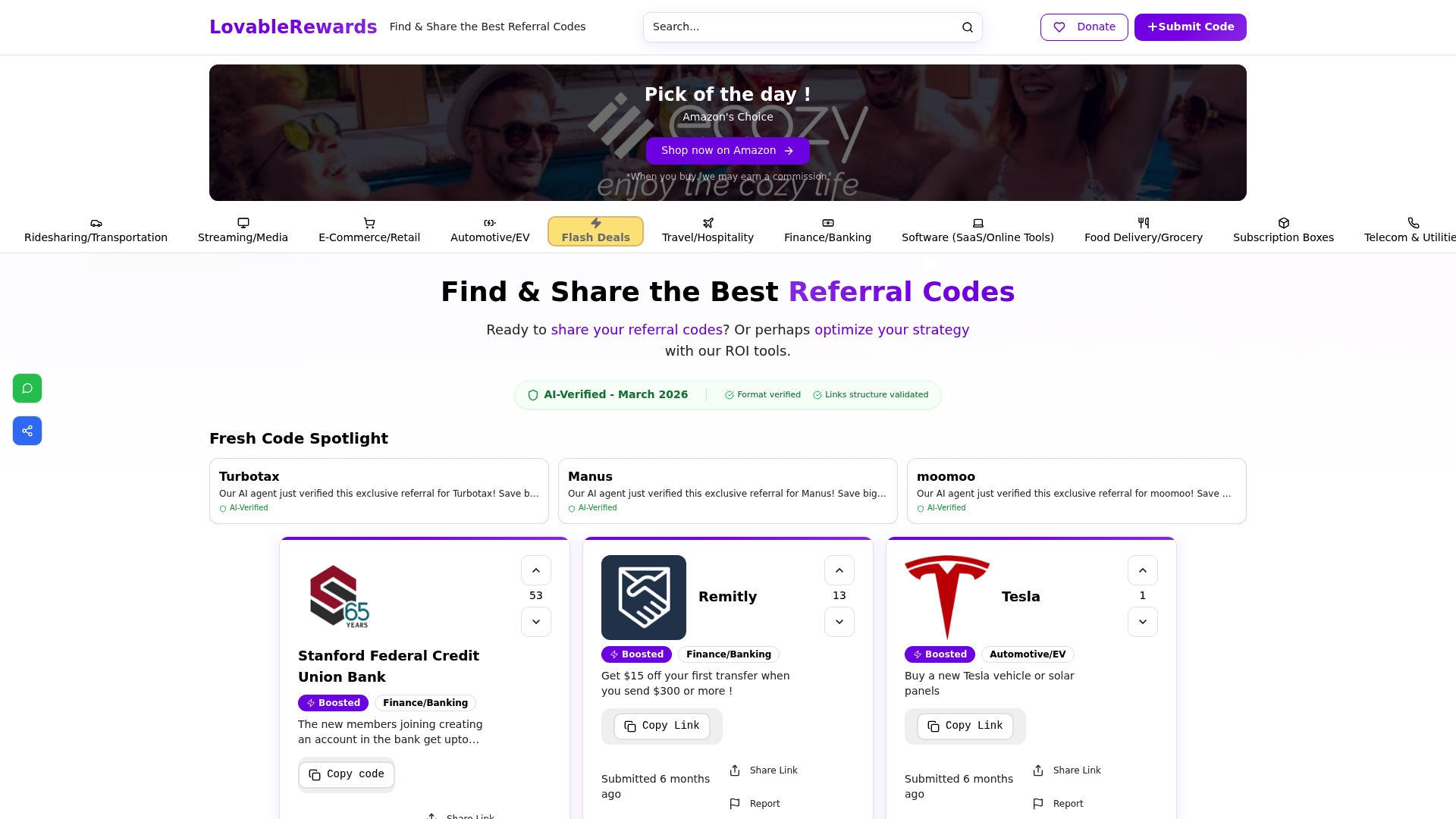
At LovableRewards, we built our platform specifically to solve the rotation problem. Every code listed goes through AI-based verification to confirm it is active before it reaches you. Our community contributors submit fresh codes regularly, and our fair rotation system ensures you see a diverse range of offers rather than the same stale listings recycled endlessly. Whether you are hunting for e-commerce discounts, cashback offers, or referral bonuses in financial services and transportation, you will find verified, current deals organized by category and updated in real time. Stop wasting time on aggregator sites with 18% success rates and start browsing a source built for how promo code rotation actually works today.
Frequently asked questions
Why do most promo codes I find online not work?
Most codes on public coupon sites are expired because of retailer rotation policies. Over 60% of listed codes are invalid at any given time, according to the Baymard Institute.
How can I find working promo codes more reliably?
Use verified platforms, retailer newsletters, and browser extensions rather than aggregator sites. Verified sources achieve 73% success rates compared to just 18% for aggregators.
What are single-use and session-based codes?
Single-use codes work only once per customer and expire immediately after redemption. Session-based codes are tied to your active browsing session and cannot be saved or shared.
How long do promo codes typically last after they're released?
Most promo codes expire within 7 to 30 days due to rotation policies designed to prevent fraud and control campaign budgets.
Do browser extensions work for finding valid promo codes despite rotation?
Yes, browser extensions test multiple codes in real time at checkout, making them far more effective than static lists. Retailers shifting to session-based codes make real-time testing tools the most practical option for deal seekers today.