
TL;DR:
- Fair code rotation ensures every referral code gets equal exposure based on merit.
- Different systems use round-robin or weighted algorithms, each with pros and cons.
- Transparency and active monitoring improve code visibility and overall referral success.
If you've ever submitted a referral code to a sharing platform and watched it sit untouched while others racked up conversions, you already know the frustration. The problem isn't always your offer. Often, it's how codes get distributed. Code rotation fairness, meaning the systematic and equal distribution of referral codes so every contributor gets a real shot at exposure, is one of the most overlooked factors in referral marketing success. This guide breaks down how rotation actually works, where it fails, and what you can do right now to make sure your codes get the visibility they deserve.
Table of Contents
- Understanding code rotation fairness
- How code rotation fairness works
- Challenges and pitfalls of code rotation fairness
- Best practices to maximize code exposure and engagement
- Why true code rotation fairness is harder than it looks
- Unlock fair referral rewards with LovableRewards
- Frequently asked questions
Key Takeaways
| Point | Details |
|---|---|
| Equal code exposure | Code rotation fairness ensures all codes receive balanced opportunities for referral rewards. |
| 10-25% conversion range | Typical conversion rates for referral links fall between 10 and 25 percent, regardless of rotation. |
| Monitor and adapt | Tracking rotation practices and adjusting strategies leads to greater engagement and success. |
| Prevent unfair manipulation | Robust rotation systems help minimize gaming and fraud, protecting program integrity. |
| Platform transparency matters | Choose referral marketing platforms that openly reveal their code rotation process and fairness standards. |
Understanding code rotation fairness
Code rotation fairness is the principle that every referral code submitted to a platform or program should receive proportional, unbiased exposure to potential users. In practice, this means no single code should dominate the feed while others get buried. It sounds simple, but achieving it consistently is anything but.
Unequal exposure happens for several reasons. Older codes often accumulate more clicks simply because they've been indexed longer. Platforms without structured rotation logic may default to showing the most recently added or most-clicked codes, creating a feedback loop where popular codes get more popular and newer ones struggle to gain traction. This isn't intentional bias, but the result is the same: unfair distribution.
Why does this matter? Because referral marketing only works when participants trust the system. If contributors feel their codes are invisible, they stop sharing. Engagement drops. The entire ecosystem suffers. General referral benchmarks show 10-25% conversion from referral links, but those numbers assume the code actually reaches an audience. Without fair rotation, many codes never get that chance.
Here's what "fair" looks like in practical terms:
- Every active code gets displayed within a predictable time window
- No code receives disproportionate placement without a transparent reason (like a paid boost)
- Expired or invalid codes are removed promptly so they don't consume rotation slots
- New contributors get equal entry-level exposure, not a penalty for being new
"Fair rotation isn't about treating every code identically. It's about giving every code an equal opportunity to perform based on its merit, not its age or the contributor's history."
Pro Tip: Before submitting your code to any platform, check whether they publish their rotation logic. Platforms that explain how codes are ordered and displayed are far more likely to deliver genuine fairness.
For more practical strategies, code rotation tips can help you understand how to position your codes for maximum impact from day one.
How code rotation fairness works
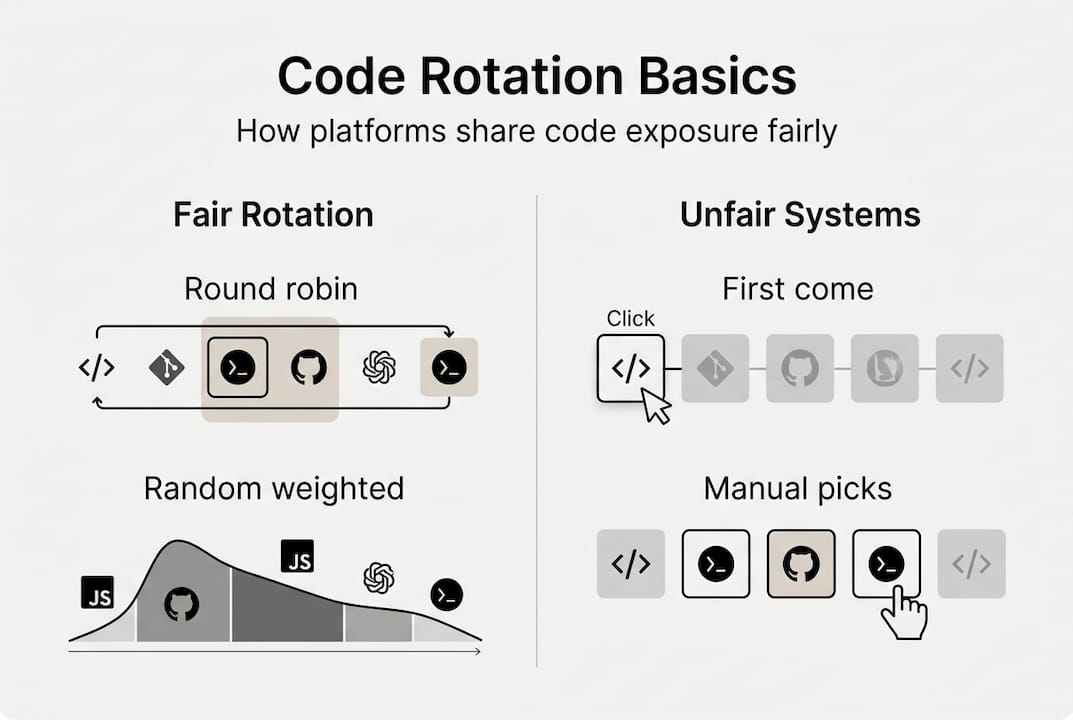
Now that you understand what fairness means, let's look at how platforms actually implement it. The mechanics vary widely, but most systems rely on one of two core approaches: round-robin rotation or weighted random selection.
Round-robin rotation cycles through all active codes in a fixed sequence. Code A appears first, then Code B, then Code C, and the cycle repeats. It's transparent and predictable, which users love. The downside is that it doesn't account for code quality or relevance, so a low-value code gets the same slot as a high-converting one.

Weighted random selection assigns each code a probability score based on factors like recency, past performance, or contributor standing. Higher-weighted codes appear more often, but every code still has a chance. It's more flexible, but less transparent unless the platform publishes its weighting criteria.
Here's a quick comparison:
| Approach | Fairness level | Transparency | Best for |
|---|---|---|---|
| Round-robin | High | Very high | Equal contributor communities |
| Weighted random | Medium | Medium | Performance-driven platforms |
| Manual curation | Low | Low | Editorial platforms |
| AI-assisted rotation | High | High | Scalable, verified marketplaces |
Most reputable platforms follow a process that looks something like this:
- Code is submitted and verified for validity
- Code enters the active rotation pool
- Rotation algorithm assigns an initial display weight
- Code appears in the feed based on its position in the cycle
- Performance data (clicks, conversions) is tracked and optionally used to adjust future weighting
- Expired or invalid codes are automatically removed from rotation
Referral benchmarks suggest 10-25% conversion from referral links, but that ceiling is only reachable when the rotation system puts your code in front of real, interested users. A well-structured rotation process is what bridges the gap between submission and actual performance.
For a detailed walkthrough on sharing codes fairly, step-by-step guidance can help you navigate platform-specific rotation rules. You can also use a referral ROI tool to estimate what fair rotation could realistically mean for your earnings.
Challenges and pitfalls of code rotation fairness
Understanding the mechanics is one thing. Dealing with the real-world obstacles is another. Even well-designed rotation systems face serious challenges that can undermine fairness for honest contributors.
The biggest threat is gaming. Some users submit duplicate codes under different accounts, artificially inflating their presence in the rotation pool. Others create fake clicks to boost their performance metrics, tricking weighted systems into favoring their codes. Without strong fraud detection, these tactics quietly tilt the playing field.
Common pitfalls that affect code rotation fairness include:
- Duplicate submissions: The same code submitted multiple times by one user, consuming extra rotation slots
- Click fraud: Artificially inflated click counts that skew performance-based weighting
- Stale code accumulation: Expired codes that haven't been removed, clogging the rotation pool
- Opaque algorithms: Platforms that don't explain their rotation logic, making it impossible to know if you're being treated fairly
- Participation imbalance: High-volume contributors dominating rotation simply because they submit more codes
Technical limitations also create problems. Smaller platforms may lack the infrastructure to run true algorithmic rotation, defaulting instead to chronological or manual ordering. This creates a "first in, last out" problem where older codes get buried and newer ones get all the attention, or vice versa.
Pro Tip: Always verify that a platform has active fraud prevention before investing time in it. Look for AI-based verification, duplicate detection, and clear expiration policies. These features signal that the platform takes fairness seriously.
Transparency is non-negotiable. If a platform can't tell you how codes are ordered and why, that's a red flag. Preventing referral fraud is a shared responsibility between the platform and its contributors. On your end, avoiding expired codes is one of the simplest ways to keep the rotation pool clean and protect your own reputation.
Best practices to maximize code exposure and engagement
Knowing the pitfalls is useful. Knowing how to work around them is better. These practices will help you get the most out of any code rotation system, regardless of the platform.
First, keep your codes current. An expired code sitting in a rotation pool wastes a slot that could belong to a working offer. Update or remove codes as soon as they expire. This keeps your profile clean and signals to the platform that you're an active, trustworthy contributor.
Second, monitor your rotation performance regularly. Most platforms provide analytics showing impressions, clicks, and conversions. Track these numbers weekly. If your code is getting impressions but no clicks, the offer itself may need refinement. If it's getting clicks but no conversions, the landing page or reward structure may be the issue.
Here's a simple tracking framework:
| Metric | What it tells you | Action if low |
|---|---|---|
| Impressions | How often your code appears | Check rotation eligibility |
| Click-through rate | How compelling your offer looks | Improve code description |
| Conversion rate | How well the offer converts | Review reward value |
| Rotation frequency | How often your slot comes up | Verify active status |
General referral conversion rates sit between 10-25%, so if you're falling below that range consistently, something in your funnel needs attention.
Additional strategies that drive engagement:
- Submit codes to platforms with verified rotation systems, not just high-traffic forums
- Write clear, specific descriptions for each code so users know exactly what they're getting
- Use a loyalty points planner to understand the cumulative value of your referral activity
- Check how code rotation works on each platform before committing time to it
- Engage with the community by verifying others' codes, which often improves your own standing in the rotation
The contributors who see the best results aren't necessarily the ones with the highest-value codes. They're the ones who stay active, monitor their metrics, and adapt quickly.
Why true code rotation fairness is harder than it looks
Here's something most articles won't tell you: nearly every platform claims to offer fair rotation. Very few actually deliver it consistently. The gap between the claim and the reality comes down to hidden biases baked into the system, often unintentionally.
Algorithms built on performance data naturally favor codes that already perform well. That sounds logical until you realize it creates a structural disadvantage for new contributors. The system rewards past success, not current quality. A brand-new, high-value code from an unknown contributor will almost always lose rotation priority to an average code from an established user.
Metrics alone don't fix this. You can track impressions and conversions all day, but if the rotation logic itself is skewed, the numbers will reflect the bias without revealing it. Smart referral marketers don't just participate and hope. They actively test platforms, compare rotation frequency across accounts, and look for verified referral codes on platforms that publish their fairness standards.
True fairness requires conscious design and ongoing adjustment. It's not a feature you set once and forget. The best platforms treat rotation fairness as a living system, not a static rule.
Unlock fair referral rewards with LovableRewards
If fair code rotation is what you've been missing, LovableRewards was built with exactly that in mind.
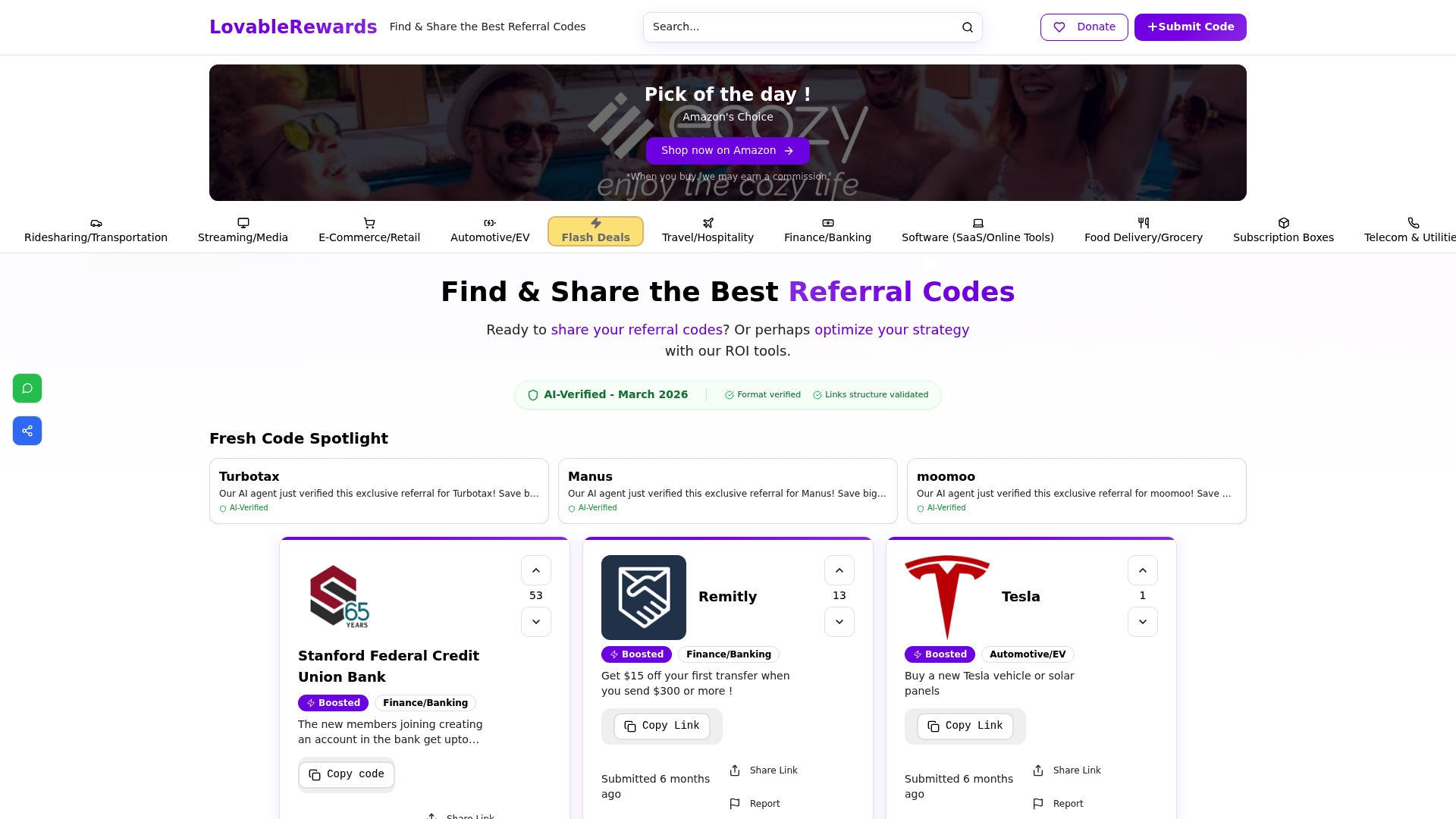
LovableRewards uses AI-based verification and a structured rotation system to give every contributor equal exposure from day one. No black-box algorithms. No hidden favoritism. You can browse working referral codes across dozens of categories, submit your own, and track performance in a transparent environment. The platform's community moderation and expiration tracking keep the pool clean, so your code competes on merit. Learn more about how it works and see why referral marketers trust LovableRewards to deliver fair, verifiable results.
Frequently asked questions
What does 'code rotation fairness' mean?
Code rotation fairness means every participant's referral code gets equal exposure and a genuine chance to be used, without any single code dominating the pool unfairly. Rotation-specific metrics are still emerging, but the principle is widely recognized in referral marketing.
How can I tell if a referral platform is truly fair in code rotation?
A fair platform publishes its rotation logic, provides per-code analytics, and removes expired codes automatically to prevent pool clogging. No universal standard exists yet for measuring rotation fairness, so transparency from the platform itself is your best indicator.
What conversion rates should I expect from rotated referral codes?
General referral benchmarks show 10-25% conversion from referral links, though your actual rate depends on offer quality, platform audience, and how effectively your code is rotated.
Can code rotation systems be manipulated or gamed?
Yes, without fraud detection, users can submit duplicate codes or generate fake clicks to gain unfair rotation priority. Risks of manipulation are real, which is why AI-based verification and duplicate detection are essential platform features.
How do I optimize my referral code's exposure?
Choose platforms with systematic, transparent rotation, keep your codes current, and monitor click and conversion analytics weekly. Referral conversion benchmarks of 10-25% are achievable when your code reaches the right audience through a fair rotation system.