
TL;DR:
- Referral platforms feature verified, community-sourced codes offering higher authenticity and success rates.
- Peer recommendations significantly increase trust, engagement, and long-term customer value.
- Using verified referral platforms maximizes savings, reduces wasted time, and boosts marketing ROI.
Most people scroll past referral platforms without a second thought, assuming they're cluttered with fake codes or reserved for heavy spenders. That assumption is costing them real money. 92% of consumers trust peer recommendations over traditional advertising, yet millions still rely on generic coupon sites that recycle outdated deals. Referral platforms operate on a fundamentally different model: real users sharing real codes, often verified by community moderation or AI tools. This guide breaks down what referral platforms actually are, why they work so well psychologically, and how you can use them to build a smarter, more consistent savings strategy starting today.
Table of Contents
- What are referral platforms and why do they matter?
- The psychological power of peer-to-peer recommendations
- Comparing direct referral benefits for users and marketers
- How to maximize your savings (and rewards) using referral platforms-using-referral-platforms)
- What most people get wrong about referral platforms
- Start unlocking authentic rewards with LovableRewards
- Frequently asked questions
Key Takeaways
| Point | Details |
|---|---|
| Peer-driven trust | Referral platforms harness peer recommendations, which 92% of users trust over ads. |
| Better savings strategy | Authentic referral codes offer more reliable and higher-value savings than generic coupons. |
| High ROI for marketers | Referral platforms boost customer retention and can achieve up to 10x return on investment. |
| Community advantage | Active communities on referral platforms verify codes and keep offers up to date. |
What are referral platforms and why do they matter?
A referral platform is a digital space where users share, discover, and verify referral codes and reward links across industries. Think of it as a community-powered savings engine. Instead of a faceless algorithm pulling deals from brand websites, you get codes submitted by actual users who've tested them firsthand. That origin matters more than most people realize.
Traditional coupon sites aggregate discounts from brand-side promotions. They're useful, but the codes often expire without notice, and there's no accountability when one fails. Referral platforms flip this model. Users submit codes they've personally received or used, which means the codes are tied to real accounts and real transactions. This creates a layer of authenticity that generic coupon aggregators simply can't replicate.
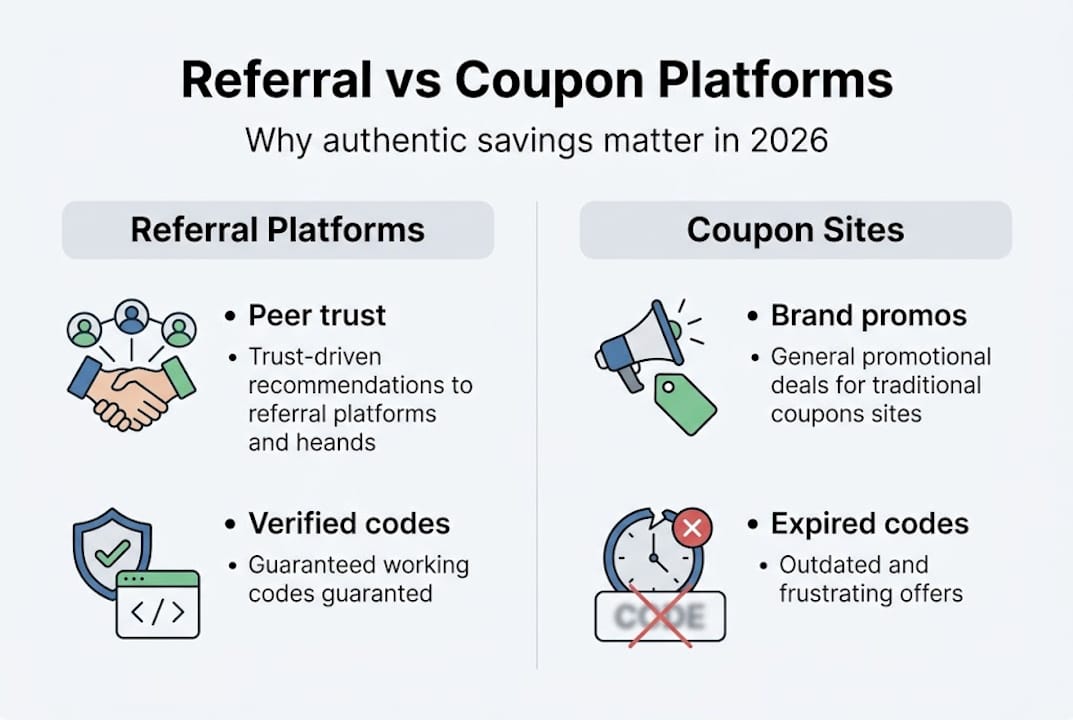
For individuals, the core benefit is straightforward: less time hunting for working codes, and a much higher success rate when you actually apply one. You're not wading through a graveyard of 2024 promo codes hoping something sticks. You're accessing a living, rotating list of offers that the community keeps fresh.
For marketers, the value goes deeper. Understanding referral codes explained reveals why they outperform almost every other acquisition channel. Referred customers show 37% higher retention, convert four times faster, and carry 16 to 25% higher lifetime value compared to customers acquired through paid ads. That's not a marginal edge. That's a structural advantage.
Here's a quick breakdown of what referral platforms deliver to each group:
- Individuals: Access to working, community-verified codes; reduced friction in the savings process; ability to stack offers across categories
- Marketers: Lower customer acquisition cost; higher-quality leads; organic word-of-mouth growth that compounds over time
- Both: A transparent ecosystem where code validity is tracked and expired deals are flagged
"The best referral platforms don't just list codes. They create a feedback loop where users validate each other's submissions, making the whole system more reliable over time."
This feedback loop is what separates a quality referral platform from a random forum thread. It's the difference between a curated marketplace and a digital bulletin board.
The psychological power of peer-to-peer recommendations
Trust is the engine behind every successful referral. When a friend tells you a product is worth buying, you believe them in a way you never would after seeing a banner ad. This isn't just intuition. It's backed by decades of behavioral research on social proof and decision-making under uncertainty.
Peer recommendations outperform ads by a wide margin, with 92% of people saying they trust suggestions from people they know or communities they belong to. This trust translates directly into action. Users who arrive through a referral are already pre-sold on the concept. They're not skeptical browsers. They're motivated buyers.
This is why platforms like Dropbox achieved explosive growth through referral mechanics. By offering extra storage for every friend referred, Dropbox turned its existing users into a distribution network. The result was a 3,900% increase in signups over 15 months, without relying on traditional advertising at all. The product spread because people trusted the source.
The same principle applies to discount codes on referral platforms. When a code comes from a verified user in a community you trust, you're far more likely to use it and complete the purchase. Compare that to a code you found on a random website with no attribution. The psychological gap is enormous.
You can explore multi-industry referral examples to see how this plays out across sectors from fintech to food delivery. The pattern is consistent: peer-sourced codes drive higher engagement and lower abandonment rates at checkout.
Here's what makes peer-driven referral platforms particularly effective:
- Users feel a sense of community ownership over the platform's quality
- Social accountability discourages submission of fake or expired codes
- Positive experiences reinforce participation, creating a virtuous cycle
- Trust compounds as users build track records within the community
Pro Tip: Only engage with referral platforms that use active verification, whether AI-based, community-moderated, or both. Platforms without any verification layer are where fake codes thrive, and one bad experience can sour you on the entire category.
Comparing direct referral benefits for users and marketers
Trust explains the psychology. Numbers explain the business case. Referral programs consistently deliver results that paid advertising struggles to match, and the data is clear on both sides of the equation.
Referral programs generate ROI between 8:1 and 10x, and Dropbox's 3,900% growth via referrals remains one of the most cited examples in marketing history. These aren't outliers. They reflect a structural truth: people referred by someone they trust are better customers in almost every measurable way.
Here's a side-by-side look at the benefits:
| Benefit | For users | For marketers |
|---|---|---|
| Cost savings | Direct discounts and cashback | Lower acquisition cost per customer |
| Time efficiency | Faster code discovery | Faster conversion from lead to buyer |
| Trust factor | Community-verified codes | Higher-quality, pre-sold leads |
| Long-term value | Stacking offers across categories | Higher retention and lifetime value |
| Reach | Access to niche deals | Organic growth through existing users |
For users, the practical advantage is being able to stack offers. A referral code for a new account combined with a cashback offer from the same platform can double your effective discount. Most people don't realize this is possible because they're only looking at one code at a time.

For marketers, using a referral program ROI tool can quantify exactly how much each referred customer is worth compared to a paid acquisition. The numbers almost always favor referral. You can also explore referral marketing tips to sharpen your strategy around code distribution and incentive design.
Here's a step-by-step breakdown of how value flows for each group:
- User discovers a referral platform and browses verified codes by category
- User applies a code at checkout, saving money on a first or repeat purchase
- User shares their own referral link, earning rewards when others sign up
- Marketer tracks referral conversions, seeing lower cost and higher retention than paid channels
- Marketer reinvests savings into better incentives, attracting more high-quality referrals
This cycle compounds. Each participant makes the system more valuable for everyone else.
How to maximize your savings (and rewards) using referral platforms
Knowing that referral platforms work is one thing. Knowing how to use them strategically is another. Here's how to get the most out of them without wasting time or falling for expired codes.
Referred users carry 16 to 25% higher lifetime value, which means platforms and brands are genuinely motivated to keep their referral offers generous. You're not fighting for scraps. You're accessing deals that brands want you to use.
Follow this process to build a consistent savings habit:
- Choose platforms with active verification. Look for AI-based checks or community moderation. This filters out dead codes before you waste time at checkout.
- Set up category alerts. Many platforms let you follow specific industries like travel, fintech, or e-commerce. Alerts notify you when new verified codes drop.
- Join the community actively. Users who submit codes and engage with the platform often get early access to promoted deals and visibility boosts.
- Rotate your codes. Don't rely on a single code indefinitely. Track which ones you've used and check for fresher alternatives regularly.
- Stack when possible. Combine a referral code with a cashback offer or a first-purchase bonus for maximum savings on a single transaction.
Understanding the community referral code workflow helps you see how codes move through a platform's lifecycle, from submission to verification to expiration. Knowing this flow lets you time your searches better.
Here's a quick feature comparison to help you evaluate any referral platform you're considering:
| Feature | Why it matters | What to look for |
|---|---|---|
| Code verification | Reduces failed redemptions | AI or community-based checks |
| Expiration tracking | Keeps listings current | Visible expiry dates or auto-removal |
| Fair rotation | Equal exposure for contributors | Transparent submission queue |
| Category filtering | Faster code discovery | Searchable, organized listings |
| Community moderation | Improves code reliability | User ratings or flagging system |
Pro Tip: Track your redemptions in a simple spreadsheet. Note the platform, code, date used, and whether it worked. After a month, you'll clearly see which platforms deliver the highest success rate and where to focus your time.
What most people get wrong about referral platforms
Here's the uncomfortable truth: most people either dismiss referral platforms entirely or use them so passively that they barely scratch the surface of what's available. Both approaches leave real value on the table.
The most common myth is that only big spenders benefit. In reality, the compounding effect of consistent, modest participation often outperforms occasional large-scale use. A user who applies three small referral codes per month across different categories will accumulate more savings over a year than someone who hunts for one big deal every quarter.
Another persistent misconception is that most codes are fake. On unverified platforms, that concern has merit. But on platforms with active AI verification and community moderation, referred customers show measurably higher retention and satisfaction, which means the ecosystem rewards authenticity. Fake codes get flagged fast.
What experts often overlook is that community health drives code reliability. A platform with engaged users who submit, test, and flag codes is fundamentally more trustworthy than one with passive listings. Your participation, even small contributions like rating a code or flagging an expired one, improves the experience for everyone. Exploring types of referral programs reveals just how varied and accessible these opportunities are across industries.
The real risk isn't using referral platforms. It's ignoring them while paying full price.
Start unlocking authentic rewards with LovableRewards
You now have a clear picture of how referral platforms work and why they deliver results that traditional coupon sites can't match. The next step is putting that knowledge to work with a platform built specifically for this purpose.
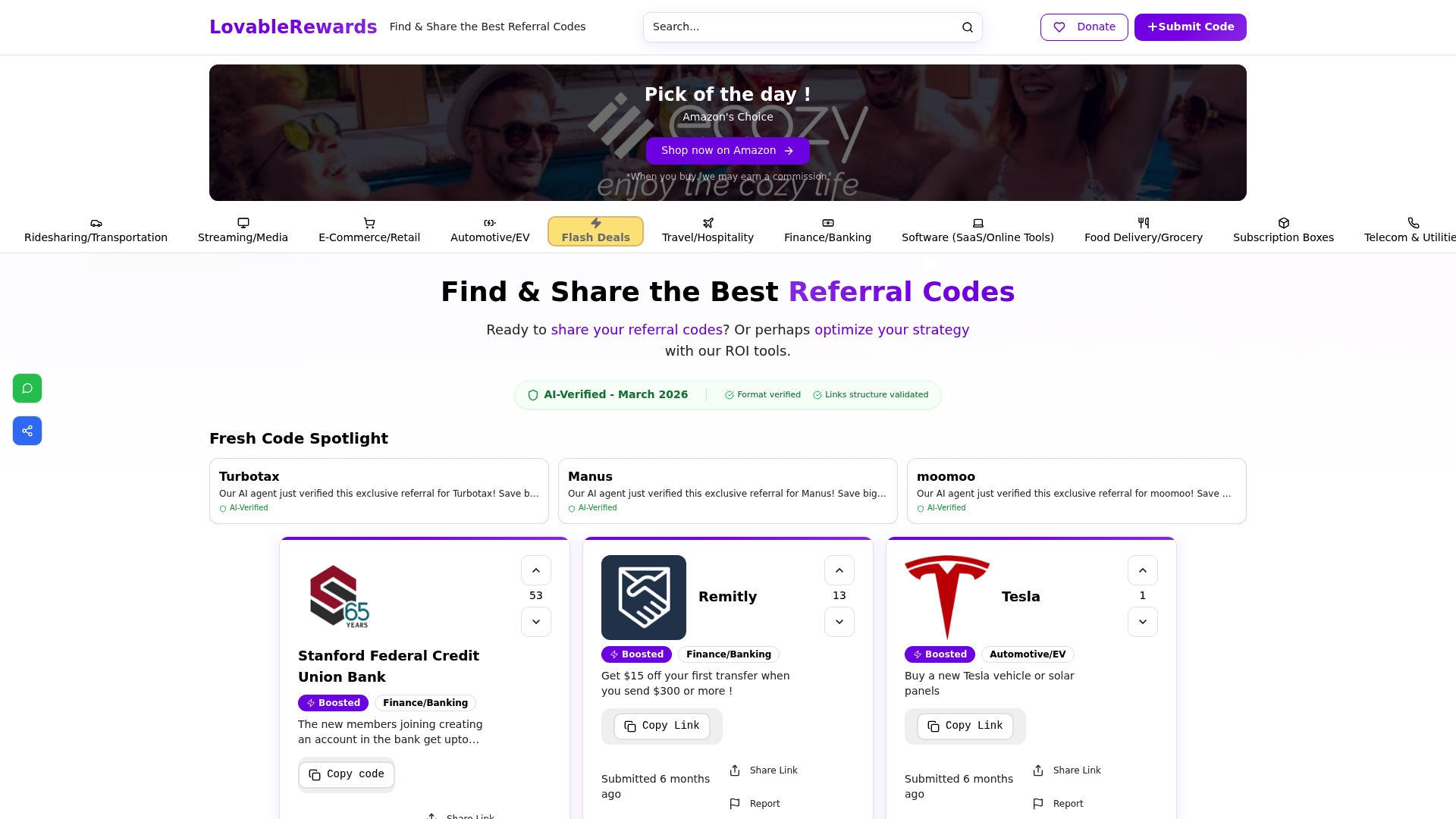
LovableRewards is a community-driven platform where every referral code is AI-verified before it reaches you. No guessing whether a code still works. No wading through expired listings. The platform maintains a fair rotation system so contributors get equal exposure, and you get access to a constantly refreshed pool of authentic deals across e-commerce, fintech, transportation, and more. If you want to understand how referral codes work before diving in, the resources are right there. Start saving smarter today.
Frequently asked questions
Are referral platforms safe to use for finding discount codes?
Yes, reputable referral platforms verify codes through AI tools or community moderation, which significantly reduces exposure to scams. Platforms built on peer-sourced recommendations naturally filter out bad actors because users flag unreliable submissions.
Can I use referral codes even if it's my first purchase?
Most referral codes are designed specifically for new users, so your first purchase is actually the ideal time to apply one. Referred users convert faster and tend to have higher lifetime value, which is why brands make first-purchase incentives especially generous.
How do referral platforms differ from regular coupon sites?
Referral platforms rely on user-submitted codes tied to real accounts, while coupon sites typically pull general promotions from brand databases. This user-sourced model means codes on referral platforms are more likely to be current and valid, since referral programs show higher retention and authenticity than broad discount campaigns.
Do marketers really gain more from referrals compared to ads?
Yes, consistently. Referral ROI reaches 8:1 to 10x compared to traditional advertising, and the leads generated are higher quality because they arrive with built-in trust from a peer recommendation.