
TL;DR:
- Transparency in referral programs involves clear terms, real-time updates, and honest reward communication. It builds trust, increases participation, and improves overall performance. Over-formalization can harm authenticity and reduce referral effectiveness.
Referrals are one of the most powerful tools in marketing, yet 92% of consumers trust personal recommendations above all other sources. Still, most referral programs bleed participation because they keep users in the dark. When someone shares a code but never hears whether it worked, or signs up through a friend's link only to find the reward missing, trust evaporates fast. Transparency is the missing variable. This article breaks down exactly what transparency means in the referral context, why it matters more than most programs realize, and how both marketers and consumers can use it to get better, more consistent results.
Table of Contents
- Why transparency matters in referral programs
- How transparency drives trust and participation
- The role of unique codes and validation in transparency
- Risks, limitations, and nuances of transparency
- Best practices for transparent, effective referral programs
- A fresh look: Is more transparency always better in referrals?
- Try transparency-driven referrals with LovableRewards
- Frequently asked questions
Key Takeaways
| Point | Details |
|---|---|
| Transparency boosts trust | Clear communication and validation in referral programs make consumers more likely to engage and share codes. |
| Unique codes prevent fraud | Attribution and progress-tracking features help both marketers and consumers by safeguarding rewards and simplifying validation. |
| Balance is essential | Too much formality can dampen authenticity, so programs should prioritize transparency without losing their personal touch. |
| Strong ROI results | Brands with transparent referral systems see up to 40% higher participation and measurable sales boosts. |
Why transparency matters in referral programs
Transparency in a referral program means three things: clear program terms, real-time status updates, and honest communication about when and how rewards are paid out. It sounds simple. But most programs fail at all three.
When a referrer shares a code, they want to know the code worked. When a new customer uses that code, they want to know the discount actually applied. Without that feedback loop, both parties feel like they're guessing. That uncertainty kills motivation to participate again.
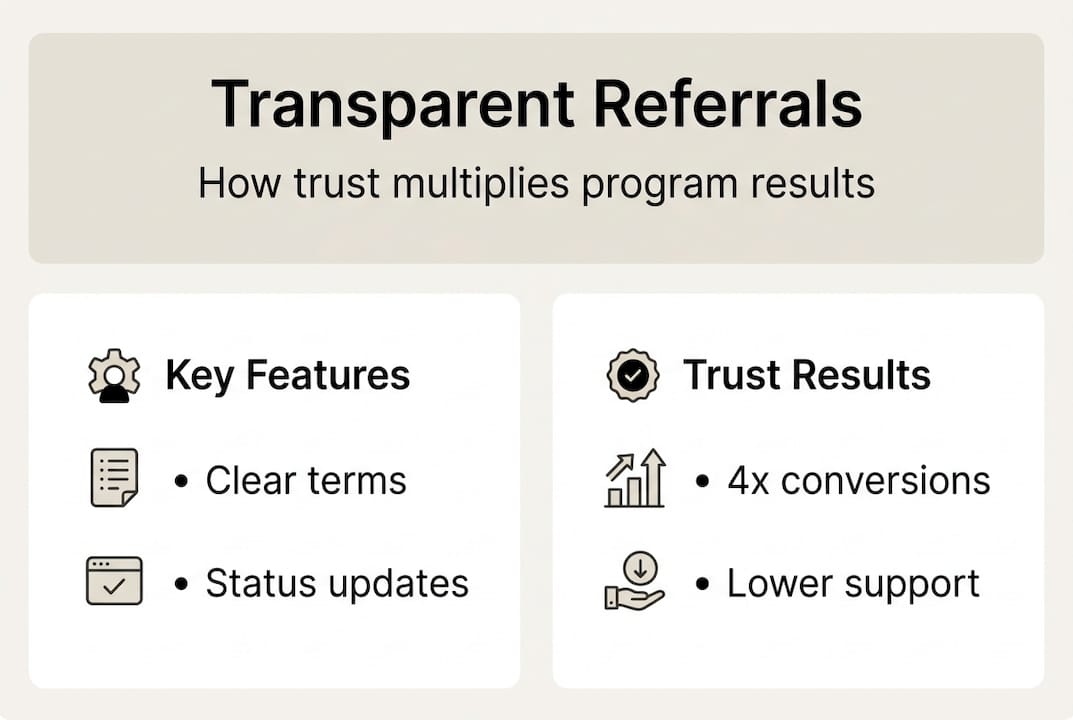
Transparency builds trust and increases long-term participation in referral programs. Here's what that looks like in practice for both sides:
For marketers:
- Higher repeat referral rates because participants feel confident the process works
- Easier recruitment of new advocates because the program's rules are clearly stated
- Lower fraud risk because tracking is visible and accountability is built in
- Better data for optimizing reward structures
For consumers:
- Confidence that shared codes are valid before using them
- No surprises when rewards don't appear unexpectedly
- Greater willingness to recommend programs to friends
The numbers back this up. Consumers are 4x more likely to convert when referred by a friend, but that effect multiplies when the program itself feels trustworthy. Without transparency, even a great incentive structure fails to retain advocates past the first referral.
"Referral programs with clear status updates and visible reward tracking consistently outperform those that leave participants guessing about outcomes."
Trust crumbles in referral programs for predictable reasons. The most common: rewards arrive late without explanation, codes expire without notice, and program rules change mid-campaign without announcement. Any one of these is enough to turn a motivated advocate into a silent skeptic. You can learn more about structuring programs that avoid these traps with referral marketing tips and by exploring the full range of types of referral programs that work across different industries.
How transparency drives trust and participation
There's a clear chain reaction here, and it's worth walking through step by step. When people understand exactly how a referral program works, they trust it. When they trust it, they participate more. When participation increases, conversions follow. And when conversions happen visibly, advocates become brand champions.
Here's the sequence in action:
- Program terms are clear from the start. Advocates know what reward they get, when they get it, and what the new customer must do to trigger it.
- The referral is tracked and confirmed. Both the referrer and the new customer receive an acknowledgment that the code was accepted.
- Status updates follow. As the new customer completes required steps (first purchase, first deposit, etc.), the referrer gets notified.
- Reward is delivered on time. No guessing about payout timelines. A specific date or trigger is communicated upfront.
- Post-reward engagement begins. Satisfied referrers share again. The cycle compounds.
Real-world data supports this. In corporate examples, clearer communication led to a 40 to 41% increase in referral hires. Tech and beverage companies that redesigned their referral communications to include milestone updates saw similar lifts in both referral volume and quality.

Psychologically, transparency works because it reduces anxiety. When people feel uncertain about whether their referral counted, they don't share again. But when they see confirmation, they reciprocate. It's the same reason people tip better at restaurants where they like and trust the server. Clarity creates comfort, and comfort creates loyalty.
You can benchmark how your program compares using discount code benchmarks to understand industry-standard performance metrics.
Pro Tip: Set up automated referral status emails at three key points: when the code is used, when the qualifying action is completed, and when the reward is paid. This simple sequence can significantly reduce "where's my reward?" complaints and dramatically boost repeat sharing.
If you want to measure the financial impact before launching, the referral ROI calculator makes it easy to project returns based on your program's structure. For inspiration, multi-industry code examples show how different sectors implement transparent programs at scale.
The role of unique codes and validation in transparency
Generic promo codes are a transparency problem waiting to happen. When one code works for everyone, you lose the ability to track who referred whom, and participants lose the ability to confirm their code made a difference.
Unique codes fix this. Each referrer gets their own code, and every use of that code is tied directly to their account. That one change transforms a vague reward promise into a trackable, verifiable transaction.
| Feature | Generic codes | Unique referral codes |
|---|---|---|
| Tracking per referrer | No | Yes |
| Fraud prevention | Low | High |
| Status update capability | Not possible | Fully automated |
| Reward accuracy | Approximate | Exact |
| Participant trust | Low | High |
Unique codes prevent leaks, enhance tracking, and consistently outperform generic alternatives in measured program performance. The difference isn't marginal. Unique codes drive measurably better results because the accountability they create benefits everyone involved.
Validation tools reinforce this further. Code verification systems, expiration alerts, and status confirmation emails all serve the same function: they tell users the system is working and that their participation matters. Reliable tracking improves trust by giving both marketers and consumers a shared, accurate picture of the referral relationship.
For marketers, real-time dashboards showing who used a code and when rewards were triggered reduce the volume of support tickets and user frustration. For consumers, seeing a code validated at checkout removes doubt instantly.
You can explore how verified referral codes are managed across different program types, and dig into strategies to prevent fraud in referrals before it becomes a problem. Understanding the full community code workflow also helps you see how verification and distribution work together in a well-run program.
Risks, limitations, and nuances of transparency
Transparency isn't a binary switch you flip on and call it a day. Push it too far in the wrong direction and you risk turning a personal, organic referral into something that feels corporate and procedural.
| Transparency factor | Benefit | Potential risk |
|---|---|---|
| Clear terms | Reduces confusion | Can feel overly legalistic |
| Full tracking visibility | Builds confidence | May raise privacy concerns |
| Automated status emails | Reduces anxiety | Can feel impersonal at scale |
| Public reward disclosure | Incentivizes sharing | May attract low-quality referrals |
| Over-formalization | Reduces ambiguity | Saps authenticity and warmth |
Over-formalization can commoditize referral recommendations and strip them of the personal trust that made them valuable in the first place. A referral that feels like a corporate transaction loses the social proof element that makes referrals convert so well.
Privacy regulations add another layer of nuance. In some cases, brand transparency reduces algorithm aversion and strengthens trust. But disclosing too much data about how referral tracking works can actually make users uncomfortable, particularly in regions with strict data protection laws.
The goal is functional transparency, not exhaustive transparency. Users need to know enough to feel confident. They don't need a technical manual.
Pro Tip: Focus transparency on the three things users actually care about: did my code work, when do I get my reward, and what does the new customer need to do. Everything beyond that is noise for most participants.
For a deeper look at how to structure programs that balance openness with simplicity, the breakdown of types of referral programs is worth reviewing. And understanding code rotation fairness shows how equitable exposure can complement transparency without overcomplicating the user experience.
Best practices for transparent, effective referral programs
Now let's put everything together. These are the practices that actually move the needle for marketers and consumers alike.
For marketers:
- Write program terms in plain language. If a customer service rep has to explain your terms to advocates regularly, the terms are too complex.
- Issue unique codes to every participant. No exceptions. Generic codes undermine both tracking and trust.
- Automate milestone updates. Tell referrers when their code is used, when the qualifying action is complete, and when the reward is on its way.
- Set clear payout timelines. "Within 30 days of your friend's first purchase" beats "rewards may take some time to process."
- Share aggregate program results. Let advocates know how many people they've helped and how much they've earned. This motivates continued participation.
For consumers:
- Always verify a referral code is active before sharing it widely
- Prefer programs that show you a confirmation screen when your code is applied
- Look for programs that communicate reward timelines upfront
- Avoid sharing codes from programs that don't explain what triggers the reward
- Choose platforms where code validity is independently verified
Transparency increases engagement by 25 to 40% compared to programs with opaque processes. That range is wide because the effect varies by industry, but the direction is always the same: more clarity means more participation.
For real-world examples of how these practices play out across sectors, multi-industry referral examples offer concrete models. And for a consolidated view of what works, referral best practices walk through the core strategies in detail.
A fresh look: Is more transparency always better in referrals?
Here's what we've seen that most articles won't say directly: total transparency can actually hurt a referral program if applied without judgment.
Brands that over-formalize their referral structures, complete with legal disclaimers, exhaustive tracking disclosures, and rigid process documentation, often find that advocates start feeling like unpaid salespeople rather than genuine fans. The personal feel is gone. And when that happens, the referral's social proof value drops sharply.
Over-formalization commoditizes recommendations and reduces the authentic trust that makes referrals convert better than advertising. The referral power comes from the relationship, not the process.
Our view at LovableRewards: transparency should serve the relationship, not replace it. The best programs use transparency as a trust enabler, giving people just enough visibility to feel confident, while preserving the personal, story-driven nature of genuine recommendations. Check the full range of referral program types to see how the best-performing structures balance these two forces.
Try transparency-driven referrals with LovableRewards
If you're ready to put these principles into practice, LovableRewards was built exactly for this.
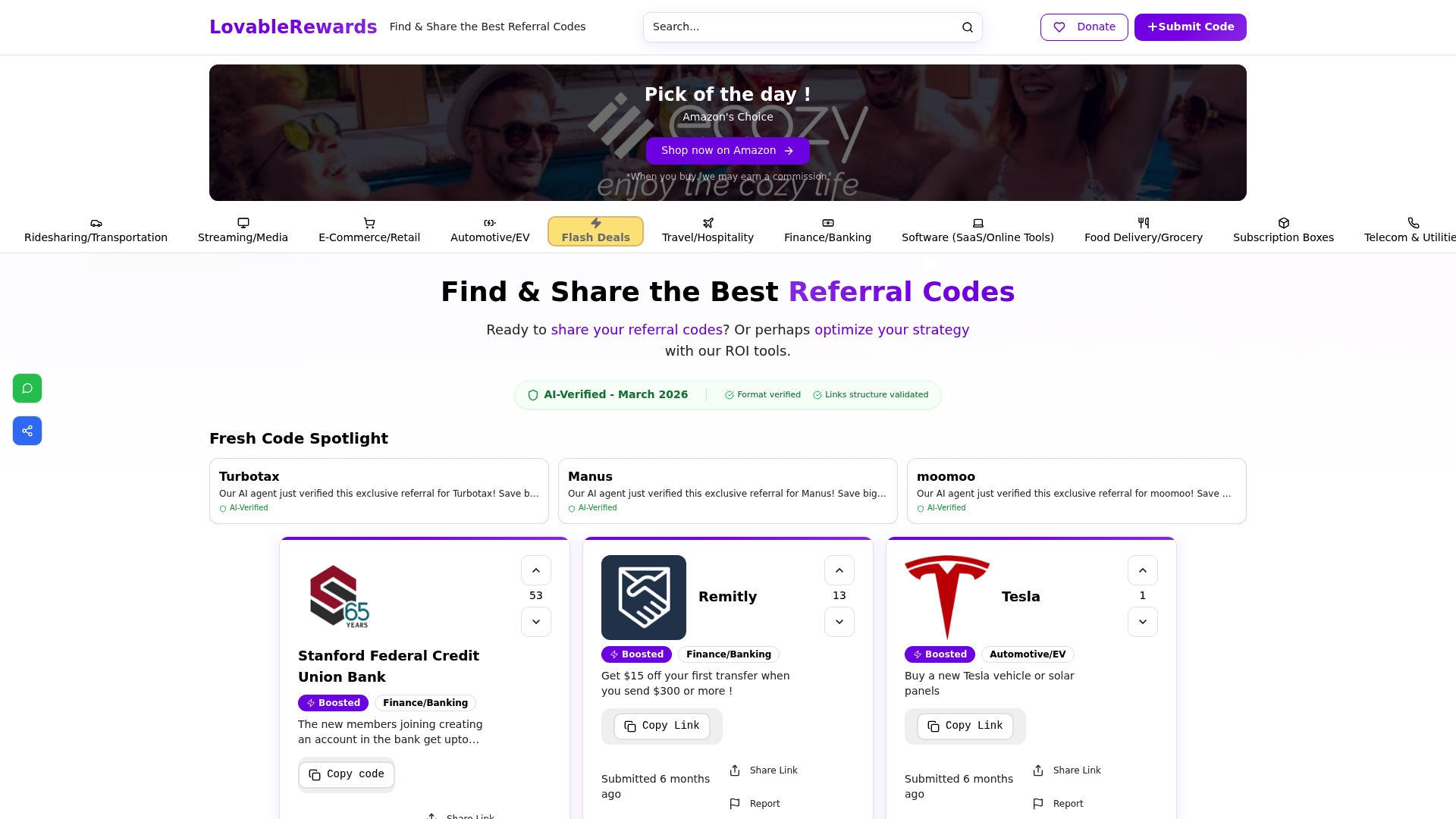
The LovableRewards platform gives both marketers and deal hunters a verified, transparent environment for sharing and discovering referral codes. Every code goes through AI-based validation so you always know what's active and legitimate. You can track performance, submit your own codes, and see real-time status on reward availability. For marketers, the referral ROI calculator helps you project returns before you launch, so there are no surprises. Transparency isn't a feature here. It's the foundation.
Frequently asked questions
What does transparency mean in a referral program?
Transparency means all parties can easily see referral terms, code status, and rewards, reducing confusion and building trust. Transparency builds trust and increases participation by removing uncertainty from the referral experience.
How do unique codes improve transparency and prevent fraud?
Unique codes let programs track each referral individually, preventing unauthorized sharing and ensuring only valid discounts are applied. Unique codes prevent leaks and deliver measurably higher performance than generic alternatives.
Can too much transparency hurt referral effectiveness?
Overly strict or formal transparency can make referrals feel transactional rather than personal, which reduces the social trust that drives conversions. Over-formalization commoditizes referrals and can lower authentic engagement.
Are transparent referral programs better for consumers or marketers?
Both benefit: consumers gain clarity and confidence, while marketers see higher participation and measurable ROI. Transparency increases participation and strengthens the program's long-term performance for everyone involved.